Get your free personalized podcast brief
We scan new podcasts and send you the top 5 insights daily.
ClickHouse CEO Aaron Katz reveals that their database is gaining enterprise customers through an unconventional channel: AI recommendations. He notes that Anthropic itself became a customer after its own model, Claude, suggested using ClickHouse for observability, demonstrating how LLMs are now influencing major technology purchasing decisions within large companies.

Related Insights
Anthropic dominated the crucial developer market by strategically focusing on coding, believing it to be the best predictor of a model's overall reasoning abilities. This targeted approach allowed their Claude models to consistently excel in this vertical, making agentic coding the breakout AI use case of the year and building an incredibly loyal developer following.

While ChatGPT and Gemini chase mass adoption, Claude focuses on a "hyper-technical" user base. Features like Artifacts and Skills, while too complex for casual consumers, create a deep moat with engineers and prosumers who are willing to invest time in building complex workflows.

According to IBM's AI Platform VP, Retrieval-Augmented Generation (RAG) was the killer app for enterprises in the first year after ChatGPT's release. RAG allows companies to connect LLMs to their proprietary structured and unstructured data, unlocking immense value from existing knowledge bases and proving to be the most powerful initial methodology.
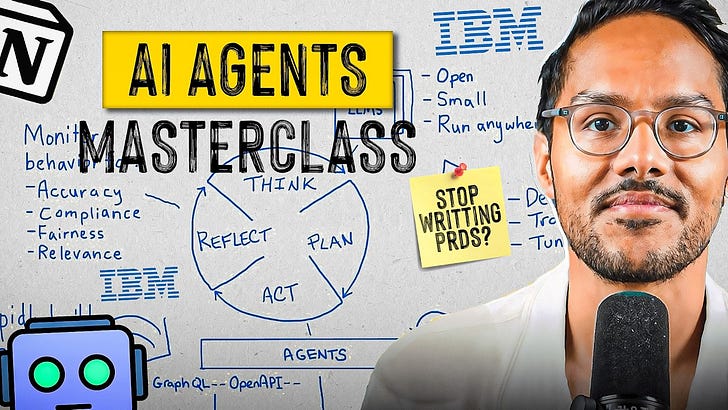
Moving beyond chatbots, tools like Claude Cowork empower non-coders to create complex, multi-step autonomous workflows using natural language. This 'agentic' capability—connecting documents, searches, and data—is a key trend that will democratize automation and software creation for all knowledge workers.

Instead of relying solely on massive, expensive, general-purpose LLMs, the trend is toward creating smaller, focused models trained on specific business data. These "niche" models are more cost-effective to run, less likely to hallucinate, and far more effective at performing specific, defined tasks for the enterprise.

G2's research shows a dramatic acceleration in AI adoption for B2B purchasing. The percentage of buyers starting their journey with an LLM surged from 29% to 50% in just four months. This signals a fundamental, non-negotiable shift in buyer behavior that marketing strategies must immediately address.

The concept of "Skills" was born when the team found that telling Claude *how* to query a data source and follow design guidelines produced better, more flexible dashboards than building rigid, parameterized tools. This discovery highlighted the power of instruction over hard-coding.

Instead of competing on diagnostics, Anthropic is positioning its Claude model as an 'orchestrator' to unify disparate health data for patients and providers. This strategy targets a major pain point—system navigation and data integration—rather than directly challenging established medical AI use cases, carving out a unique enterprise niche.
According to OpenAI's Head of Applications, their enterprise success is directly fueled by their consumer product's ubiquity. When employees already use and trust ChatGPT personally, it dramatically simplifies enterprise deployment, adoption, and training, creating a powerful consumer-led growth loop that traditional B2B companies lack.

Brex spending data reveals a key split in LLM adoption. While OpenAI wins on broad enterprise use (e.g., ChatGPT licenses), startups building agentic, production-grade AI features into their products increasingly prefer Anthropic's Claude. This indicates a market perception of Claude's suitability for reliable, customer-facing applications.
