Get your free personalized podcast brief
We scan new podcasts and send you the top 5 insights daily.
The ultimate global competition is for AI supremacy. Realizing the US has an advantage due to its access to advanced chips, China views controlling Taiwan's semiconductor industry not just as a territorial goal, but as a critical step to winning the AI race.

Related Insights
The primary competitive arena for AI is no longer just about creating the best algorithm. It has evolved into a geopolitical contest for control over the entire technology stack, including the infrastructure, supply chains, standards, and energy systems required to deploy AI models at a national scale.

The competition in AI infrastructure is framed as a binary, geopolitical choice. The future will be dominated by either a US-led AI stack or a Chinese one. This perspective positions edge infrastructure companies as critical players in national security and technological dominance.
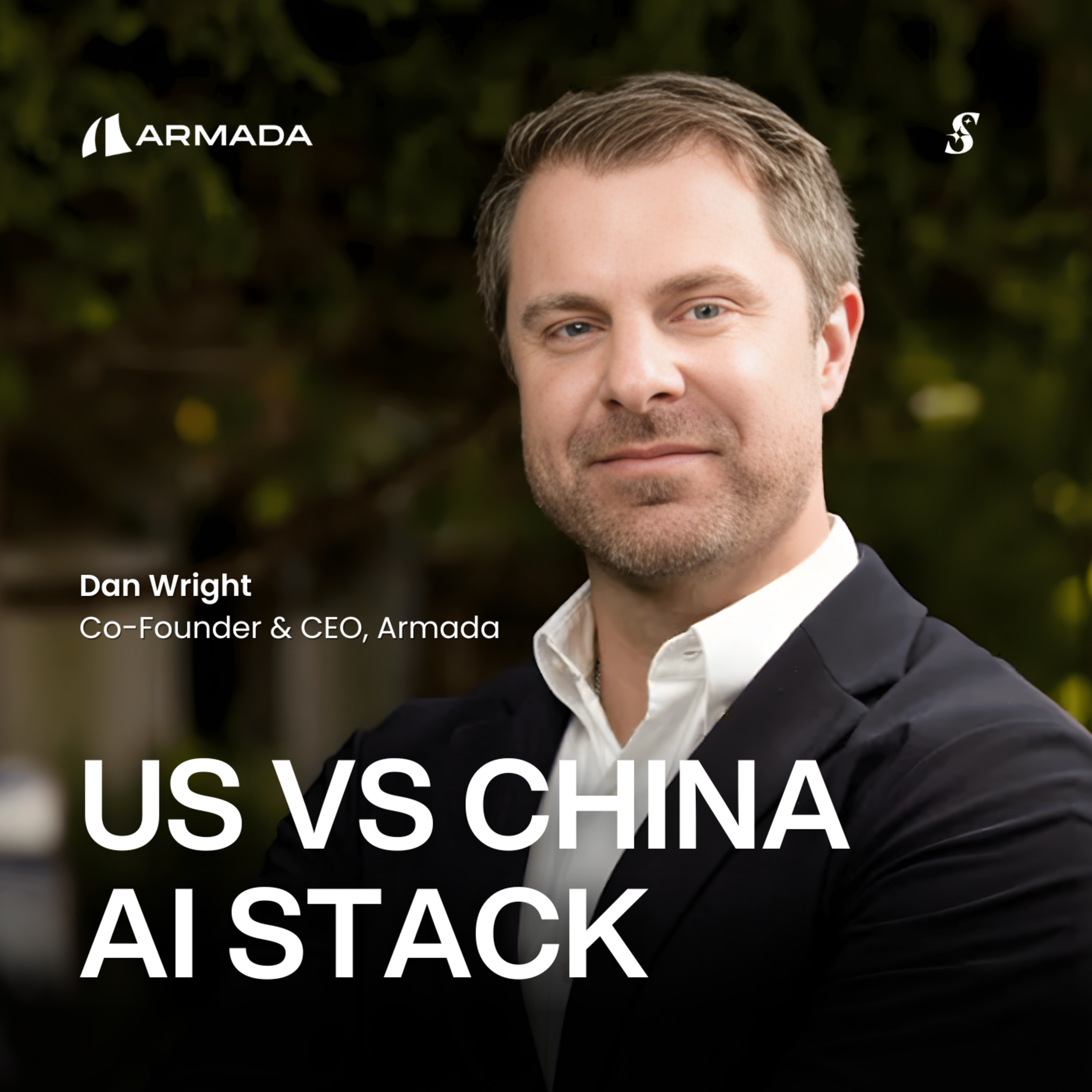
The competition for AI supremacy is a two-country race between the US and China, with all other nations playing peripheral roles. This singular dynamic is so powerful that it will consume global capital and force all other geopolitical issues to align around it, defining the next era of international relations.

The brazen smuggling of NVIDIA chips to China signals that the competition for AI dominance is an "all-out sprint" and a matter of national security. Control over compute infrastructure is now as geopolitically critical as energy, making it the central battleground of a new technological Cold War.

With 97% of high-end chips and 72% of the global foundry market controlled by Taiwan, specifically TSMC, any disruption—from military blockade to cyberattack—would trigger an 'economic apocalypse.' This massive over-concentration creates a singular, fragile chokepoint with no short-term alternative, threatening the entire global economy.

Ben Thompson presents a counterintuitive geopolitical argument: allowing China dependency on Taiwan for semiconductors creates a safer equilibrium. Cutting China off removes this critical dependency, potentially making a military strike on TSMC an optimal, if devastating, strategic move for Beijing.

Beyond financial metrics, the most significant 'tail risk' to the AI boom is the high concentration of advanced semiconductor manufacturing overseas, particularly in Taiwan. A geopolitical conflict could sever the supply of essential hardware, posing a much more fundamental threat to the industry's growth than market volatility or corporate overspending.

If the US achieves overwhelming AI superiority, particularly in military applications, it could force adversaries like China into desperate, high-stakes actions like destroying TSMC, ultimately destabilizing the world.
![Ben Thompson on Big Tech, China, and the AI Boom Running Out of Money - [Invest Like the Best, EP.487] thumbnail](https://megaphone.imgix.net/podcasts/b0356202-9aa0-11f1-b3c3-6bc8a0cf3d6f/image/772d31a372a483035b6fc678729cae0b.jpg?ixlib=rails-4.3.1&max-w=3000&max-h=3000&fit=crop&auto=format,compress)
The US is allowing Nvidia to sell advanced chips to China again. The strategic calculus has shifted from simple resource hoarding to geopolitics: keeping China dependent on Taiwan's TSMC makes an invasion less likely, as it would destroy the very supply chain China needs for its AI ambitions.

China's semiconductor strategy is not merely to reverse-engineer Western technology like ASML's. It's a well-funded "primacy race" to develop novel, AI-driven lithography systems. This approach aims to create superior, not just parallel, manufacturing capabilities to gain global economic leverage.