Get your free personalized podcast brief
We scan new podcasts and send you the top 5 insights daily.
Audience forecasting for cinema advertising is no longer based solely on historical data. Companies use AI models that incorporate inputs like real-time social listening and pre-sale ticket data to create more accurate audience projections, allowing for smarter media planning.

Related Insights
GenAI transforms advertising's core pillars. It enables hyper-personalized creatives at scale, democratizes ad production for smaller businesses, and fundamentally enhances the two most critical functions of any ad platform: predicting user behavior and measuring campaign outcomes.

AI overcomes the difficulty of forecasting individual consumption by not looking at reps in isolation. Instead, it groups them into cohorts based on shared characteristics (e.g., channel, type). This allows the model to learn from collective patterns and apply those insights to correct and improve individual forecasts.

Marketers can leverage prediction markets to discover what their target audience will care about in the next 3-12 months. This data, which represents real-money bets on future outcomes, provides a powerful and underutilized source for creating forward-thinking content that anticipates market trends.

Traditional marketing relies on static, often biased customer personas. AI-driven systems replace these assumptions with dynamic models built on real-time user behavior. This allows startups to observe what customers actually do, removing bias and grounding strategy in reality.
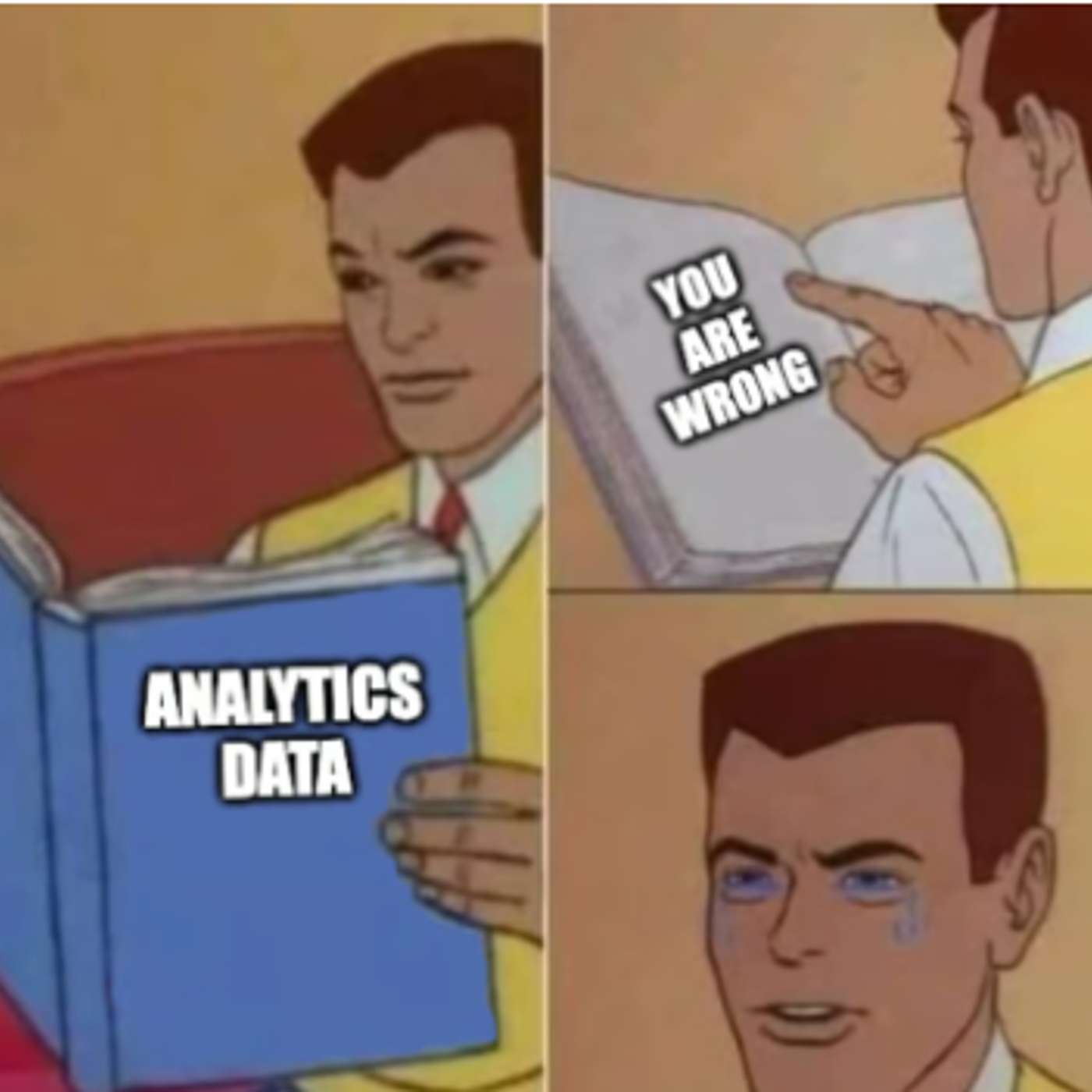
Go beyond simple prospect research and use AI to track broad market sentiment. By analyzing vast amounts of web data, AI can identify what an entire audience is looking for and bothered by right now, revealing emerging pain points and allowing for more timely and relevant outreach.

The sheer number of variables in a consumption model—individual customer seasonality, new bookings, timing, and rep forecasts—creates a level of complexity that is nearly impossible for humans to manage effectively. AI is becoming essential to aggregate and analyze this data to produce a reliable forecast.
Initially dismissing AI for creative tasks, media companies now recognize its inevitability. The key to adoption is framing AI's value around revenue generation (making more money), which is a far more compelling business case than simply cost-saving (e.g., reducing producer headcount).

Traditional marketing involves planning, launching, and then learning. AI enables an "outcome-based" model where marketers define the desired result first (e.g., profit, brand lift) and technology works backward to achieve it, aligning marketing more closely with finance and the CEO.

The traditional marketing focus on acquiring 'more data' for larger audiences is becoming obsolete. As AI increasingly drives content and offer generation, the cost of bad data skyrockets. Flawed inputs no longer just waste ad spend; they create poor experiences, making data quality, not quantity, the new imperative.
To avoid costly public relations crises, marketers are adopting a new technique: running creative assets against AI-generated "synthetic audiences." This provides a cost-effective sense check on how different groups might respond, identifying potential issues before a campaign goes live.
