Get your free personalized podcast brief
We scan new podcasts and send you the top 5 insights daily.
The best people to build internal AI tools aren't the most technically skilled but those with deep 'company DNA.' They understand the work in an 'uncanny way' and can align AI to replicate nuanced, high-quality outcomes, often outperforming distractible 'AI excited' enthusiasts.
Related Insights
Beyond just using AI tools, truly "AI-native" companies are built differently. They feature distinct organizational designs, new talent profiles, and leadership visions that fundamentally rethink problem-solving. This structural difference separates them from legacy companies merely adding AI features.

The most valuable AI champions within a company don't just promote tools. They act as 'internally deployed vibe coders,' embedding with business units to show what's possible by co-creating solutions and helping to fundamentally change workflows.

Simply hiring superstar "Galacticos" is an ineffective team-building strategy. A successful AI team requires a deliberate mix of three archetypes: visionaries who set direction, rigorous executors who ship product, and social "glue" who maintain team cohesion and morale.

Finding people who can effectively deploy AI agents is hard. Instead of sifting through LinkedIn for "AI experience," the best talent pools are top-performing Forward Deployed Engineers from AI companies or intellectually curious internal employees who deeply understand the business context.

As AI handles routine coding, the most valuable engineers are either "dreamers" with strong product sense who can own features end-to-end, or deep subject matter experts who can verify and handle the complex, trust-critical parts of the system where human verification is still essential.

Empowering non-technical employees to build AI solutions forces the documentation of tacit knowledge. By aligning an AI to perform a task, they convert expert intuition into a repeatable, documented process, thus mitigating key-person risk for the organization.
AI tools act as a 'superpower' for high-agency generalists who possess good taste and deep customer understanding but may lack deep technical specialization. This could reverse the long-standing corporate trend of valuing specialists, making these empowered generalists the most impactful players in a company.
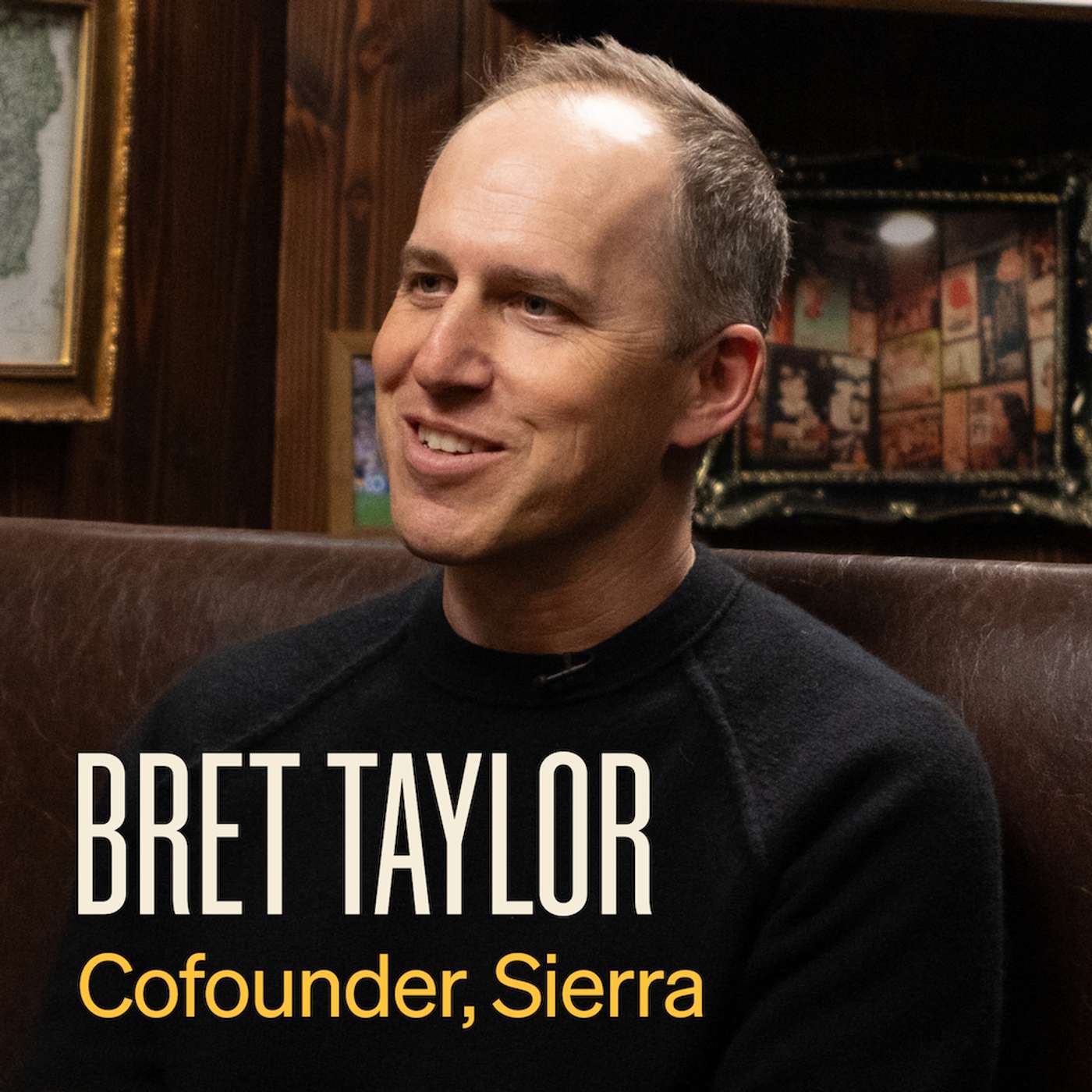
With AI tools being so new, no external "experts" exist. OpenAI's Chairman argues that the individuals best positioned to lead AI adoption are existing employees. Their deep domain knowledge, combined with a willingness to learn the new technology, makes them more valuable than any outside hire. Call center managers can become "AI Architects."
In the AI era, formal job titles are less relevant than core competencies. The most valuable individuals are those who combine three key traits: a deep understanding of customer problems, strong product taste, and a nuanced grasp of the constantly shifting, 'jagged edge' of AI model capabilities.
![Eric Vishria - A Decade of Lessons Investing in Software & Hardware - [Invest Like the Best, EP.486] thumbnail](https://megaphone.imgix.net/podcasts/be6f2778-94f0-11f1-8fc8-5fdf34225c7d/image/c8265322cedbd7f9e8b4d6d8b037c42b.jpg?ixlib=rails-4.3.1&max-w=3000&max-h=3000&fit=crop&auto=format,compress)
The key differentiator for companies succeeding with AI isn't technical prowess but mastery of core behaviors: flexibility, targeted incremental delivery, being data-led, and cross-functional teams. Strong fundamentals are the prerequisite for benefiting from advanced technology.
