Get your free personalized podcast brief
We scan new podcasts and send you the top 5 insights daily.
Amidst a decade-long economic decline, Canada's decision to match US tariffs is an emotionally satisfying but economically suicidal policy. A weaker nation picking a fight with its largest trading partner prioritizes political posturing over the financial well-being of its own citizens.

Related Insights
A parallel is drawn between the UK's decision to leave the EU and the US considering tariffs. Both policies stem from the same protectionist impulse that ultimately harms a nation's economy, GDP, and business investment.

Canada's leadership faces a paradox: to achieve long-term economic independence from the U.S., it must first secure a trade deal with the Trump administration. This deal is needed to create the stability and investment environment necessary to reorient its economy towards other global partners.

By walking away from a crucial trade deal with the US—which accounts for 78% of its exports—Canada is committing economic suicide. The move, driven by national pride and a pivot toward China, ignores its massive economic dependency and will hurt Canada far more than the US.
While the US exports less to Canada by volume, its exports (electronics, pharma) have far higher margins and shareholder value multiples than Canadian exports (lumber, oil). Therefore, for every dollar of trade disrupted by tariffs, the US loses significantly more economic value, making the policy self-defeating.

Canada's long-term economic strategy is built on the belief that the era of increasing integration with the US is permanently over. The leadership anticipates that future American politicians will find it difficult to remove trade barriers, necessitating a fundamental, long-term pivot for Canada's economy away from US dependency.
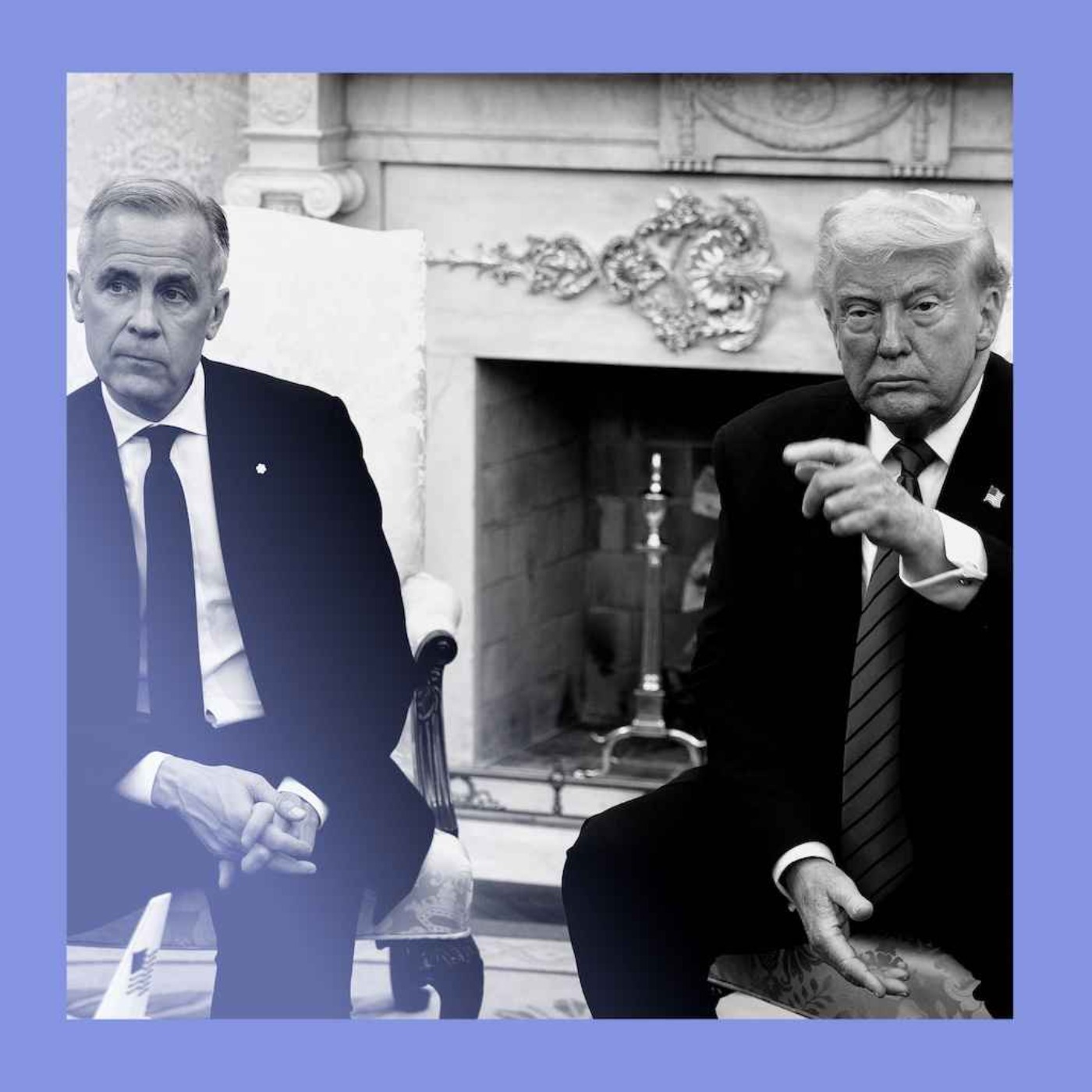
Tariffs are politically useful in a fiscal crisis because they function as a hidden consumption tax. They allow politicians to claim they're taxing foreigners and protecting the nation, while the revenue raised is insufficient to solve the debt problem and domestic consumers bear the cost.

Canada's defiant trade stance is strategically foolish. A wiser approach would be to emulate China's early playbook: play the supplicant while weak. By patiently absorbing expertise and building economic strength, a nation can position itself to make demands later from a position of power.
To counteract US trade barriers, Canada's long-term strategy involves removing its own internal trade barriers between provinces. This move is projected to boost GDP by a quarter of a trillion dollars, enough to offset even a complete breakdown of the US trade deal.
The US exports high-margin products like iPhones, generating significant shareholder value per dollar of trade. Canadian exports like timber have low margins. This makes the trade relationship far more beneficial to the US, contradicting the grievance narrative used to justify tariffs.

Far from being a precise tool against China, recent US tariffs act as a blunt instrument that harms America's own interests. They tax raw materials and machine tools needed for domestic production and hit allies harder than adversaries. This alienates partners, disrupts supply chains, and pushes the world towards a 'World Minus One' economic coalition excluding the US.
