Get your free personalized podcast brief
We scan new podcasts and send you the top 5 insights daily.
Facing Nvidia's near-total capture of AI data center revenue growth since 2022, AMD CEO Lisa Su made a "bet the farm" move. By granting OpenAI warrants for up to 10% of AMD, she aims to secure a critical design win for their next-gen chip, validating it as a viable competitor to Nvidia.
Related Insights
Amidst fears of an AI bubble, AMD CEO Lisa Su's core strategy is aggressive investment. She argues that for a generational opportunity like AI, the danger of being too cautious and falling behind far outweighs the financial risk of overinvesting in the short term.

Nvidia's staggering revenue growth and 56% net profit margins are a direct cost to its largest customers (AWS, Google, OpenAI). This incentivizes them to form a defacto alliance to develop and adopt alternative chips to commoditize the accelerator market and reclaim those profits.

Tech giants often initiate custom chip projects not with the primary goal of mass deployment, but to create negotiating power against incumbents like NVIDIA. The threat of a viable alternative is enough to secure better pricing and allocation, making the R&D cost a strategic investment.

Despite losing money, OpenAI leveraged its massive user base to secure warrants for 10% of AMD. This contrasts with NVIDIA, who received equity in OpenAI, showcasing how user control dictates power in strategic partnerships, even with hardware giants.
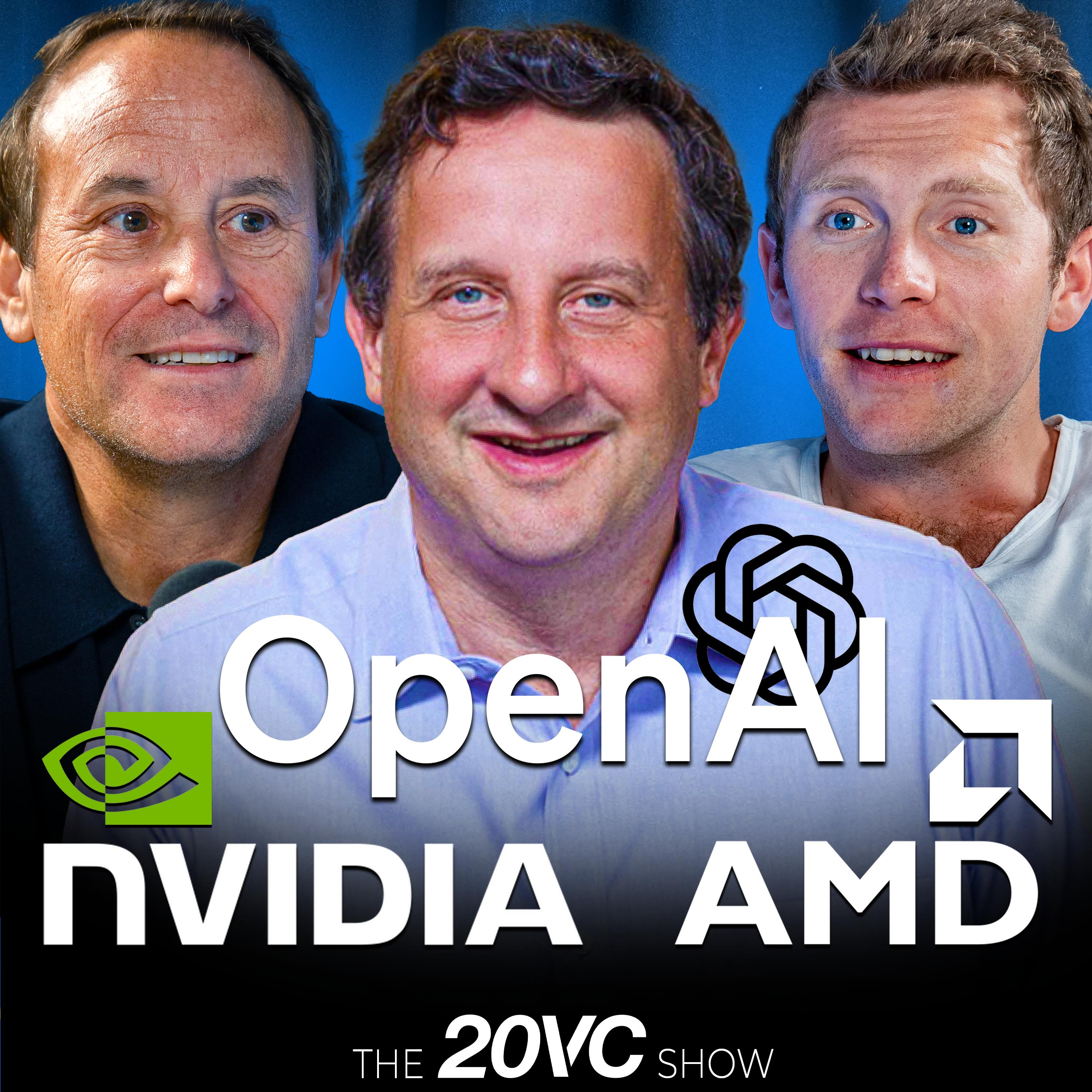
OpenAI is actively diversifying its partners across the supply chain—multiple cloud providers (Microsoft, Oracle), GPU designers (Nvidia, AMD), and foundries. This classic "commoditize your compliments" strategy prevents any single supplier from gaining excessive leverage or capturing all the profit margin.

Beyond capital, Amazon's deal with OpenAI includes a crucial stipulation: OpenAI must use Amazon's proprietary Trainium AI chips. This forces adoption by a leading AI firm, providing a powerful proof point for Trainium as a viable competitor to Nvidia's market-dominant chips and creating a captive customer for Amazon's hardware.

OpenAI's deal structures highlight the market's perception of chip providers. NVIDIA commanded a direct investment from OpenAI to secure its chips (a premium). In contrast, AMD had to offer equity warrants to OpenAI to win its business (a discount), reflecting their relative negotiating power.

Specialized chips (ASICs) like Google's TPU lack the flexibility needed in the early stages of AI development. AMD's CEO asserts that general-purpose GPUs will remain the majority of the market because developers need the freedom to experiment with new models and algorithms, a capability that cannot be hard-coded into purpose-built silicon.
Altman’s ability to secure massive deals, like getting Nvidia to co-sign loans for data centers, stems from the immense leverage ChatGPT's market dominance provides. Partners fear missing out on the key AI platform, compelling them into aggressive agreements they might otherwise avoid.
The deal isn't just about cloud credits; it's a strategic play to onboard OpenAI as a major customer for Amazon's proprietary Tranium AI chips. This helps Amazon compete with Nvidia by subsidizing a top AI lab to adopt and validate its hardware.
