Get your free personalized podcast brief
We scan new podcasts and send you the top 5 insights daily.
Critics frequently label the Russell index broken for mechanically divesting winners that outgrow small-cap thresholds while retaining stagnant performers. In practice, this forced rebalancing often protects returns by capturing parabolic momentum gains while automatically dodging subsequent post-peak collapses and accounting scandals.

Related Insights
A market-cap weighted index like the S&P 500 is, by its very structure, a momentum strategy. As a stock's price rises, its market cap increases, automatically boosting its weighting in the index. This forces passive investors to allocate more capital to outperforming stocks, a core tenet of momentum investing.

The structure of cap-weighted indices like the S&P 500 inherently favors recent winners. Massive, automatic inflows from passive investing amplify this momentum factor, concentrating risk in the largest companies rather than providing true diversification.
The RAFI Growth Index selects companies based on high percentage growth but weights them by the absolute dollar magnitude of that growth. This prevents tiny, speculative companies with explosive percentage gains from dominating the index, instead favoring firms with a larger, more stable economic impact.
The S&P 600 small-cap index has massively outperformed the more popular Russell 2000. The key difference is the S&P 600's requirement for profitability, which screens out speculative, pre-revenue "junk" companies that drag down the Russell 2000's returns, especially during speculative bubbles.
While Berkshire Hathaway is built for durability, the S&P 500 index possesses a unique long-term advantage: its self-cleansing mechanism. As dominant companies inevitably falter over centuries (e.g., NVIDIA), the index automatically replaces them with the next generation of winners. This constant rejuvenation could make the index a more resilient investment over an extremely long timeframe.

Owning a broad, cap-weighted index fund eliminates the need to predict market winners. As dominant companies like Sears fade, they are replaced by innovators like Amazon. The index automatically adjusts, selling off losers and increasing holdings in rising stars, ensuring you always own the future.

When markets are top-heavy and expensive, like in 2000, the concentration risk of market-cap weighting is severe. In the 13 years after the dot-com peak, while the S&P 500 went nowhere, its equal-weighted version doubled, highlighting a powerful de-risking strategy.
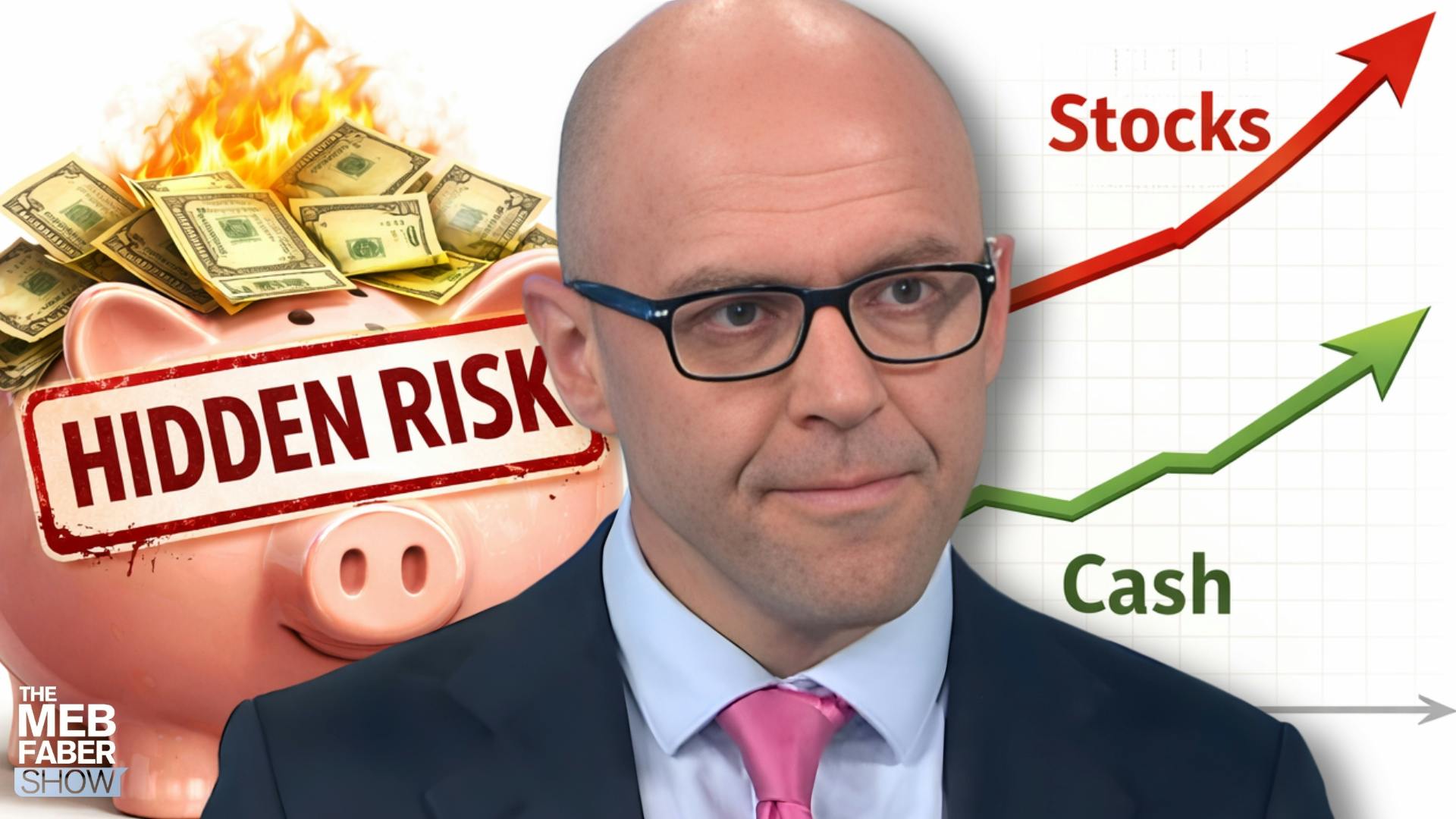
By design, market capitalization-weighted indices increase allocations to assets as their prices rise. This forces investors to continuously buy more of what has already performed well, leading to concentration in popular, often expensive, assets and sectors from the previous market cycle.

Stocks that are added to an index and later removed (a "flip-flop") systematically damage returns. The index buys after a 75% run-up but sells after a 70% drop. Because the index investor missed the initial gain but participates fully in the loss, the net effect is a significant performance drag.
A fundamental index like RAFI systematically generates a "rebalancing alpha" by weighting companies on economic size, not stock price. This forces it to trim stocks whose prices have soared relative to fundamentals and buy those that have fallen. This discipline leads to consistent outperformance over cap-weighted value indexes.