Get your free personalized podcast brief
We scan new podcasts and send you the top 5 insights daily.
A fundamental index like RAFI systematically generates a "rebalancing alpha" by weighting companies on economic size, not stock price. This forces it to trim stocks whose prices have soared relative to fundamentals and buy those that have fallen. This discipline leads to consistent outperformance over cap-weighted value indexes.
Related Insights
A market-cap weighted index like the S&P 500 is, by its very structure, a momentum strategy. As a stock's price rises, its market cap increases, automatically boosting its weighting in the index. This forces passive investors to allocate more capital to outperforming stocks, a core tenet of momentum investing.

The RAFI Growth Index selects companies based on high percentage growth but weights them by the absolute dollar magnitude of that growth. This prevents tiny, speculative companies with explosive percentage gains from dominating the index, instead favoring firms with a larger, more stable economic impact.
Market-cap-weighted indexes create a perverse momentum loop. As a stock's price rises, its weight in the index increases, forcing new passive capital to buy more of it at inflated prices. This mechanism is the structural opposite of a value-oriented 'buy low, sell high' discipline.
Owning a broad, cap-weighted index fund eliminates the need to predict market winners. As dominant companies like Sears fade, they are replaced by innovators like Amazon. The index automatically adjusts, selling off losers and increasing holdings in rising stars, ensuring you always own the future.

The performance gap between market-cap and equal-weight strategies is not random; it's cyclical and can last for over a decade. While market-cap has dominated recently (winning 8 of the last 11 years), this was preceded by a period where equal-weight won for 13 of the prior 15 years. Recognizing these long cycles is crucial for strategic allocation.

A fundamental index (RAFI) naturally creates a value tilt by reweighting companies to their economic footprint. Therefore, its performance should be measured against cap-weighted value indexes, not the total market. Against this proper benchmark, it has added over 2% per year in live performance.

When markets are top-heavy and expensive, like in 2000, the concentration risk of market-cap weighting is severe. In the 13 years after the dot-com peak, while the S&P 500 went nowhere, its equal-weighted version doubled, highlighting a powerful de-risking strategy.
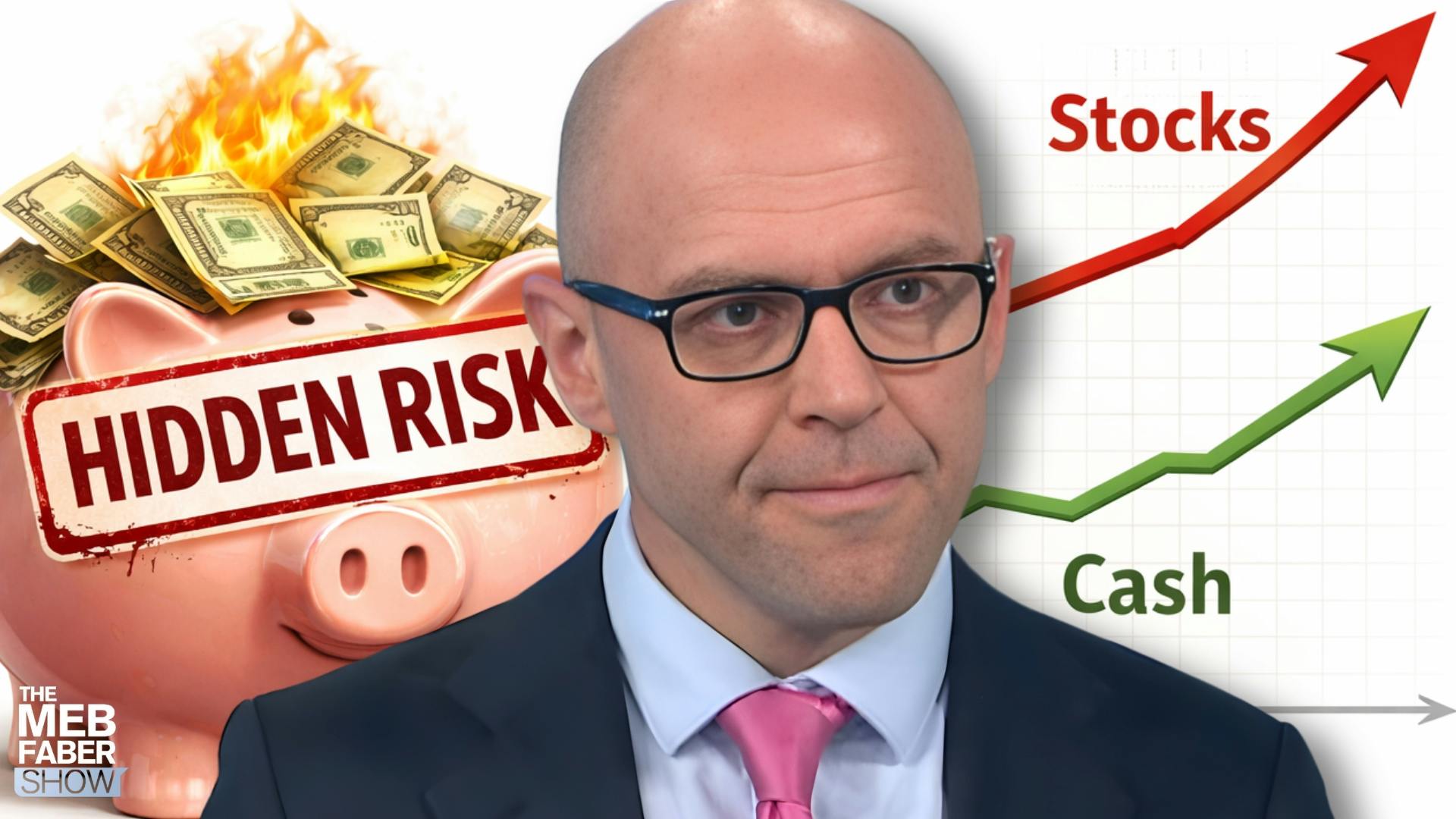
By design, market capitalization-weighted indices increase allocations to assets as their prices rise. This forces investors to continuously buy more of what has already performed well, leading to concentration in popular, often expensive, assets and sectors from the previous market cycle.

Market efficiency increases with company size and liquidity. Therefore, the excess returns (alpha) from investment factors like value are significantly larger in the inefficient micro-cap space. For large-caps, the market is so efficient that factor premiums are minimal, making low-cost indexing a superior strategy.

Market cap indexing acts like a basic trend-following system by buying more of what's rising. However, its Achilles' heel is the lack of a valuation anchor, causing investors to over-concentrate in expensive assets at market peaks. In high-valuation environments, almost any other weighting method, like equal-weight or value, is likely to outperform over the long term.