Get your free personalized podcast brief
We scan new podcasts and send you the top 5 insights daily.
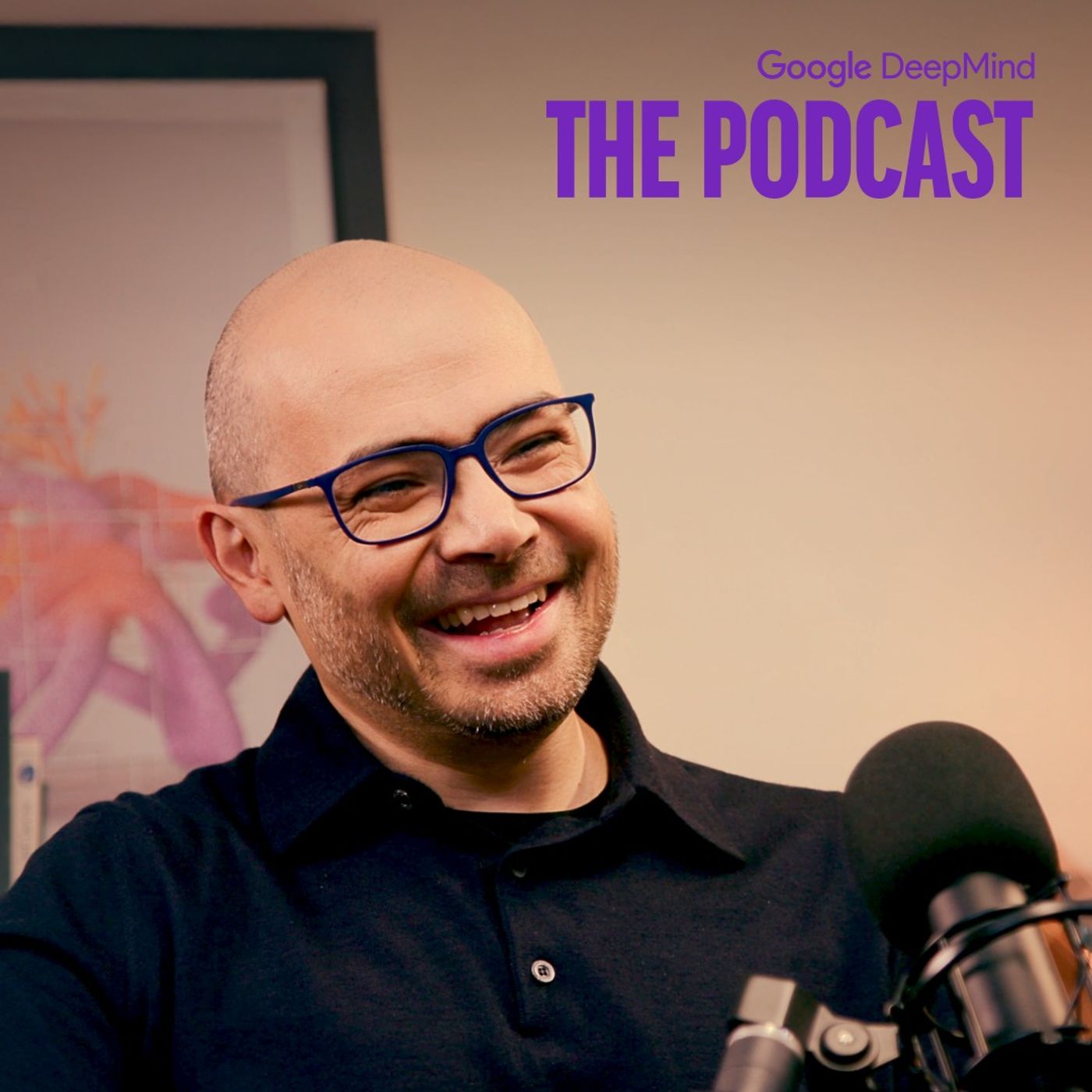
Google DeepMind's Demis Hassabis frames OpenAI's move into advertising as a 'tell' that contradicts claims of AGI being 'around the corner.' He argues that if a company truly believed in imminent, world-changing AGI, it wouldn't be distracted by building conventional ad products.

Related Insights
Demis Hassabis states that while current AI capabilities are somewhat overhyped due to fundraising pressures on startups, the medium- to long-term transformative impact of the technology is still deeply underappreciated. This creates a disconnect between market perception and true potential.
Hassabis argues AGI isn't just about solving existing problems. True AGI must demonstrate the capacity for breakthrough creativity, like Einstein developing a new theory of physics or Picasso creating a new art genre. This sets a much higher bar than current systems.

The hype around an imminent Artificial General Intelligence (AGI) event is fading among top AI practitioners. The consensus is shifting to a "Goldilocks scenario" where AI provides massive productivity gains as a synergistic tool, with true AGI still at least a decade away.

Demis Hassabis argues against an LLM-only path to AGI, citing DeepMind's successes like AlphaGo and AlphaFold as evidence. He advocates for "hybrid systems" (or neurosymbolics) that combine neural networks with other techniques like search or evolutionary methods to discover truly new knowledge, not just remix existing data.
If NVIDIA's CEO truly believed AGI was imminent, the most rational action would be to hoard his company's chips to build it himself. His current strategy of selling this critical resource to all players is the strongest evidence that he does not believe in a near-term superintelligence breakthrough.

There's a stark contrast in AGI timeline predictions. Newcomers and enthusiasts often predict AGI within months or a few years. However, the field's most influential figures, like Ilya Sutskever and Andrej Karpathy, are now signaling that true AGI is likely decades away, suggesting the current paradigm has limitations.
By focusing PR on scientific breakthroughs like protein folding, Google DeepMind and Demis Hassabis build public trust. This strategy contrasts sharply with OpenAI's narrative, which is clouded by its controversial non-profit-to-for-profit shift, creating widespread public skepticism.
Demis Hassabis points out a paradox: if a company truly believes AGI is imminent, a world-changing technology, focusing on an advertising business model seems shortsighted. He suggests this focus on ads is a "tell" that reveals their AGI timeline might be more marketing than reality.
DeepMind CEO Demis Hassabis's denial of ads in Gemini, despite reports of a future rollout, is a tactical move. By positioning Gemini as a premium, ad-free alternative, Google aims to capture market share from ChatGPT as OpenAI introduces ads, exploiting a potential weakness in user experience.

Demis Hassabis reveals his original vision was to keep AI in the lab longer to solve fundamental scientific problems, like curing cancer. The unexpected commercial success of chatbots created an intense 'race condition' that altered this 'purer' scientific path, bringing both challenges and a massive influx of resources.