Get your free personalized podcast brief
We scan new podcasts and send you the top 5 insights daily.
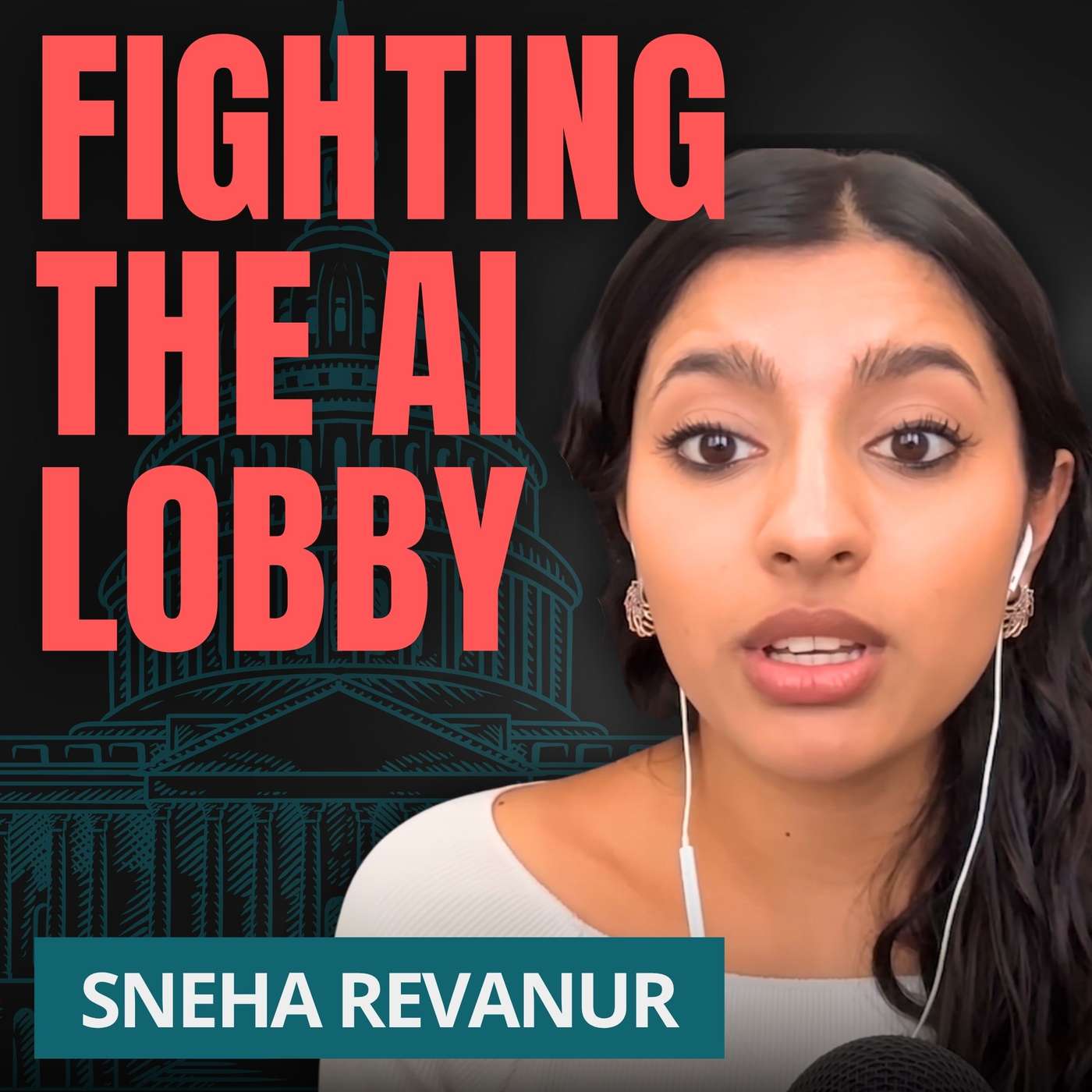
AI policy advocate Sneha Revanur frames the 2028 U.S. presidential election as potentially the most important in history. The person elected could be in charge during a rapid intelligence explosion, making world-historic decisions about AI and potentially wielding superintelligence itself.
Related Insights
By 2028, the primary American political issue will shift from traditional economics and foreign policy to the societal impact of AI. The election will become a referendum on whether AI's benefits are broadly shared or if it has only enriched a small Silicon Valley elite at the expense of national employment.

With widespread public anxiety about AI and a lack of clear federal leadership, there is a significant political opening. A candidate who can articulate a sensible vision for AI regulation—one that protects citizens while fostering innovation—could capture the attention of a worried electorate.

The path to surviving superintelligence is political: a global pact to halt its development, mirroring Cold War nuclear strategy. Success hinges on all leaders understanding that anyone building it ensures their own personal destruction, removing any incentive to cheat.

The first entity to achieve AGI could see it self-improve at an exponential rate, potentially achieving 20,000 years of progress overnight. This concept of "fast takeoff" makes any delay in the AI race, even for regulatory reasons, a potentially catastrophic strategic error.

Before AI potentially diminishes human influence, we are in a unique historical moment where a few key individuals have immense leverage to shape the future. This creates a high-stakes period of heroic (or villainous) action.

A cynical explanation for the race to build superintelligence is the immense power it would confer. The controller could develop technologies so advanced they would have a decisive advantage over all other global actors, akin to a group with guns facing one with swords.

While a fast AI takeoff accelerates some risks, slower, more gradual AI progress still enables dangerous power concentration. Scenarios like a head of state subverting government AIs for personal loyalty or gradual economic disenfranchisement do not depend on a single company achieving a sudden, massive capability lead.

By constantly comparing AI's power to nuclear weapons, tech leaders are making a powerful argument against their own independence. If the technology is truly an existential threat, it logically follows that it should be government-controlled for national security, not managed by venture-backed startups.
The scale of the AI revolution, seen by some analysts as bigger than the internet, is creating existential fear among governments. They worry that foundational AI models will become society-level institutions they don't control. This fear, more than just economic competition, is driving the global push for sovereign AI initiatives.

OpenAI CEO Sam Altman has publicly stated a timeline for AI to conduct AI research autonomously, aiming for an intern-level researcher by 2026 and a fully automated one by 2028. This could massively accelerate AI progress and lead to an intelligence explosion.