Get your free personalized podcast brief
We scan new podcasts and send you the top 5 insights daily.
Future Teslas will contain powerful AI inference chips that sit idle most of the day, creating an opportunity for a distributed compute network. Owners could opt-in to let Tesla use this power for external tasks, earning revenue that offsets electricity costs or the car itself.

Related Insights
The vast network of consumer devices represents a massive, underutilized compute resource. Companies like Apple and Tesla can leverage these devices for AI workloads when they're idle, creating a virtual cloud where users have already paid for the hardware (CapEx).

By integrating Starlink satellite connectivity directly into its cars, Tesla can solve for internet outages that cripple competitors. This creates a powerful moat, ensuring its fleet remains operational and potentially creating a new licensable mesh network for other vehicles.
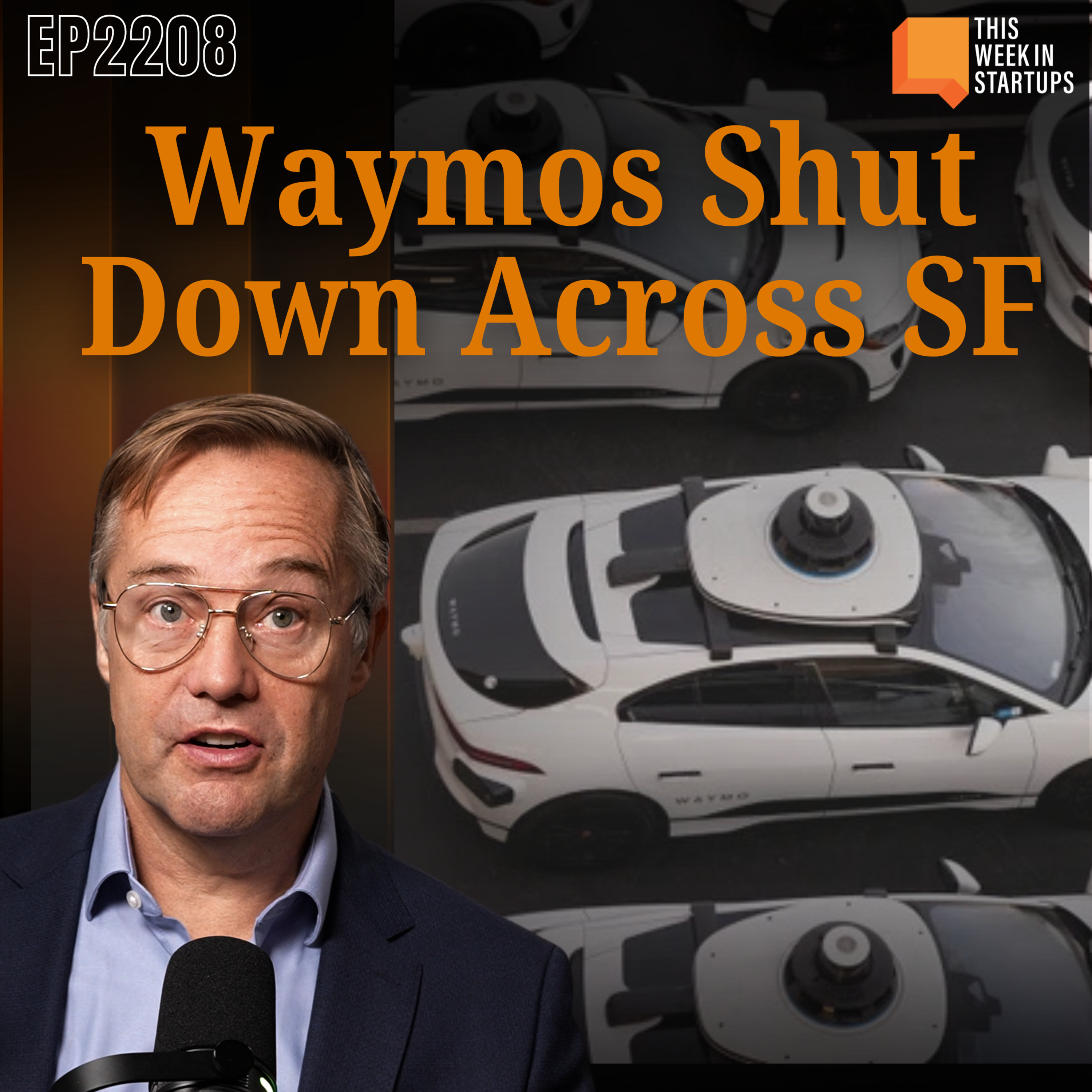
Musk envisions a future where a fleet of 100 million Teslas, each with a kilowatt of inference compute, built-in power, cooling, and Wi-Fi, could be networked together. This would create a massive, distributed compute resource for AI tasks.
Apple crushed competitors by creating its M-series chips, which delivered superior performance through tight integration with its software. Tesla is following this playbook by designing its own AI chips, enabling a cohesive and hyper-efficient system for its cars and robots.
Musk states that designing the custom AI5 and AI6 chips is his 'biggest time allocation.' This focus on silicon, promising a 40x performance increase, reveals that Tesla's core strategy relies on vertically integrated hardware to solve autonomy and robotics, not just software.
Elon Musk is personally overseeing the AI5 chip, a custom processor that deletes legacy GPU components. He sees this chip as the critical technological leap needed to power both the Optimus robot army and the autonomous Cybercab fleet, unifying their core AI stack.

As tech giants like Google and Amazon assemble the key components of the autonomy stack (compute, software, connectivity), the real differentiator becomes the ability to manufacture cars at scale. Tesla's established manufacturing prowess is a massive advantage that others must acquire or build to compete.
Tesla's decision to stop developing its Dojo training supercomputer is not a failure. It's a strategic shift to focus on designing hyper-efficient inference chips for its vehicles and robots. This vertical integration at the edge, where real-world decisions are made, is seen as more critical than competing with NVIDIA on training hardware.

To achieve scalable autonomy, Flywheel AI avoids expensive, site-specific setups. Instead, they offer a valuable teleoperation service today. This service allows them to profitably collect the vast, diverse datasets required to train a generalizable autonomous system, mirroring Tesla's data collection strategy.

Tesla's latest master plan signals a philosophical pivot from mere sustainability to 'sustainable abundance.' The new vision is to leverage AI, automation, and manufacturing scale to overcome fundamental societal constraints in energy, labor, and resources, rejecting a zero-sum view of growth.
