Get your free personalized podcast brief
We scan new podcasts and send you the top 5 insights daily.
While antibody-drug conjugates (ADCs) are an exciting frontier in endometrial cancer, a critical challenge is emerging: determining optimal duration for maintenance therapies. Experts are concerned about committing patients to long-term, potentially toxic treatments without clear stopping rules, a key question for future trials.

Related Insights
Instead of a single cure, the goal is to create a "cancer treatment framework." This involves sequencing different ADCs with varied mechanisms of action to overcome resistance as it develops. This approach aims to transform cancer from a terminal diagnosis into a manageable, long-term condition.

A defining characteristic of antibody-drug conjugates is not just their response rate, but their remarkable duration of response. Patients who respond often maintain that response for a significantly longer period than with standard chemotherapy, a benefit likely attributable to the ADC's effect on the tumor microenvironment.

Experts are cautious about using ADCs as long-term frontline maintenance therapy in ovarian cancer. Unlike oral PARPs, prolonged administration of these potent chemotherapies could cause cumulative toxicities, especially bone marrow suppression, potentially rendering patients unable to tolerate essential treatments upon relapse.

As various maintenance therapies (immunotherapy, ADCs) are integrated into endometrial cancer treatment, the next major clinical question is defining how long these agents need to be continued to maximize benefit while minimizing long-term toxicity and patient burden.

Despite significant interest, circulating tumor DNA (ctDNA) is not yet an actionable tool for guiding the duration of maintenance immunotherapy in endometrial cancer. While studies like DuoE show ctDNA levels correlate with outcomes, there is no evidence to support using its clearance to decide when to stop treatment. It remains a prognostic, not a predictive, biomarker for this purpose.

Success with shorter, fixed-duration ADC regimens in perioperative bladder cancer trials is prompting oncologists to evolve their thinking in the metastatic setting. The conversation is shifting away from indefinite treatment towards stopping therapy earlier for patients with deep responses.

As multiple effective Antibody-Drug Conjugates (ADCs) become available, the primary clinical challenge is no longer *if* they work, but *how* to use them best. Key unanswered questions involve optimal sequencing, dosing for treatment versus maintenance, and overall length of therapy, mirroring issues already seen in breast cancer.
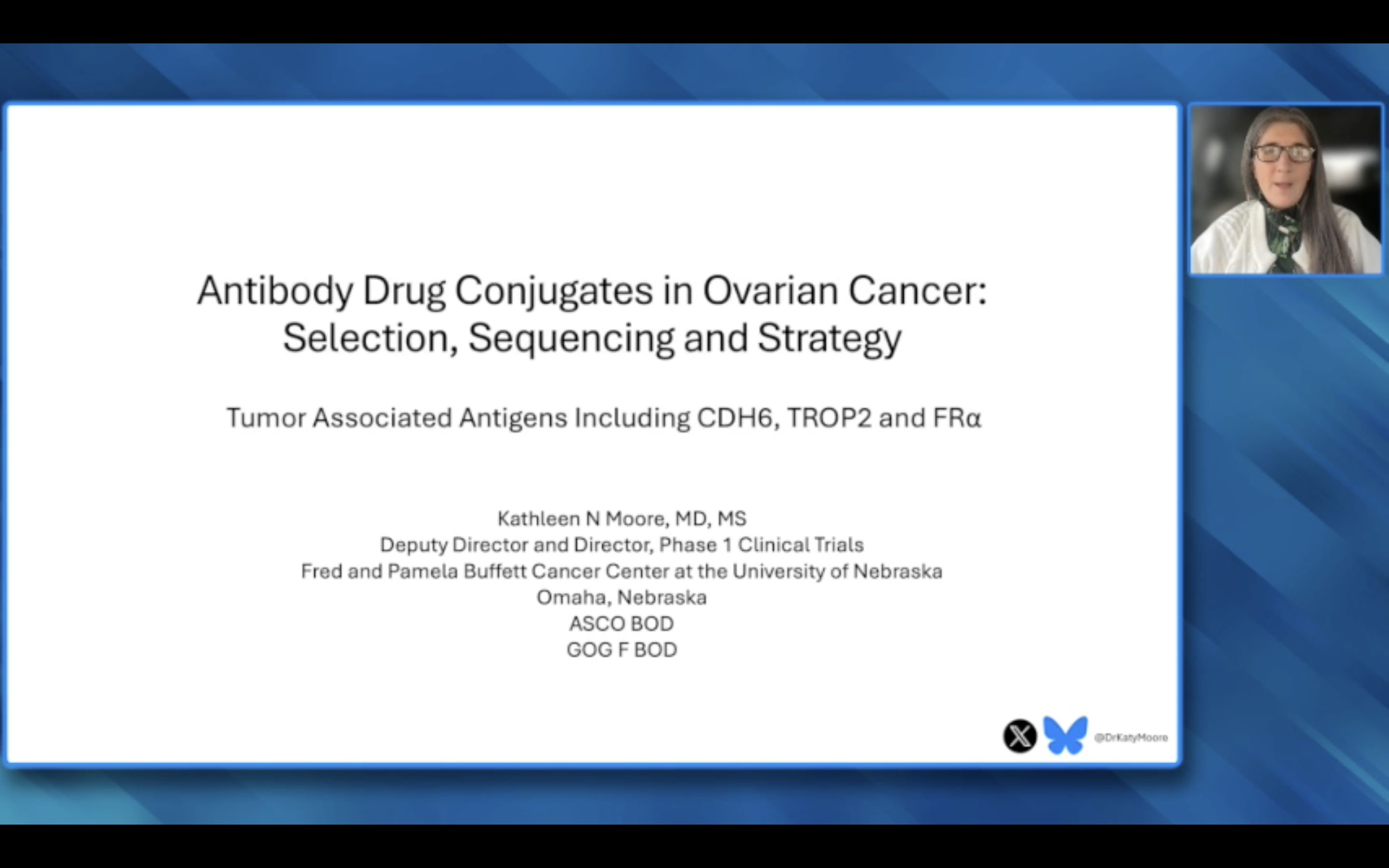
A high-level discussion among experts reveals a growing debate about the long-term use of antibody-drug conjugates (ADCs). They question whether the benefits of continuous chemotherapy delivery outweigh the cumulative and novel toxicities, suggesting a need for a more balanced approach to treatment duration.

While circulating tumor DNA (ctDNA) is currently hard to act on for escalating treatment, its most promising near-term application may be in identifying patients who can safely stop or reduce therapy, rather than determining when to start it.
As potent ADCs prove effective, the current paradigm of treating until disease progression is unsustainable due to cumulative toxicity. Experts urge trial designers to be "brave" and prospectively investigate optimal, fixed treatment durations sooner rather than later, shifting the goal from indefinite therapy to achieving a deep remission.