Get your free personalized podcast brief
We scan new podcasts and send you the top 5 insights daily.
As various maintenance therapies (immunotherapy, ADCs) are integrated into endometrial cancer treatment, the next major clinical question is defining how long these agents need to be continued to maximize benefit while minimizing long-term toxicity and patient burden.

Related Insights
As more effective treatments for desmoid tumors become available, a critical unmet need is emerging: knowing when to stop therapy. Future research must focus on identifying signals, such as radiologic changes on MRI, to guide treatment duration. This will help clinicians avoid both the risk of early relapse from stopping too soon and the toxicity of unnecessary overtreatment.

Experts are cautious about using ADCs as long-term frontline maintenance therapy in ovarian cancer. Unlike oral PARPs, prolonged administration of these potent chemotherapies could cause cumulative toxicities, especially bone marrow suppression, potentially rendering patients unable to tolerate essential treatments upon relapse.

Traditional endpoints like progression-free survival (PFS) incentivize continuous treatment. The NCI group proposes "treatment-free survival," a novel metric that quantifies time spent *off* therapy. This endpoint better captures the patient experience and rewards treatments that provide durable responses after a finite course.
Despite significant interest, circulating tumor DNA (ctDNA) is not yet an actionable tool for guiding the duration of maintenance immunotherapy in endometrial cancer. While studies like DuoE show ctDNA levels correlate with outcomes, there is no evidence to support using its clearance to decide when to stop treatment. It remains a prognostic, not a predictive, biomarker for this purpose.
The future of GYN oncology immunotherapy is diverging. For responsive cancers like endometrial, the focus is on refining biomarkers and overcoming resistance. For historically resistant cancers like ovarian, the strategy shifts to using combinatorial approaches (e.g., CAR-NKs, vaccines) to fundamentally alter the tumor microenvironment itself, making it more receptive to an immune response.
The next frontier in CSCC isn't just about new drugs, but about optimizing existing ones. A key research area is determining the minimum number of immunotherapy doses required for an optimal response—potentially just one or two—to limit toxicity, reduce treatment burden, and personalize care for high-risk patients.
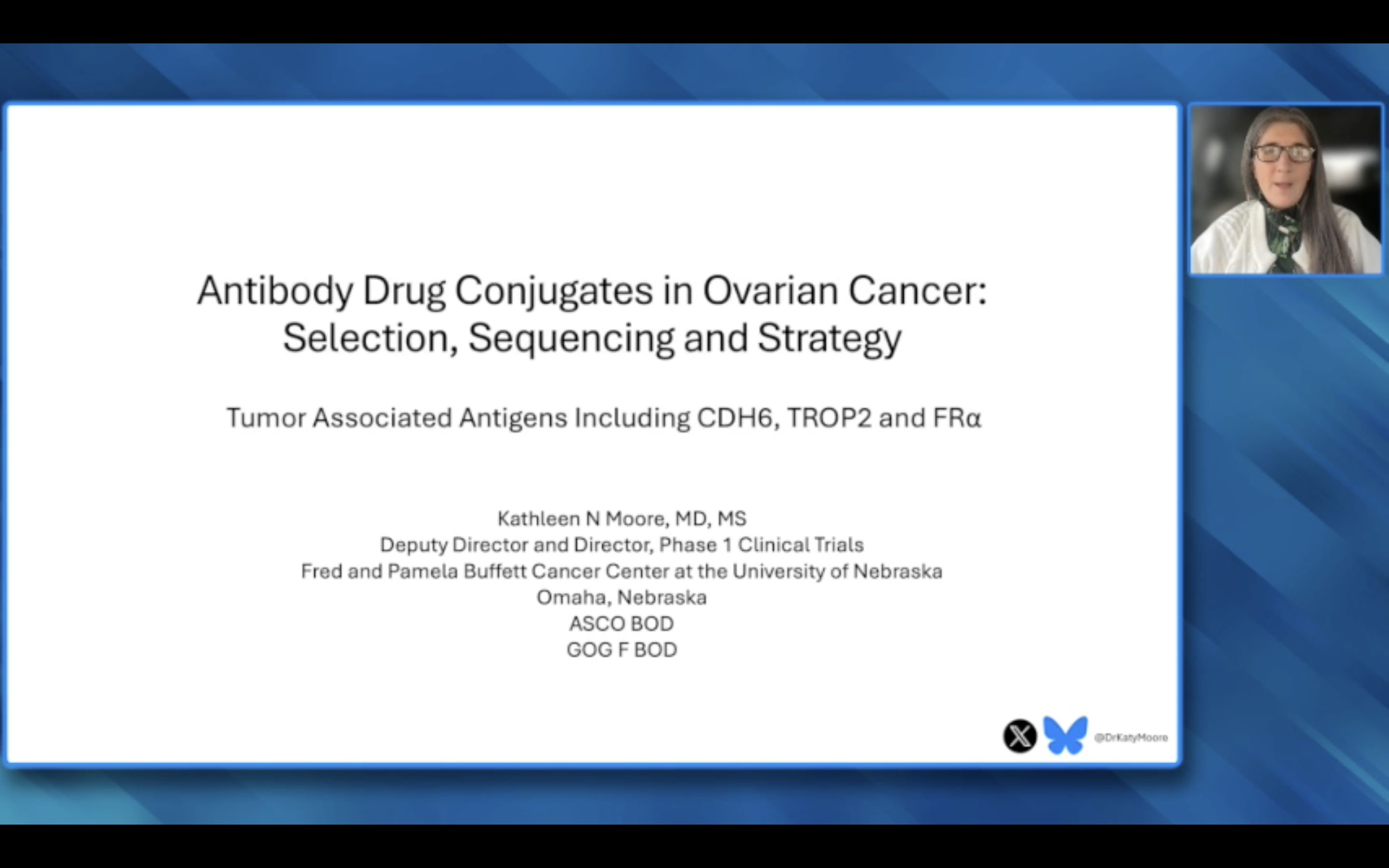
As multiple effective Antibody-Drug Conjugates (ADCs) become available, the primary clinical challenge is no longer *if* they work, but *how* to use them best. Key unanswered questions involve optimal sequencing, dosing for treatment versus maintenance, and overall length of therapy, mirroring issues already seen in breast cancer.
There is no standard duration for systemic therapies like niragacestat. Clinicians often aim for 6-12 months, potentially extending to two years. The decision to stop is subjective and arbitrary, balancing treatment side effects against disease symptoms, highlighting the need for individualized approaches rather than fixed protocols.

While circulating tumor DNA (ctDNA) is currently hard to act on for escalating treatment, its most promising near-term application may be in identifying patients who can safely stop or reduce therapy, rather than determining when to start it.
While checkpoint inhibitors are standard for dMMR endometrial cancer, a clear clinical boundary is emerging for the pMMR subgroup. Based on trial data showing no benefit for fully resected disease (e.g., B21 trial), oncologists are not offering immunotherapy to pMMR patients without measurable disease, avoiding significant toxicity without proven efficacy.