Get your free personalized podcast brief
We scan new podcasts and send you the top 5 insights daily.
To cut through complexity when evaluating a new thesis, Josh Wolf uses the blunt, two-word question, "What sucks?" This approach led Lux Capital to identify nuclear waste as the core problem and investment opportunity in the nuclear industry.
![[REPLAY] Josh Wolfe – Seeing the Lux (Capital Allocators, EP.65) thumbnail](https://static.libsyn.com/p/assets/f/b/7/6/fb76e1c8bfb69e8dd959afa2a1bf1c87/CA_Square_logo_light_background_6.26.24.jpg)
Related Insights
Common investment 'rules of thumb,' like avoiding tools businesses, are often based on outdated pattern matching and can cause VCs to miss generational companies like Canva. Instead of relying on these heuristics, investors should use first-principles thinking to analyze why a product truly needs to exist, conducting their own research to find the underlying truth.
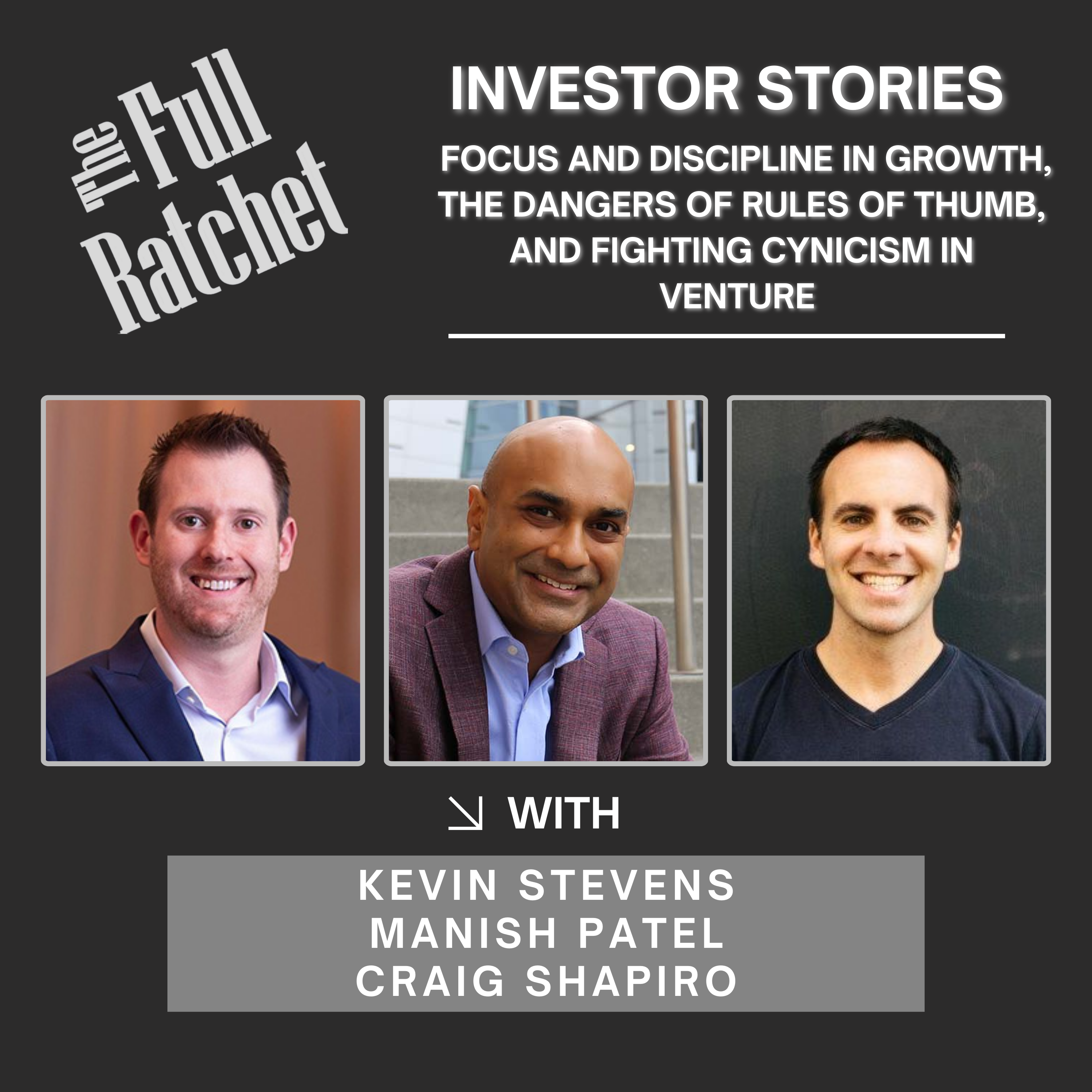
Investors don't need deep domain expertise to vet opportunities in complex industries. By breaking a problem down to its fundamentals—such as worker safety, project costs, and labor shortages in construction—the value of a solution becomes self-evident, enabling confident investment decisions.

Instead of tackling multiple downstream symptoms, identify and solve the single upstream "lead domino" problem. For example, making energy abundant and cheap through nuclear power makes complex challenges like recycling and carbon capture economically and technically feasible, rather than performative, inefficient gestures.

Daniel Ek shares a core principle from his co-founder: a company's value isn't its product or technology, but the cumulative total of all problems it solves for customers. This mental model reframes difficult challenges as direct opportunities to create significant value.

Sun Tzu's "Art of War" is largely written in the negative ("don't do this"), a "via negativa" approach. This simplifies decision-making by focusing on eliminating obvious errors. In investing, this translates to using checklists of past failures to avoid ruin, ensuring that what remains is the only viable path to take.
Bill Conway of The Carlyle Group challenged Lux Capital's founders with two critical questions: Why does the world need another venture fund, and what will be your durable competitive advantage against giants like Sequoia and Kleiner? Answering these defined their strategy.
Investor Chris Reisach argues that if an investment doesn't make sense to you, the problem likely lies with the business, not your intellect. He advises junior VCs to trust their confusion as an adverse signal. A founder's inability to clearly articulate their vision is a fundamental flaw, and investing without true conviction is a recipe for failure.

Maintain a running list of problems you encounter. If a problem persists and you keep running into it after a year, it's a strong signal for a potential business idea. This "aging" process filters out fleeting frustrations from genuinely persistent, valuable problems.

Before committing capital, professional investors rigorously challenge their own assumptions. They actively ask, "If I'm wrong, why?" This process of stress-testing an idea helps avoid costly mistakes and strengthens the final thesis.

To foster contrarian thinking and prevent groupthink, Lux Capital allows each investment partner one "silver bullet" per fund. This enables a partner with deep conviction to make an investment even without team consensus, mitigating the risk of missing a brilliant, non-obvious opportunity.