Get your free personalized podcast brief
We scan new podcasts and send you the top 5 insights daily.
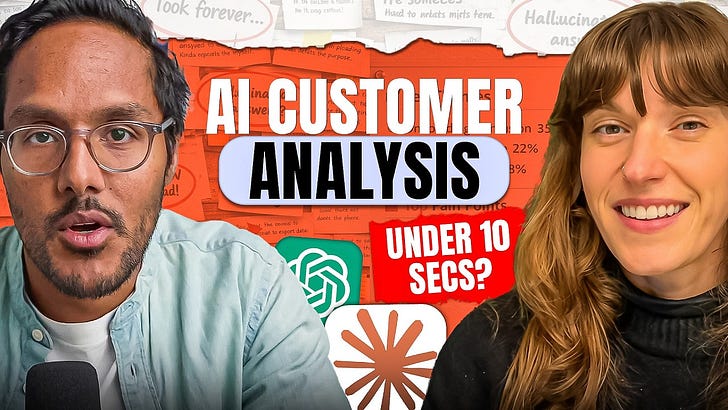
Large transcript files often hit LLM token limits. Converting them into structured markdown files not only circumvents this issue but also improves the model's analytical accuracy. The structure helps the AI handle the data more effectively than a raw text transcript.
Related Insights
Instead of manually taking notes during research, use an LLM with a large context window (like Gemini) to process long video transcripts. This creates a searchable, summarized chat from hours of content, allowing you to quickly pull key points and unique perspectives for your own writing.

Instead of one large context file, create a library of small, specific files (e.g., for different products or writing styles). An index file then guides the LLM to load only the relevant documents for a given task, improving accuracy, reducing noise, and allowing for 'lazy' prompting.

The most effective use of AI in content is not generating generic articles. Instead, feed it unique primary sources like expert interview transcripts or customer call recordings. Ask it to extract key highlights and structure a detailed outline, pairing human insight with AI's summarization power.

When using LLMs to analyze unstructured data like interview transcripts, they often hallucinate compelling but non-existent quotes. To maintain integrity, always include a specific prompt instruction like "use quotes and cite your sources from the transcript for each quote." This forces the AI to ground its analysis in actual data.

Standard file formats like .docx and .pptx are filled with complex code that LLMs struggle to parse. To build effective AI workflows, companies must create deliverables in formats that are both human-readable and AI-friendly. HTML is a prime example, as it is visually appealing for people and easily ingested by AI.

The high-volume feedback during a mastermind "hot seat" can be overwhelming. A simple solution is to record the audio, run it through an AI transcription service, and generate a structured document. This creates an actionable summary, ensuring valuable insights are captured and not lost after the event.

Teams often agonize over which vector database to use for their Retrieval-Augmented Generation (RAG) system. However, the most significant performance gains come from superior data preparation, such as optimizing chunking strategies, adding contextual metadata, and rewriting documents into a Q&A format.
Long-running AI agent conversations degrade in quality as the context window fills. The best engineers combat this with "intentional compaction": they direct the agent to summarize its progress into a clean markdown file, then start a fresh session using that summary as the new, clean input. This is like rebooting the agent's short-term memory.

When building multi-agent systems, tailor the output format to the recipient. While Markdown is best for human readability, agents communicating with each other should use JSON. LLMs can parse structured JSON data more reliably and efficiently, reducing errors in complex, automated workflows.

Instead of a single massive prompt, first feed the AI a "context-only" prompt with background information and instruct it not to analyze. Then, provide a second prompt with the analysis task. This two-step process helps the LLM focus and yields more thorough results.