Get your free personalized podcast brief
We scan new podcasts and send you the top 5 insights daily.
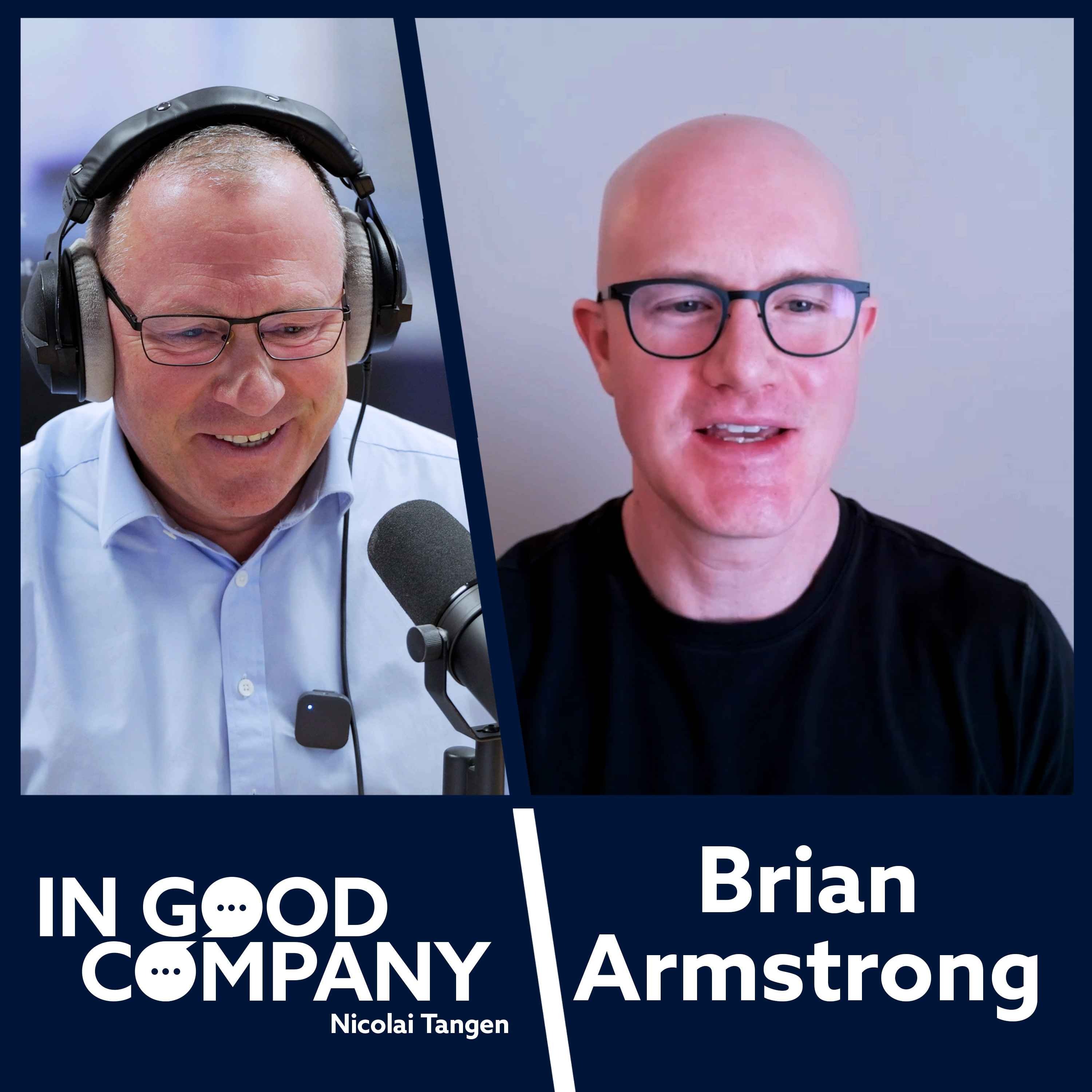
Brian Armstrong suggests his success is linked to a trait associated with the autism spectrum: a reduced concern for social cohesion. This allows him to ask seemingly "dumb" questions and pursue non-consensus ideas without fear of looking foolish, which is crucial for finding unique insights and driving innovation.
Related Insights
Wang connects his aversion to structured environments, like classrooms and corporate law, to a deep-seated anti-authoritarianism. This personality trait, which made him a poor traditional student, also drove him away from a conventional career and toward creating his own unique venture, the Queens Night Market, on his own terms.

The greatest predictor of entrepreneurial success isn't intellect or innate skill, but simply caring more than anyone else. This deep-rooted ambition and desire to succeed fuels the resilience and skill acquisition necessary to win.

The stereotype of the brilliant but socially awkward tech founder is misleading. Horowitz argues that the most successful CEOs like Mark Zuckerberg, Larry Page, and Elon Musk are actually "very smart about people." Those who truly lack the ability to understand others don't reach that level of success.

True innovation stems from cognitive and interest diversity. Pairing passionate people from disparate fields—like AI and cheese—sparks more creative conversations and breakthroughs than grouping people with similar interests, which merely creates an echo chamber.

To avoid stagnation, a business needs a leader with enough ownership to push an opinionated, semi-scary vision. This person acts as a necessary counterbalance to the natural inertia of a scaling company. According to Jason VandeBoom, without this "crazy" innovator, a business will inevitably stall in a rapidly changing market.

Using an LLM analogy, Daniel Ek seeks "high-temperature" people—individuals who might produce many bad ideas, but whose chaotic thinking also generates rare, brilliant insights. He prefers this variance to the reliable consistency of conformists, believing breakthroughs come from the fringe.

Successful individuals earn 'idiosyncrasy credit,' allowing them to deviate from social norms. However, observers often make the mistake of assuming these eccentricities were necessary for success. In reality, these behaviors are often tolerated or hidden until success provides the freedom to express them.

Beyond table stakes like hunger and vision, the most successful founders exhibit deep empathy ("people gene"), curiosity, and high emotional intelligence. They are secure, know their weaknesses, and often have a background in team sports, understanding that company building is a team effort.

Yang posits his 'gift' is not socializing well within elite circles. This detachment prevents him from internalizing their worldview, allowing him to instead rely on objective data and numbers to see future trends that others miss.

Neurodiverse individuals in the investment industry are often just called idiosyncratic or brilliant. Research frames neurodiversity as a superpower, enabling teams to analyze the same data from different perspectives. This cognitive friction is a pathway to generating alpha by seeing what homogenous teams miss.
