Get your free personalized podcast brief
We scan new podcasts and send you the top 5 insights daily.
Instead of building rigid in-app level editors or input forms for community content, developers can distribute an AI 'skill' directly to users. In Kath Korevec's dungeon crawler game, players install a skill that defines structural constraints (room dimensions, controls). Codex then builds custom rooms locally based on open-ended user prompts, enabling scalable, creative community contributions.

Related Insights
Instead of complex SDKs or custom code, users can extend tools like Cowork by writing simple Markdown files called "Skills." These files guide the AI's behavior, making customization accessible to a broader audience and proving highly effective with powerful models.
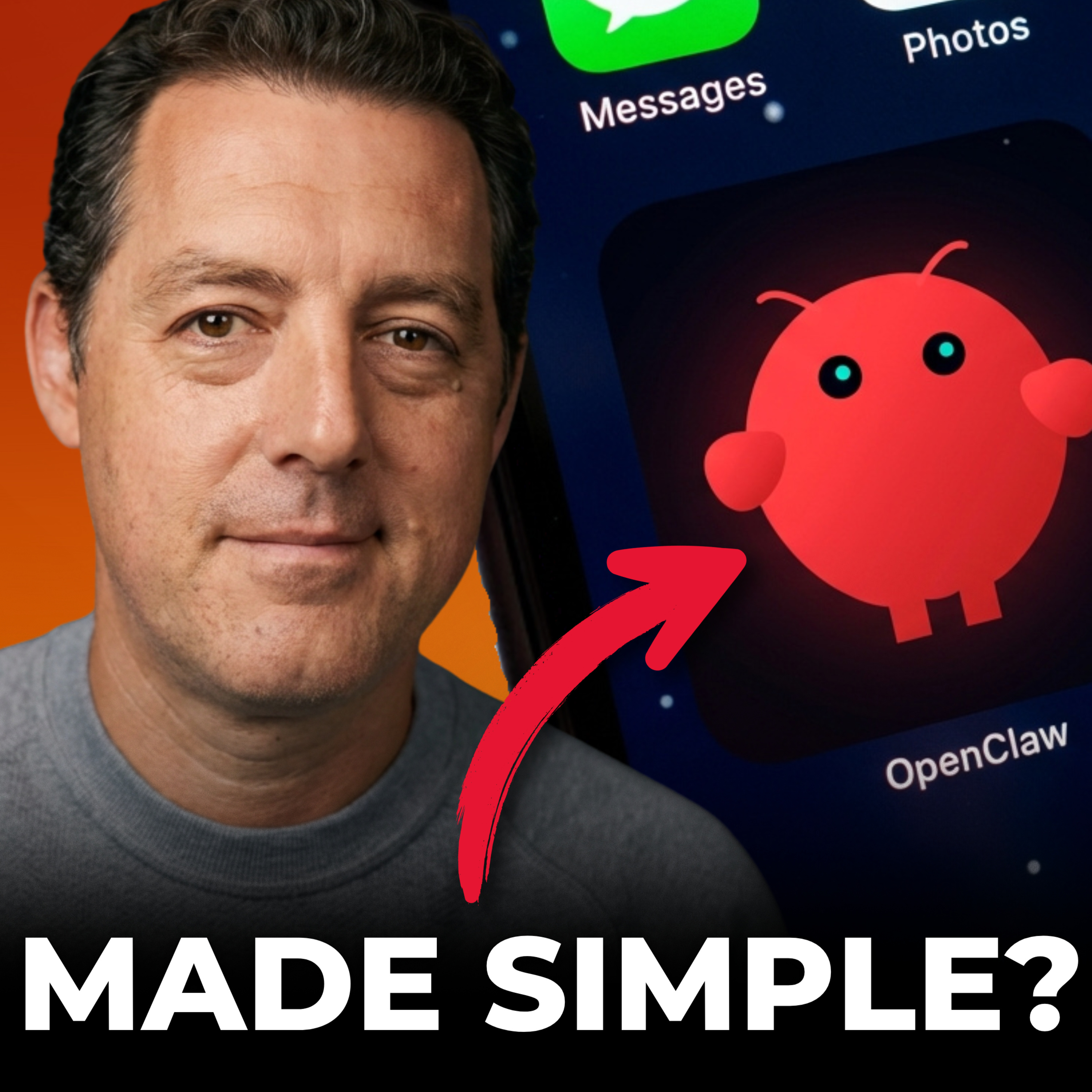
Agentic frameworks like OpenClaw are pioneering a new software paradigm where 'skills' act as lightweight replacements for entire applications. These skills are essentially instruction manuals or recipes in simple markdown files, combining natural language prompts with calls to deterministic code ('tools'), condensing complex functionality into a tiny, efficient format.
AI "skills" abstract complex API interactions into simple, accessible recipes. This lets domain experts (e.g., designers who know to use tokens for light/dark mode) codify their specialized knowledge, creating powerful, reusable building blocks for the entire community without requiring engineering knowledge.

"Skills" are not just documentation; they are reusable, machine-readable instruction manuals. They teach the broader Codex ecosystem how to properly interact with your app's "safe actions." Neglecting to create skills prevents other agents from effectively and autonomously using the application you've built.

Beyond using pre-made skills, users can simply prompt Claude to create a new skill for itself. The AI understands the required format and can generate the instructional text for a new capability, such as crafting marketing hooks that create FOMO. This democratizes the process of AI customization.

Enhancing an AI's capabilities doesn't always require coding or API integrations. A 'skill' can simply be a highly detailed, well-structured prompt. For example, a 'front end design' skill works by providing the AI with a comprehensive set of design principles, guiding it away from generic outputs.

The primary constraint on output is no longer a tool's capability but the user's skill in prompting it. This is exemplified by a developer who created a complex real-time strategy (RTS) game from scratch in one week by prompting an AI model, having not written a single line of code himself in two months.

The surprising success of Dia's custom "Skills" feature revealed a huge user demand for personalized tools. This suggests a key value of AI is enabling non-technical users to build "handmade software" for their specific, just-in-time needs, moving beyond one-size-fits-all applications.
For generative UI, designers move from defining exact layouts to creating a "skill" that guides the AI. This skill defines a design language, references tokens, and suggests best practices, steering the model's output without over-constraining it.
The founder of Memelord, a non-coder, published a functional skill for the OpenClaw agent framework by simply asking the agent how to do it. The agent wrote and published the skill itself, demonstrating a new paradigm where anyone can create and distribute software tools without writing code.