Get your free personalized podcast brief
We scan new podcasts and send you the top 5 insights daily.
Arguments that an academic's individual actions (like monetizing a newsletter) harm their entire institution's reputation are often grandiose and lack evidence. Such claims overstate the public's awareness of niche academic debates, making them an ineffective basis for ethical judgment.

Related Insights
The threshold for 'cancellable' behavior shifts for professions that require high public trust. For a network medical expert like Peter Attia, personal conduct that erodes credibility is a valid basis for dismissal, distinguishing it from punishing someone for their political views.

Academic incentive structures, like tenure and publishing in top journals, create self-contained ecosystems where success is defined by making clever moves within a niche debate. This system makes it difficult to externally evaluate the work's worth, as experts within the field will always validate it.
Individuals peripherally mentioned in scandals face significant professional and personal damage because the public often fails to differentiate degrees of involvement. An implication, however meaningless, can be enough for institutions to fire people and for reputations to be ruined, regardless of actual culpability.
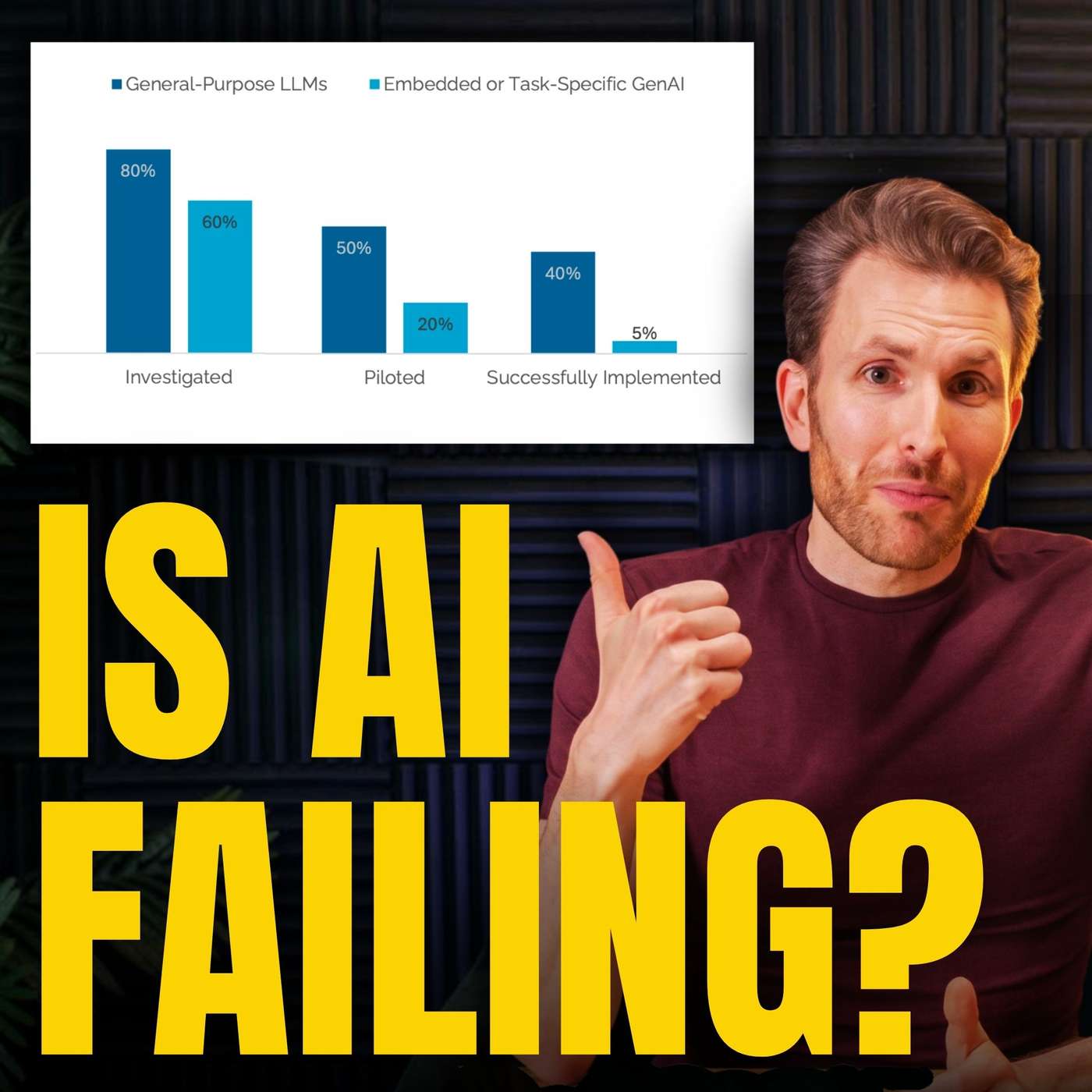
An "MIT study" on AI failures concluded the solution was "agentic AI frameworks," precisely the technology the authors were building and selling. This demonstrates how research, especially when not peer-reviewed, can function as sophisticated content marketing with an undisclosed conflict of interest, using institutional credibility to generate commercial leads.
Contrary to popular belief, publication in a top academic journal doesn't guarantee a study is correct. The social sciences lack the precise experimental validation of hard sciences, allowing incorrect theories to have "long legs and survive" due to a lack of rigorous, focused scrutiny from peers.

Unlike financial traders who can quickly reverse a bad position, institutions like government agencies and media outlets find retractions too costly to their status and careers. They often 'stand by' flawed work rather than admit error, creating a system that lacks the self-correcting mechanisms necessary for finding truth.

While commercial conflicts of interest are heavily scrutinized, the pressure on academics to produce positive results to secure their next large institutional grant is often overlooked. This intense pressure to publish favorably creates a significant, less-acknowledged form of research bias.

Academic philosophy often prioritizes technical correctness within a niche debate over broader resonance. Public philosophy (on platforms like Substack or podcasts) forces a different standard: whether an idea "rings true." This demand for resonance and an authentic voice is a crucial corrective to sterile academic discourse.
The public tends to personify complex institutions through one figure, such as Dr. Fauci representing "science." This makes the entire institution seem fallible if that person misspeaks or changes their mind, ignoring the broader consensus and internal debates among thousands of other experts.

Contrary to claims that monetizing public philosophy sullies academia, the fact that people are willing to pay demonstrates its value to a broader audience. This market validation can enhance the discipline's reputation, countering the perception that it is merely an irrelevant academic exercise.