Get your free personalized podcast brief
We scan new podcasts and send you the top 5 insights daily.
Companies are overcomplicating AI's role. It's not magic that alters basic business principles. It's simply a new tool to apply within the existing equation of applying a resource to a problem and measuring the outcome. The fundamentals of value delivery and measurement remain unchanged.

Related Insights
It's a mistake to make 'using AI' the strategy itself. Fundamental business drivers like customer lifetime value (LTV), retention, and engagement remain unchanged. AI is a powerful new method for influencing these timeless metrics, but it is not a replacement for a sound business strategy focused on customer value.

Implementing AI won't magically solve your problems. It acts as a powerful amplifier. In an agile company, it speeds up value creation. In a bureaucratic one, it aggressively exposes structural flaws, leadership gaps, and brittle decision-making processes.

Business owners should view AI not as a tool for replacement, but for multiplication. Instead of trying to force AI to replace core human functions, they should use it to make existing processes more efficient and to complement human capabilities. This reframes AI from a threat into a powerful efficiency lever.

AI's primary value isn't replacing employees, but accelerating the speed and quality of their work. To implement it effectively, companies must first analyze and improve their underlying business processes. AI can then be used to sift through data faster and automate refined workflows, acting as a powerful assistant.

AI isn't a technology to be applied to existing processes. It's a foundational layer, like an operating system, that fundamentally reshapes how businesses create value, make decisions, and operate. This perspective forces a complete rethink of strategy, not just an upgrade.

Adopting AI hasn't changed core business metrics like growth or retention. Its true value is in operational efficiency, allowing teams to analyze data more deeply. AI provides the ability to explore 'second and third level questions' and investigate previously inaccessible KPIs, improving the *how* without altering the *what*.

Businesses are unlikely to use powerful AI simply to shave a few percentage points off their software spend. The real, high-impact ROI comes from applying AI to improve core business operations, making the actual business more effective and efficient.

In the multiplayer game of business, giving every founder AI tools doesn't create a universal advantage. It simply shifts the competitive landscape. Success no longer depends on having the tool, but on being able to use it more effectively and strategically than everyone else.

The most effective AI companies don't try to automate everything. They ask which specific, repetitive task creates the most value when partially automated. This pragmatic approach delivers measurable results by using AI to augment human workers, not replace them.
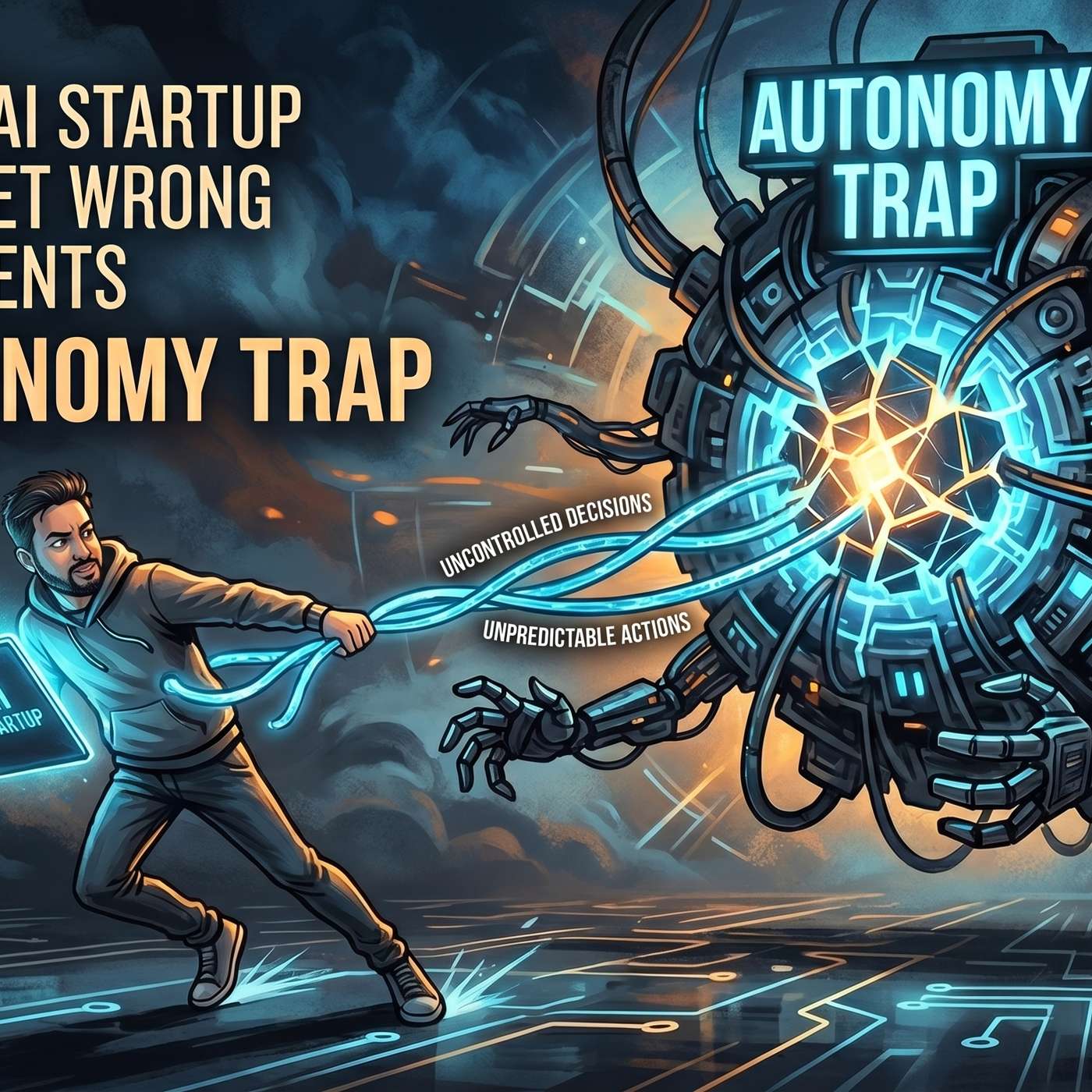
The widespread narrative presents AI as a magical, self-implementing solution. In reality, successful adoption requires using AI as a scalpel to solve a well-defined business problem, overseen by talented human experts, rather than as a magic wand applied broadly.