Get your free personalized podcast brief
We scan new podcasts and send you the top 5 insights daily.
The widespread narrative presents AI as a magical, self-implementing solution. In reality, successful adoption requires using AI as a scalpel to solve a well-defined business problem, overseen by talented human experts, rather than as a magic wand applied broadly.
Related Insights
The Cleveland Clinic's success shows that AI thrives when domain experts (doctors) act as product managers, defining the problem and guiding the tech. This ensures technology serves the core mission, preventing the pursuit of vendor-pushed "magic beans" and grounding solutions in operational reality.
Business owners should view AI not as a tool for replacement, but for multiplication. Instead of trying to force AI to replace core human functions, they should use it to make existing processes more efficient and to complement human capabilities. This reframes AI from a threat into a powerful efficiency lever.

Effective AI adoption isn't about force-fitting a new technology into a workflow. Leaders should start by identifying a significant business challenge, then assemble an agile team of business experts and technologists to apply AI as a targeted solution, ensuring the effort is driven by real-world value.

Despite hype in areas like self-driving cars and medical diagnosis, AI has not replaced expert human judgment. Its most successful application is as a powerful assistant that augments human experts, who still make the final, critical decisions. This is a key distinction for scoping AI products.

Successful AI strategy development begins by asking executives about their primary business challenges, such as R&D costs or time-to-market. Only after identifying these core problems should AI solutions be mapped to them. This ensures AI initiatives are directly tied to tangible value creation.

In AI's nascent stage, leaders shouldn't aim for a perfect multi-year strategy, as this indicates a misunderstanding of the evolving landscape. Instead, they should identify one or two key business challenges and pilot AI solutions for those specific use cases, learning and adapting along the way.

The most effective AI companies don't try to automate everything. They ask which specific, repetitive task creates the most value when partially automated. This pragmatic approach delivers measurable results by using AI to augment human workers, not replace them.
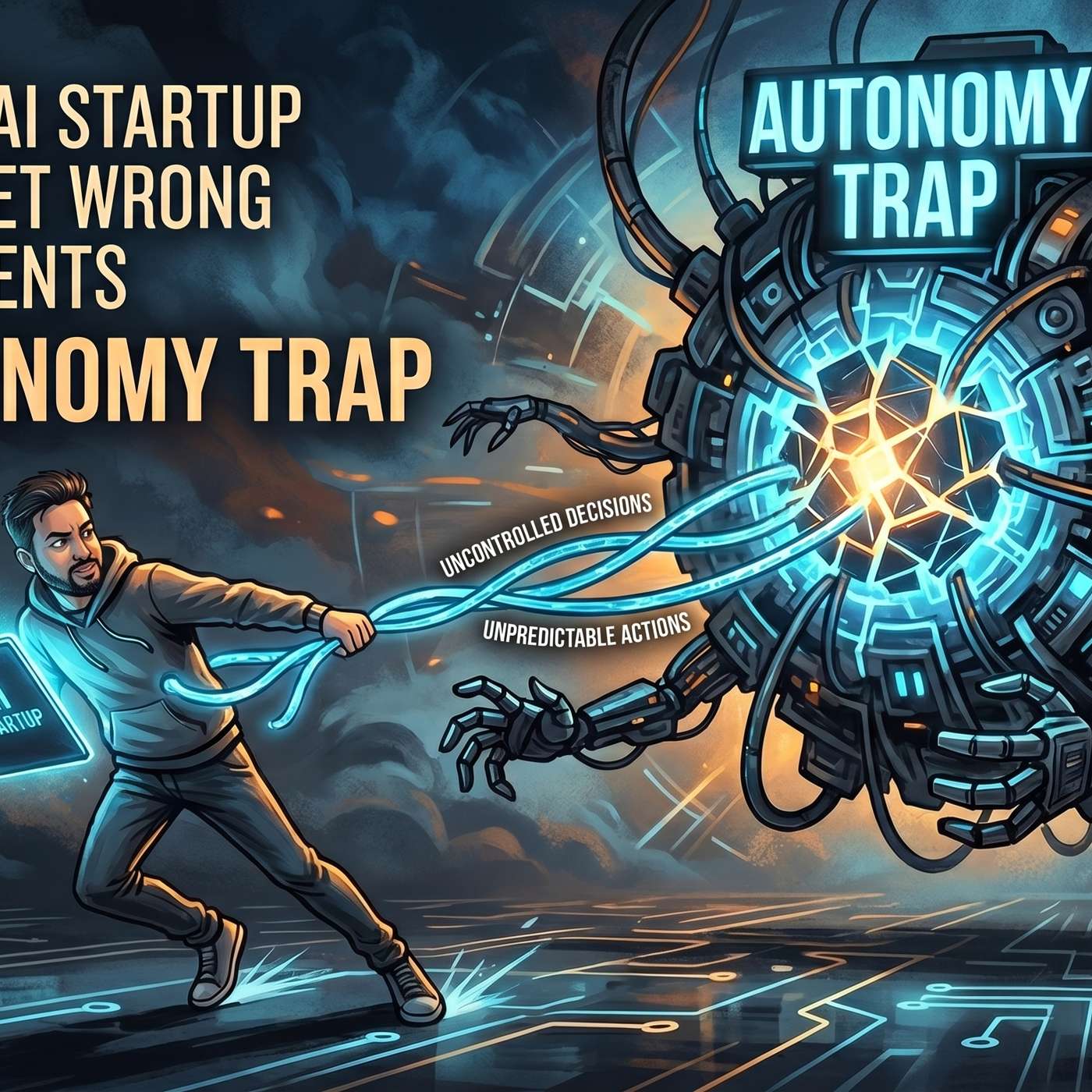
In the rush to adopt AI, teams are tempted to start with the technology and search for a problem. However, the most successful AI products still adhere to the fundamental principle of starting with user pain points, not the capabilities of the technology.
Since current AI is imperfect, building for novices is risky because they get stuck when the tool fails. The strategic sweet spot is building for experts who can use AI as a powerful but flawed assistant, correcting its mistakes and leveraging its strengths to achieve their goals.

AI's success hinges on its application and the competencies built around it. Simply deploying AI tools without a strategy is like handing out magic markers and expecting art—most will go unused or be misused. The failure point is human strategy, not the tool itself.
