Get your free personalized podcast brief
We scan new podcasts and send you the top 5 insights daily.
In an era of political decay, the Supreme Court stands out for its rigorous and respected process. First-hand observation reveals a level of institutional sanctity largely absent from other government branches. However, this functionality is fragile and under threat from political movements aiming to alter its structure.

Related Insights
The Supreme Court's authority to declare laws unconstitutional—its main function today—is not explicitly mentioned in Article 3. This power of judicial review was established by the Court itself in the early 19th century, fundamentally shaping its role in the U.S. government's balance of powers.
Each Supreme Court justice employs four elite, recent law school graduates as clerks. These young, unelected individuals hold immense responsibility, making preliminary judgments on which cases the court should hear and writing the first drafts of opinions that shape American law—a reality not contemplated by the Constitution.
Crucial U.S. institutions, while formally existing, have effectively ceased to function as checks on executive power. Congress has ceded its constitutional authority to tax and spend, and the Justice Department's independence from the White House has disintegrated, rendering them functionally inert.
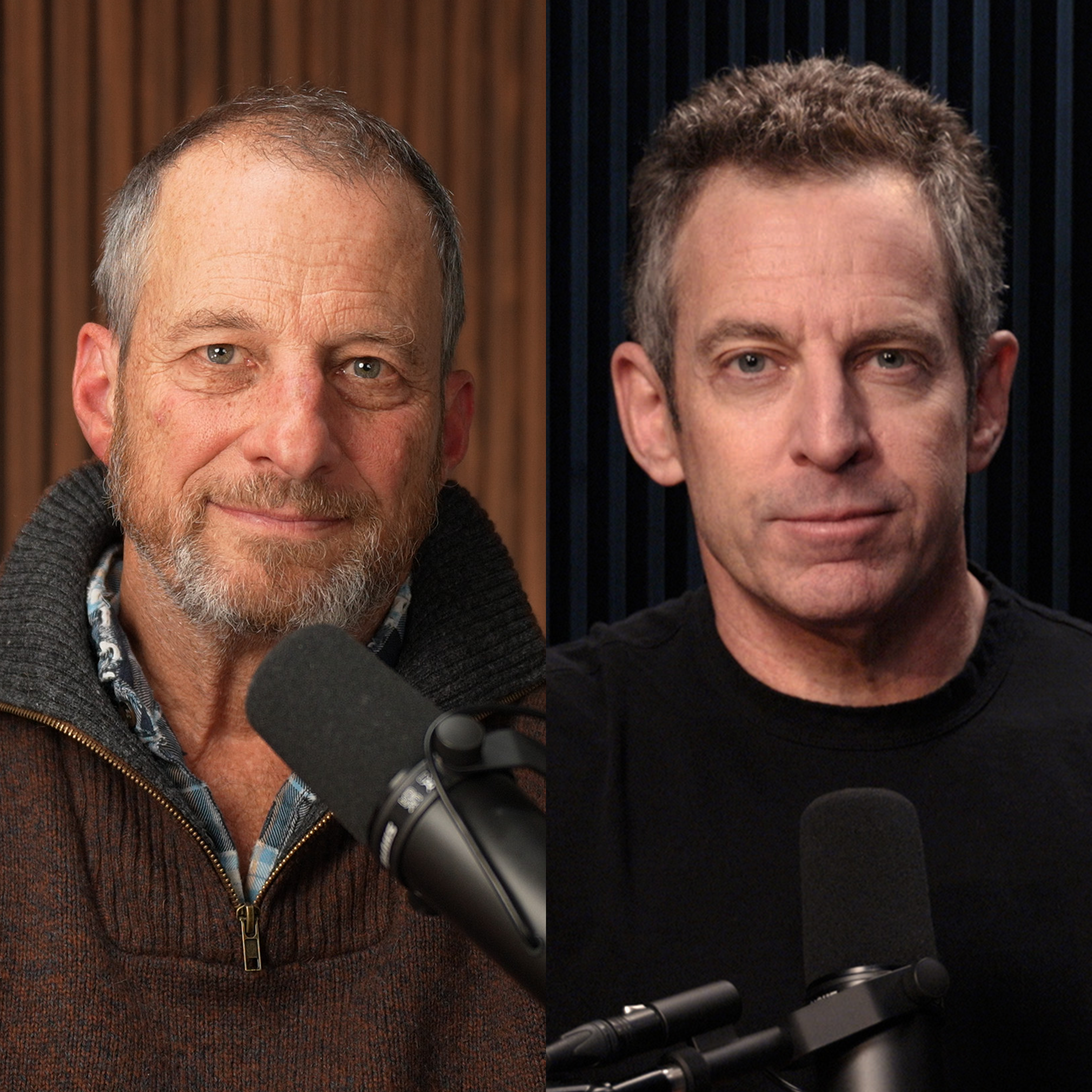
Contrary to the view that Trump operates unchecked, Shapiro posits that institutional pushback and "the pushback of reality" still moderate his worst ideas. He cites the Supreme Court striking down tariffs and incompetent loyalists being replaced as examples of these self-correcting, albeit stressed, mechanisms.

Contrary to popular belief, Article 3 of the Constitution provides a sparse blueprint for the federal judiciary. It establishes "one Supreme Court" but delegates the creation of lower courts and even the Supreme Court's size to congressional legislation, making the judiciary's structure far more flexible than assumed.
The U.S. is unique among developed nations for granting judges life tenure. While intended to ensure independence, this practice incentivizes justices to strategically retire under a politically aligned president, injecting politics into the end of their careers just as it exists at the beginning.
Reporter Jodi Cantor describes the court's culture as extreme. Justices are surrounded by "obsequiousness and reverence" from lawyers who need their vote. Simultaneously, they face a "sick culture" of public attacks and threats. This dual pressure creates a distorted environment unlike any other in public life.

The Court increasingly uses an "emergency" or "shadow" docket for major decisions. These rulings bypass oral arguments and full briefings, often resulting in orders with little to no explanation. This practice contradicts the judicial branch's claim to legitimacy, which is based on reasoned persuasion, not just power.
As the formal amendment process became politically impossible, the Supreme Court's role expanded dramatically. It became the de facto forum for constitutional change, a shift driven by the paralysis of the legislative amendment route, which both political parties now exploit.

An increasing number of Supreme Court justices previously clerked for the Court, with several directly succeeding the justice they once worked for. This trend suggests a self-perpetuating system where retiring justices may influence the White House to appoint their "favorite clerk," creating a dynamic akin to an inherited title.