Get your free personalized podcast brief
We scan new podcasts and send you the top 5 insights daily.
Standard benchmarks fall short for multi-turn AI agents. A new approach is the 'job interview eval,' where an agent is given an underspecified problem. It is then graded not just on the solution, but on its ability to ask clarifying questions and handle changing requirements, mimicking how a human developer is evaluated.

Related Insights
Treating AI evaluation like a final exam is a mistake. For critical enterprise systems, evaluations should be embedded at every step of an agent's workflow (e.g., after planning, before action). This is akin to unit testing in classic software development and is essential for building trustworthy, production-ready agents.
To gauge an expert's (human or AI) true depth, go beyond recall-based questions. Pose a complex problem with multiple constraints, like a skeptical audience, high anxiety, and a tight deadline. A genuine expert will synthesize concepts and address all layers of the problem, whereas a novice will give generic advice.

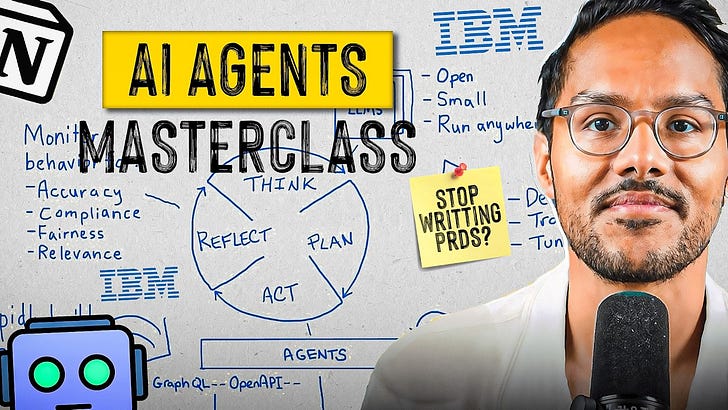
The primary bottleneck in improving AI is no longer data or compute, but the creation of 'evals'—tests that measure a model's capabilities. These evals act as product requirement documents (PRDs) for researchers, defining what success looks like and guiding the training process.

The test intentionally used a simple, conversational prompt one might give a colleague ("our blog is not good...make it better"). The models' varying success reveals that a key differentiator is the ability to interpret high-level intent and independently research best practices, rather than requiring meticulously detailed instructions.

Building a functional AI agent is just the starting point. The real work lies in developing a set of evaluations ("evals") to test if the agent consistently behaves as expected. Without quantifying failures and successes against a standard, you're just guessing, not iteratively improving the agent's performance.

Traditional AI benchmarks are seen as increasingly incremental and less interesting. The new frontier for evaluating a model's true capability lies in applied, complex tasks that mimic real-world interaction, such as building in Minecraft (MC Bench) or managing a simulated business (VendingBench), which are more revealing of raw intelligence.

The prompts for your "LLM as a judge" evals function as a new form of PRD. They explicitly define the desired behavior, edge cases, and quality standards for your AI agent. Unlike static PRDs, these are living documents, derived from real user data and are constantly, automatically testing if the product meets its requirements.

OpenAI identifies agent evaluation as a key challenge. While they can currently grade an entire task's trace, the real difficulty lies in evaluating and optimizing the individual steps within a long, complex agentic workflow. This is a work-in-progress area critical for building reliable, production-grade agents.
Since AI assistants make it easy for candidates to complete take-home coding exercises, simply evaluating the final product is no longer an effective screening method. The new best practice is to require candidates to build with AI and then explain their thought process, revealing their true engineering and problem-solving skills.

OpenAI's new GDP-val benchmark evaluates models on complex, real-world knowledge work tasks, not abstract IQ tests. This pivot signifies that the true measure of AI progress is now its ability to perform economically valuable human jobs, making performance metrics directly comparable to professional output.