Get your free personalized podcast brief
We scan new podcasts and send you the top 5 insights daily.
Uber's CEO revealed executives privately admit AI could replace 70-80% of human work but publicly state everything will be fine. This rare candor signals a potential shift in the public discourse about AI's true societal impact.

Related Insights
Despite public messaging about culture or bureaucracy, internal memos and private conversations with leaders reveal that generative AI's productivity gains are the primary driver behind major tech layoffs, such as those at Amazon.
Leaders from OpenAI, Google, and Anthropic are openly and consistently predicting profound disruption to the labor market from AI. This view, once an outlier, has become the conventional wisdom in the tech C-suite, signaling a major shift in expectations for the near-term future of work.

The rare agreement between libertarian billionaire Elon Musk and socialist senator Bernie Sanders on AI's threat to jobs is a significant indicator. This consensus from the political fringe suggests the issue's gravity is being underestimated by mainstream policymakers and is a sign of a profound, undeniable shift.

The conversation around AI and job reduction has moved from hypothetical to operational. Leaders are being instructed by boards and investors to prepare for 10-20% workforce cuts, ready to be executed. This isn't a future possibility; it's an active, ongoing preparation phase within many large companies.
In public earnings calls, CEOs of companies like Figma and Workday express excitement for AI agents. However, in mandatory SEC filings, they warn that these same agents are a significant risk, capable of disrupting their industries and making traditional software solutions obsolete.

Forget what executives say publicly. The massive capital allocation for AI data centers is the real evidence of impending job displacement. This level of investment only makes sense if companies expect significant cost savings from automating human labor, making capital the truest indicator of intent.

By openly discussing AI-driven unemployment, tech leaders have made their industry the default scapegoat. If unemployment rises for any reason, even a normal recession, AI will be blamed, triggering severe political and social backlash because leaders have effectively "confessed to the crime" ahead of time.

When tech leaders like Jack Dorsey cite AI for layoffs, it may obscure a deeper motive: a relentless race for market dominance where societal impacts like job displacement and reskilling are deprioritized. The focus is on winning, with worker welfare often becoming collateral damage.

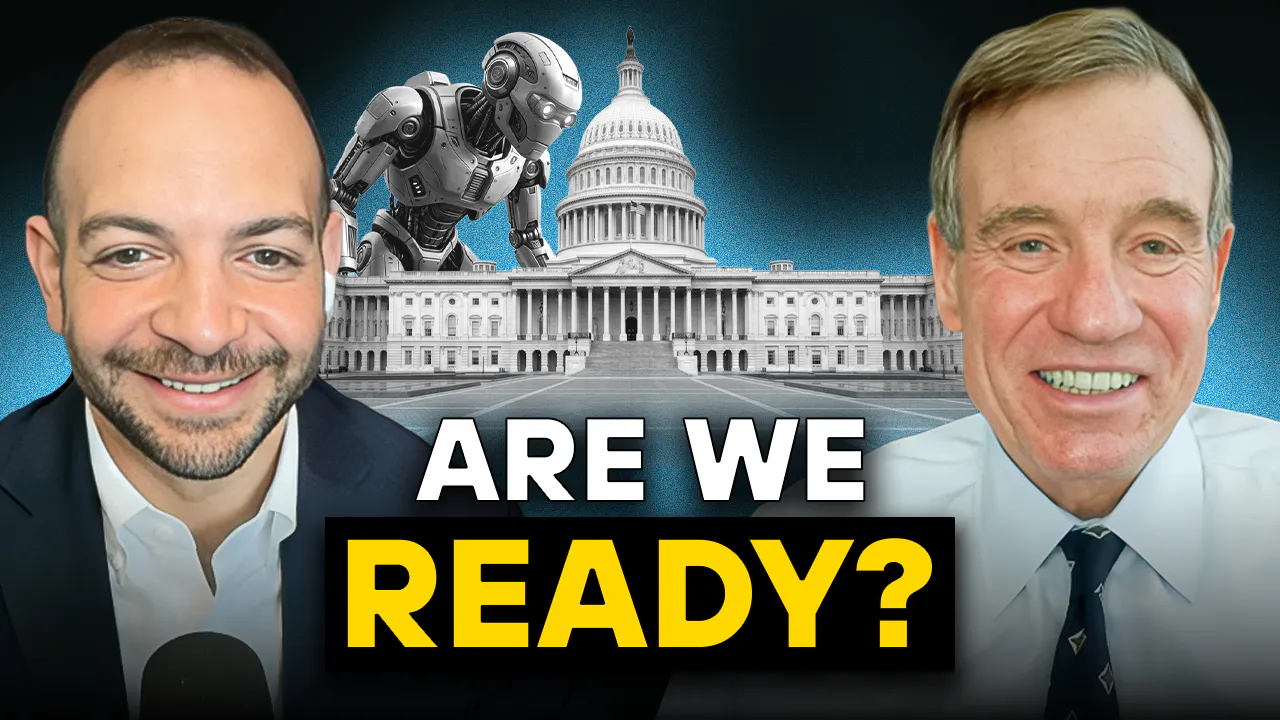
Senator Mark Warner reveals that AI CEOs privately tell him they are drastically cutting first-year hires and interns due to AI. This contradicts their more optimistic public statements, suggesting they are "freaked out about freaking out people" and intentionally managing public perception to avoid backlash.
In a sobering essay, the CEO of leading AI lab Anthropic has offered a concrete, near-term economic prediction. He forecasts massive job disruption for knowledge workers, moving beyond abstract existential risks to a specific warning about the immediate future of work.