Get your free personalized podcast brief
We scan new podcasts and send you the top 5 insights daily.
Morgan Stanley is leveraging AI not just for efficiency but to fundamentally reallocate how its analysts spend their time. By automating routine tasks, the firm aims to double the portion of time analysts spend directly with clients from approximately 25% to 50%, thereby increasing high-value engagement.

Related Insights
The common fear of AI eliminating jobs is misguided. In practice, AI automates specific, often administrative, tasks within a role. This allows human workers to offload minutiae and focus on uniquely human skills like relationship building and strategic thinking, ultimately increasing their leverage and value.

The true ROI of AI lies in reallocating the time and resources saved from automation towards accelerating growth and innovation. Instead of simply cutting staff, companies should use the efficiency gains to pursue new initiatives that increase demand for their products or services.
Focusing on AI for cost savings yields incremental gains. The transformative value comes from rethinking entire workflows to drive top-line growth. This is achieved by either delivering a service much faster or by expanding a high-touch service to a vastly larger audience ("do more").

C-suites are more motivated to adopt AI for revenue-generating "front office" activities (like investment analysis) than for cost-saving "back office" automation. The direct, tangible impact on making more money overcomes the organizational inertia that often stalls efficiency-focused technology deployments.
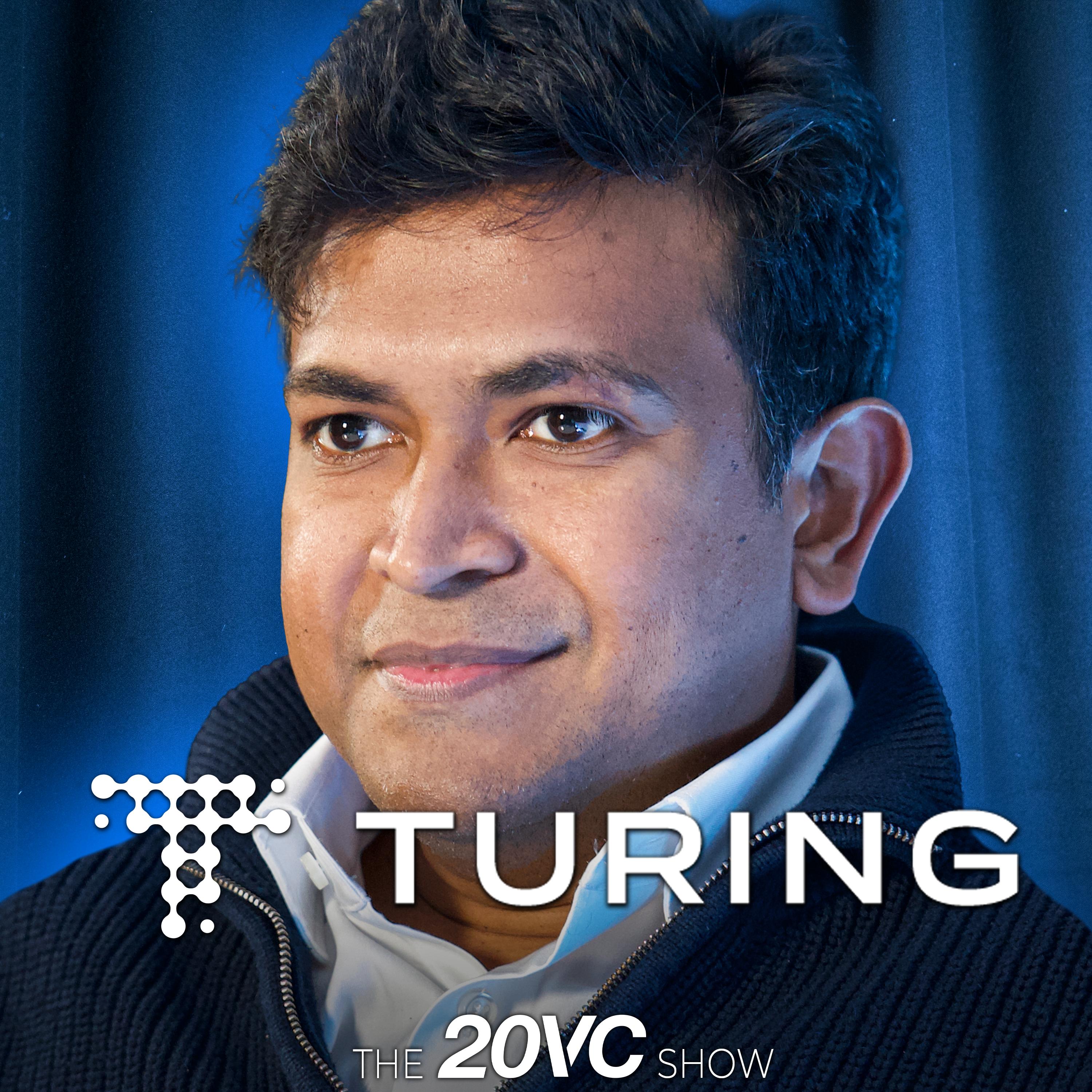
Using the historical parallel of ATMs, CEO Sim Shabalala argues that AI won't eliminate human roles but will automate routine tasks. This frees humans for higher-order work involving empathy, complex problem-solving, and valuable client interaction.
The primary ROI of sales AI isn't just saved time, but the reallocation of that time. Evaluate and justify AI tools based on their ability to maximize Customer Facing Time (CFT), as this directly increases both the quantity and quality of customer interactions, leading to better performance.

A tangible way to implement a "more human" AI strategy is to use automation to free up employee time from repetitive tasks. This saved time should then be deliberately reallocated to high-value, human-centric activities, such as providing personalized customer consultations, that technology cannot replicate.
The true ROI of AI isn't just efficiency; it's the opportunity to reallocate time from low-value tasks to uniquely human activities. Use the bandwidth gained to build deeper client relationships, foster community, and engage in creative work.

Adopt a 'more intelligent, more human' framework. For every process made more intelligent through AI automation, strategically reinvest the freed-up human capacity into higher-touch, more personalized customer activities. This creates a balanced system that enhances both efficiency and relationships.