Get your free personalized podcast brief
We scan new podcasts and send you the top 5 insights daily.
The directive's restriction against non-US citizens creates an operational nightmare for API users and enterprises. Companies would need to verify the citizenship of every end-user and employee for every interaction, a technically and legally fraught requirement that could halt enterprise adoption and hobble the entire AI ecosystem.

Related Insights
The US has positioned itself as a predictable technology partner in contrast to China's arbitrary state control. This sudden, opaque directive shatters that narrative, making the US government appear equally capricious. This erodes a key soft-power advantage, pushing allies to hedge bets and consider alternatives.
As Silicon Valley startups increasingly adopt cheaper Chinese AI platforms, a political backlash is likely. The US government may block their use, citing national security risks and data privacy concerns, mirroring past restrictions on Chinese EVs and telecom hardware.

By unilaterally revoking access for all non-US nationals, the US government demonstrated that reliance on American frontier models is a strategic vulnerability. This single action validates the need for "Sovereign AI," powerfully motivating other nations to invest heavily in their own domestic AI capabilities to ensure technological independence.
Implementing a token tax solely in the U.S. would create a price disadvantage for American AI companies. Customers would be incentivized to use foreign-domiciled API providers to avoid the tax, effectively subsidizing non-U.S. inference and harming the domestic AI industry.
Even advanced AI agents fail at basic business tasks. They are frequently blocked by bot detection on sites like Amazon during checkout and cannot pass the "Know Your Customer" (KYC) identity verification required to open a traditional bank account, necessitating human intervention.
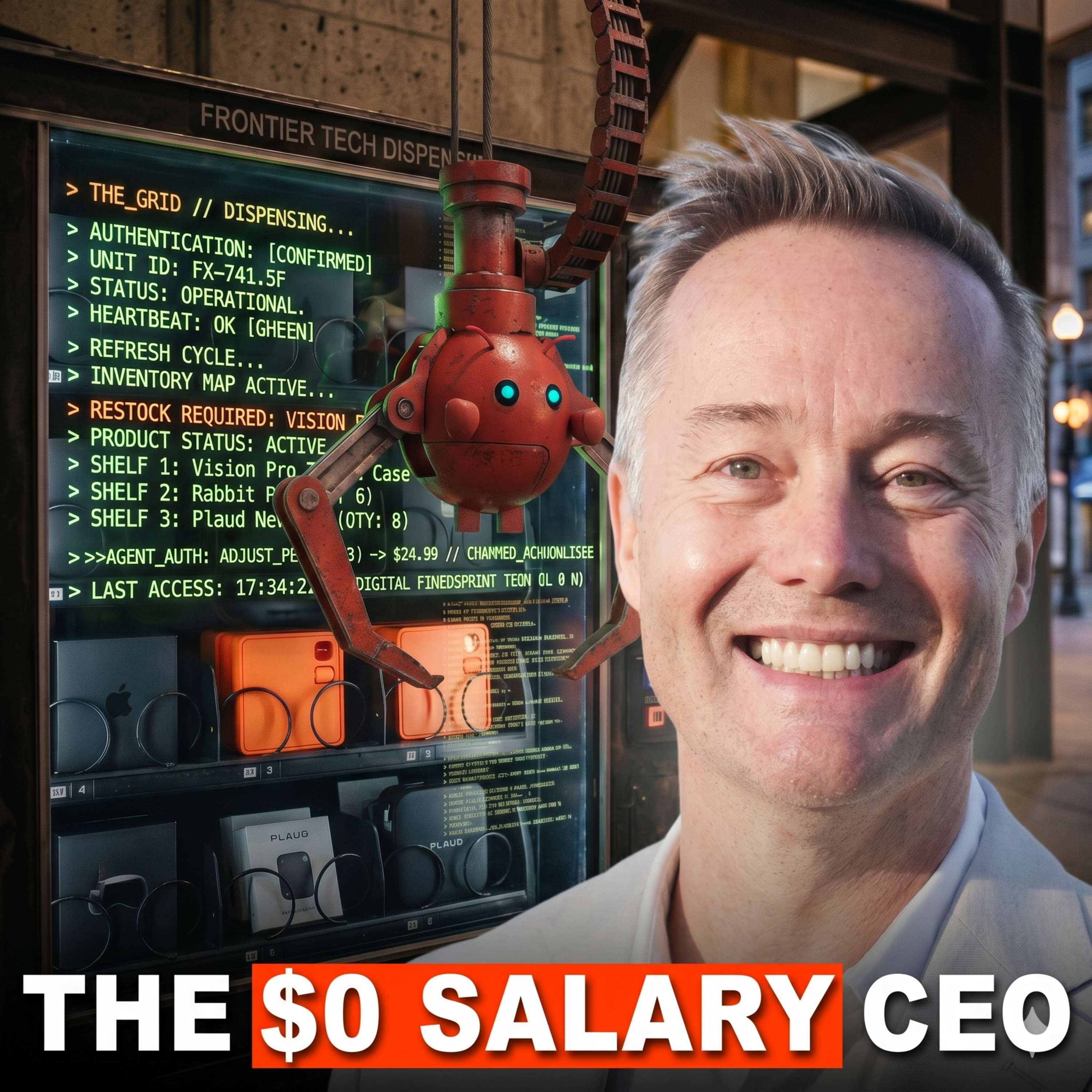
As anonymous AI agents proliferate globally, traditional KYC and national legal systems become inadequate. It will be impossible to know who or what is behind an agent, creating a need for a new global, trustless infrastructure for agent identity verification and cross-border dispute resolution to prevent abuse by bad actors.

The EU's AI Act has been so restrictive that it has largely killed native AI development in Europe. The regulation is so punitive that even major American companies like Apple and Meta are choosing not to launch their leading-edge AI capabilities there, demonstrating the chilling effect of preemptive, overbearing regulation.

The government's action, based on a non-public jailbreak, creates a chilling precedent where an AI's *potential* capabilities, rather than demonstrated harm, can trigger a shutdown. This introduces a new form of regulatory risk, termed "capability thought crimes," stifling innovation and open research for all AI developers.
Both Sam Altman and Satya Nadella warn that a patchwork of state-level AI regulations, like Colorado's AI Act, is unmanageable. While behemoths like Microsoft and OpenAI can afford compliance, they argue this approach will crush smaller startups, creating an insurmountable barrier to entry and innovation in the US.

This intervention proves that a frontier AI model's monetization can be instantly revoked by government decree. This introduces a new, unpredictable political risk that could cool investor enthusiasm for the high-capex AI sector, threatening the bull case that justifies the massive spending required to train next-generation models.