Get your free personalized podcast brief
We scan new podcasts and send you the top 5 insights daily.
Prominent US VCs like Founders Fund, despite public anti-China stances, are visiting Chinese AI startups. The goal is not investment but strategic intelligence gathering to assess the competitive landscape and evaluate supply chain dependencies within their existing American portfolios.

Related Insights
Success for Chinese AI companies like Z.AI depends on a recursive validation loop. Gaining traction and positive mentions from US tech leaders and media is crucial not just for global recognition, but for building credibility and winning enterprise customers within China itself, who closely monitor Western sentiment.
Tech giants like Alibaba and Tencent invest in AI startups like DeepSeek not just for financial returns, but for strategic benefits. The investment helps them acquire the startup as a cloud computing customer and secures access to its cutting-edge technology for their own massive user bases.
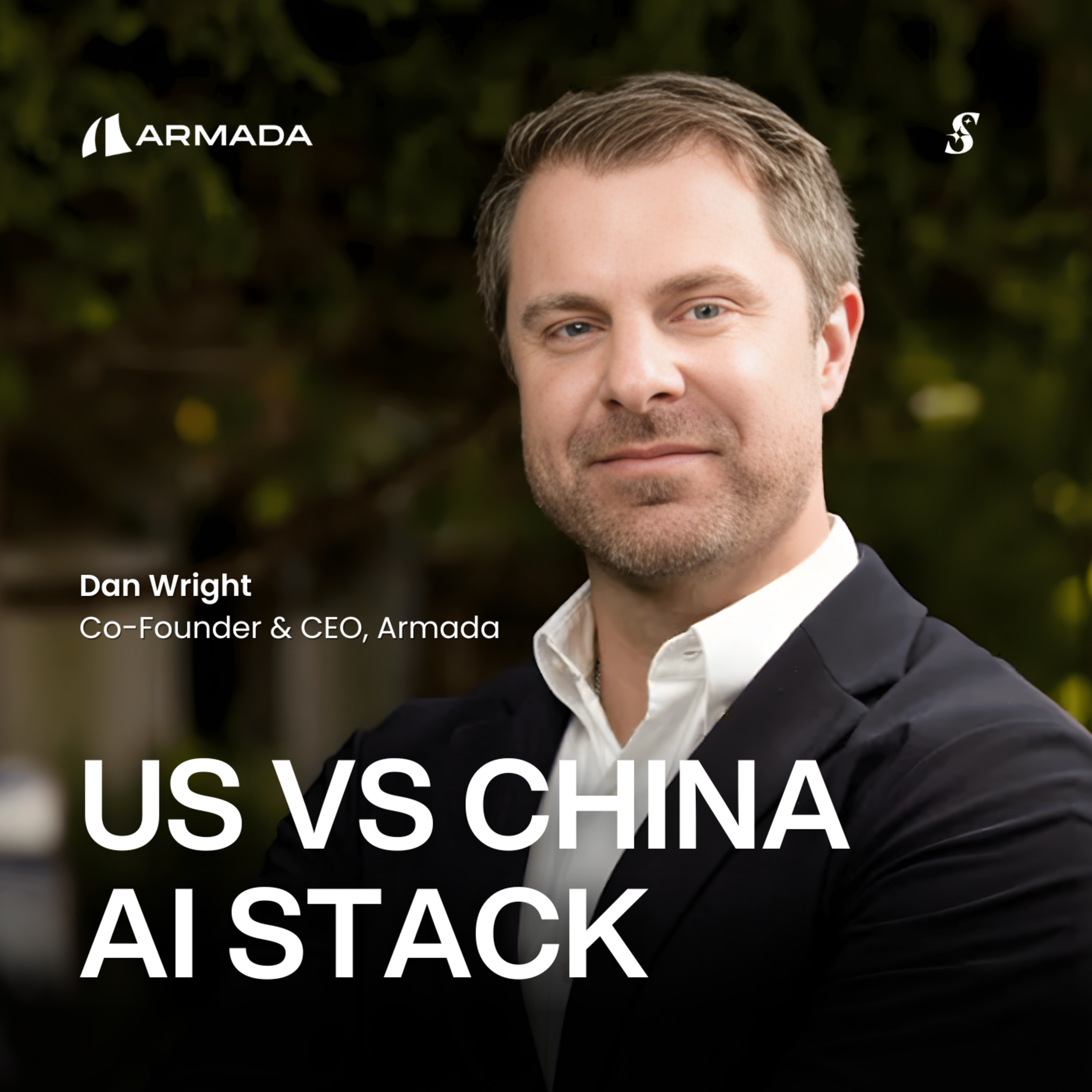
The competition in AI infrastructure is framed as a binary, geopolitical choice. The future will be dominated by either a US-led AI stack or a Chinese one. This perspective positions edge infrastructure companies as critical players in national security and technological dominance.
Top executives from OpenAI and Anthropic are warning that cheap, powerful Chinese AI models pose unacceptable security risks. However, critics like venture capitalist David Sachs suggest this is a "regulatory capture strategy" designed to eliminate competition from open-source alternatives under the guise of national security.

Chinese AI models are largely open source not for ideological reasons, but as a pragmatic branding strategy. Open-sourcing their models was necessary to build trust and credibility with Western developers who might otherwise be skeptical of closed, proprietary Chinese technology.

Zed.ai's assistance to Hugging Face was not altruism but a calculated competitive move. By highlighting the virtues of its open-source model, the company aims to neutralize U.S. geopolitical advantages, bypass trade blacklists, and undercut American competitors on price to win global market share.

The push for stricter US government action against China's AI practices is not just from politicians. Leading AI companies like OpenAI and Anthropic are pressuring Washington to curb Chinese 'distillation' of their models, framing it as a threat to national security and America's lead in AI.

As Silicon Valley startups increasingly adopt cheaper Chinese AI platforms, a political backlash is likely. The US government may block their use, citing national security risks and data privacy concerns, mirroring past restrictions on Chinese EVs and telecom hardware.

The AI competition is not a simple two-horse race between the US and China. It's a complex 2x2 matrix: US vs. China and Open Source vs. Closed Source. China is aggressively pursuing an open-source strategy, creating a new competitive dynamic that complicates the landscape and challenges the dominance of proprietary US labs.

Most US LPs have "put pencils down" on China due to geopolitical risk, creating a capital-starved market. For investors willing to do the work, this presents an opportunity with less competition and more reasonable entry valuations for a pool of incredibly hard-working founders.