Get your free personalized podcast brief
We scan new podcasts and send you the top 5 insights daily.
Classic ADCs depend on cellular internalization and subsequent membrane permeability to exert bystander cell killing. Sacituzumab govitecan operates differently by releasing its SN-38 payload directly into the extracellular tumor microenvironment prior to entering cancer cells, effectively targeting heterogenous tumors lacking uniform expression.

Related Insights
The concept of Antibody-Drug Conjugates (ADCs) as simple "chemo attached to an antibody" is a significant oversimplification. True efficacy is highly dependent on complex factors like the linker's cleavage properties within the acidic tumor microenvironment, creating a "bystander effect" that is crucial to their function.
Antibody-drug conjugates (ADCs) can cause immunogenic cell death, remodeling the tumor microenvironment and enhancing antigen presentation. This mechanism could potentially make PD-L1 negative ('cold') tumors responsive to immune checkpoint inhibitors, creating a strong rationale for investigating ADC-immunotherapy combinations in this patient population.
Modern antibody-drug conjugates (ADCs) like trastuzumab deruxtecan can kill nearby cancer cells that don't express the target protein. This 'bystander effect' is a game-changer, allowing ADCs to be effective even in tumors with varied (heterogeneous) protein expression, which has historically been a major clinical challenge.

Despite targeting the same protein (Trope-2), different ADCs like sacituzumab govitecan (SG) and sacituzumab tirumotecan (sac-TMT) exhibit unique toxicity profiles due to their different linker-payloads. Clinicians must be prepared for diarrhea with SG versus oral mucositis with sac-TMT, requiring distinct mitigation strategies for drugs that otherwise seem very similar.

A key innovation in Antibody-Drug Conjugates (ADCs) is the 'tandem cleave' linker. This technology requires two separate events—one in the tumor microenvironment and another after internalization—to release the payload, improving stability and reducing systemic toxicity.

The primary reason Antibody-Drug Conjugates (ADCs) stop working is payload resistance, a shift from the traditional belief that failure stems from tumors losing the target antigen. This insight drives development of multi-payload ADCs to overcome this resistance mechanism.
Unlike older antibody-drug conjugates (ADCs), newer agents are designed so their chemotherapy payload can diffuse out of the target cell and kill nearby tumor cells that may not even express the target antigen. This "bystander effect" significantly enhances their anti-tumor activity.
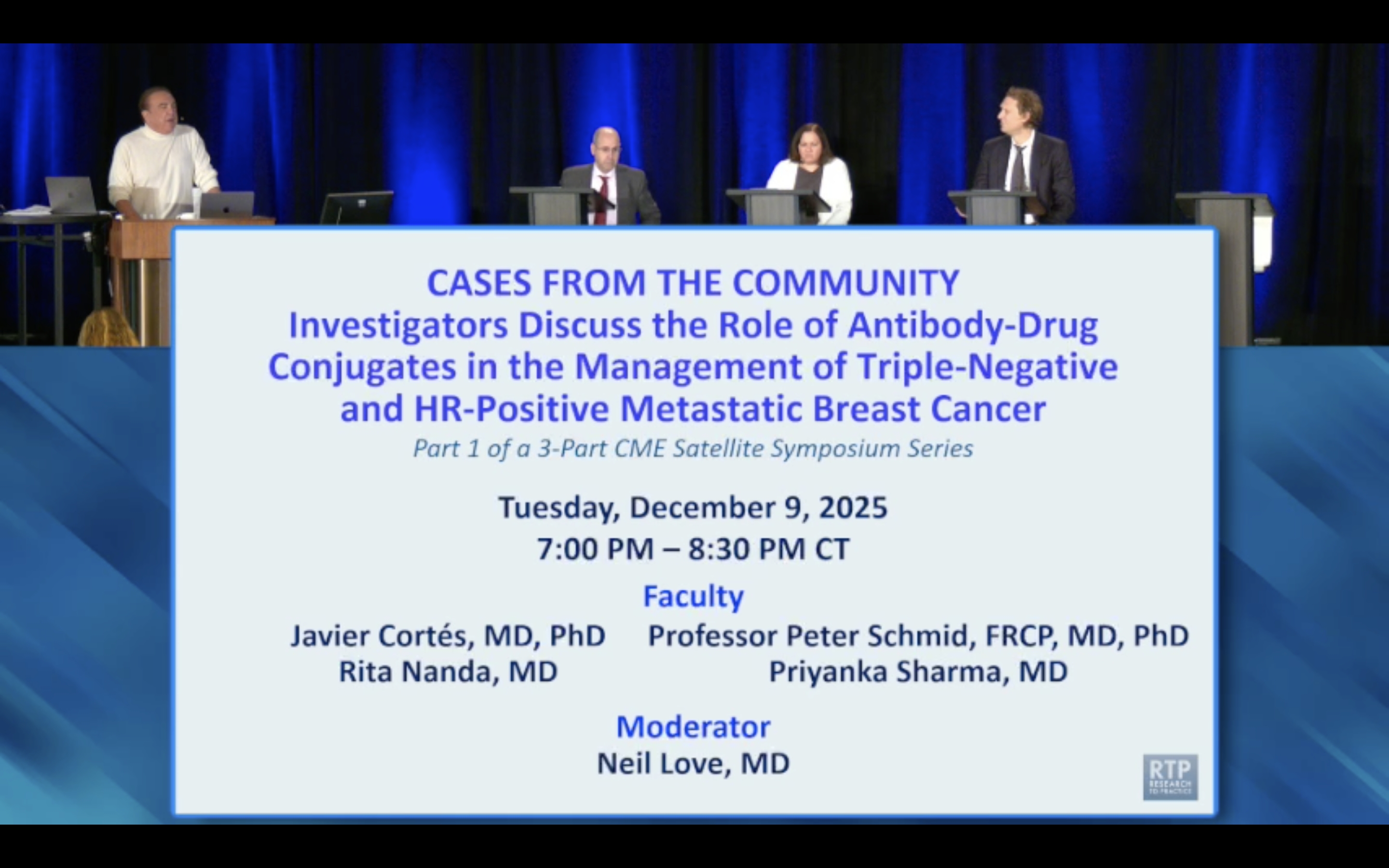
Despite both being Trop-2 targeted antibody-drug conjugates, Sacituzumab Govitecan and Datopotomab duroxotein have distinct side effects due to different linkers and payloads. Sacituzumab causes neutropenia and diarrhea, while Datopotomab is linked to stomatitis and ocular issues, requiring unique management strategies.

The differing efficacy and toxicity profiles of TROP2 ADCs like sacituzumab govitecan and Dato-DXD suggest that the drug's linker and payload metabolism are crucial determinants of clinical outcome. This indicates that focusing solely on the target antigen is an oversimplification of ADC design and performance.

New-generation antibody-drug conjugates (ADCs) are highly effective because their chemotherapy payload can diffuse out of the targeted cancer cell. This "bystander effect" allows the drug to kill adjacent, target-negative cancer cells, enhancing overall tumor destruction in heterogeneous tumors.