Get your free personalized podcast brief
We scan new podcasts and send you the top 5 insights daily.
The concept of Antibody-Drug Conjugates (ADCs) as simple "chemo attached to an antibody" is a significant oversimplification. True efficacy is highly dependent on complex factors like the linker's cleavage properties within the acidic tumor microenvironment, creating a "bystander effect" that is crucial to their function.

Related Insights
The varying outcomes of two similar Lilly ADCs (LY405/LY410) demonstrated that how a patient's body metabolizes the drug's payload is a critical factor. Absence of the CYP2D6 enzyme, crucial for a Topo-one payload, led to severe toxicity and death, highlighting a key variable beyond the linker and target.

Different TROP2-targeted ADCs using the same class of payload (topo-1 inhibitor) display distinct primary toxicities, such as diarrhea versus stomatitis. This highlights that subtle differences in drug-to-antibody ratio and linker technology create unique pharmacological profiles, making the drugs clinically distinct despite their apparent similarities.

A key innovation in Antibody-Drug Conjugates (ADCs) is the 'tandem cleave' linker. This technology requires two separate events—one in the tumor microenvironment and another after internalization—to release the payload, improving stability and reducing systemic toxicity.

To mitigate the severe toxicity of promising pan-RAS inhibitors, companies are adopting antibody-drug conjugate (ADC) technology. This marks a strategic expansion for ADCs, moving beyond traditional cytotoxic chemotherapy payloads to delivering highly specific targeted therapies, aiming to improve the therapeutic window of potent new drug classes.

The primary reason Antibody-Drug Conjugates (ADCs) stop working is payload resistance, a shift from the traditional belief that failure stems from tumors losing the target antigen. This insight drives development of multi-payload ADCs to overcome this resistance mechanism.
Unlike older antibody-drug conjugates (ADCs), newer agents are designed so their chemotherapy payload can diffuse out of the target cell and kill nearby tumor cells that may not even express the target antigen. This "bystander effect" significantly enhances their anti-tumor activity.
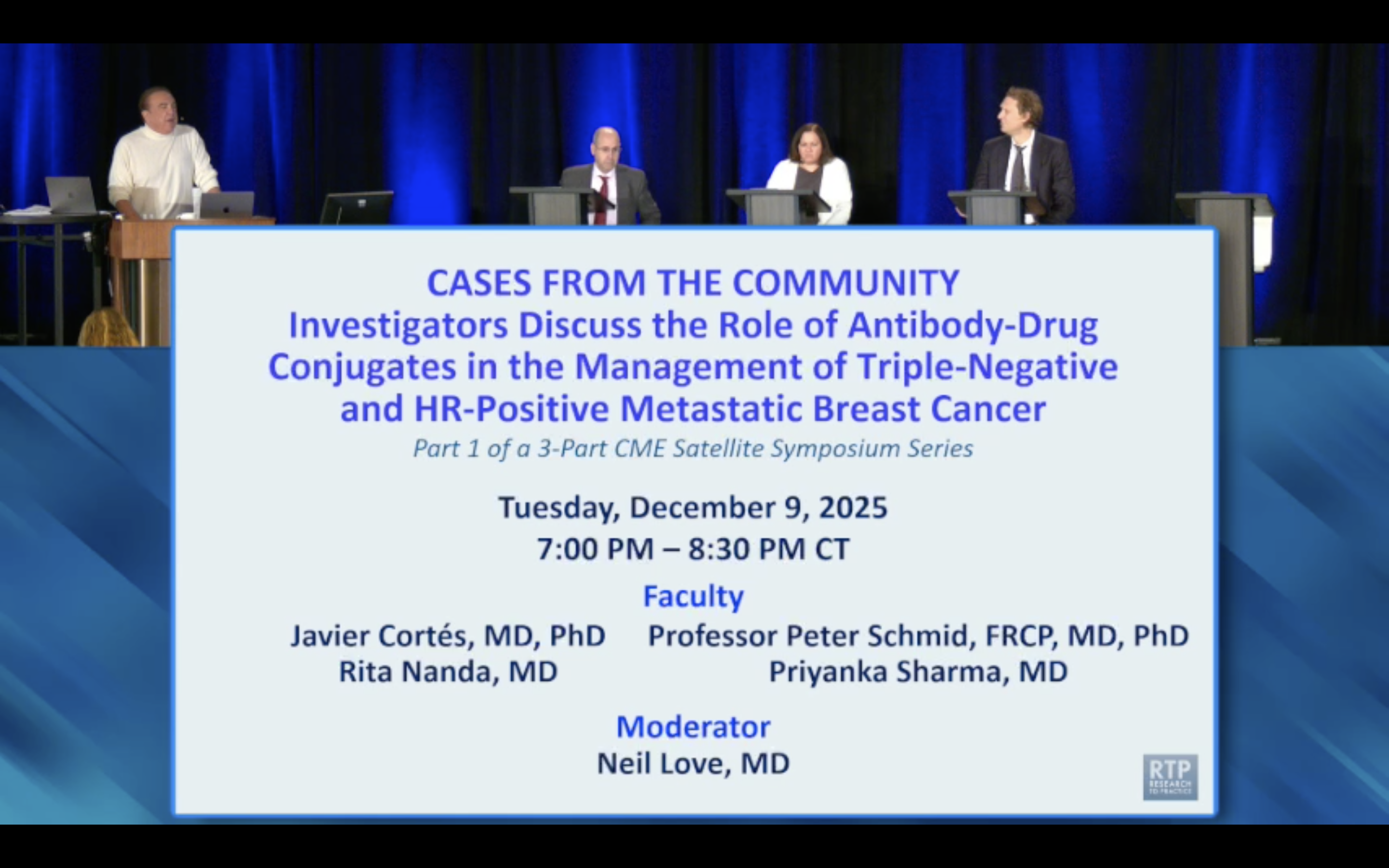
A key principle for clinicians is that an antibody-drug conjugate's adverse events are primarily dictated by its linker-payload (e.g., deruxtecan, vedotin), not its specific antibody target. This allows for anticipating toxicities like neuropathy or GI issues based on the payload class, creating a predictable framework for management across different ADCs.

The differing efficacy and toxicity profiles of TROP2 ADCs like sacituzumab govitecan and Dato-DXD suggest that the drug's linker and payload metabolism are crucial determinants of clinical outcome. This indicates that focusing solely on the target antigen is an oversimplification of ADC design and performance.
Despite being "targeted therapies," multiple promising antibody-drug conjugates (ADCs) for small cell lung cancer (SCLC) show no correlation between the target protein's expression level and patient response. This suggests the payload or other factors are the primary drivers of efficacy, complicating biomarker development for patient selection.
The next wave of antibody-drug conjugate (ADC) innovation utilizes a "toolbox" of linker technologies rather than a one-size-fits-all solution. Companies now select from a range of site-specific conjugation methods—from established cysteine engineering to advanced non-canonical amino acids—based on the specific payload and desired therapeutic index, creating a highly customized development process.
