Get your free personalized podcast brief
We scan new podcasts and send you the top 5 insights daily.
For high-stakes decisions like utilization management, validate an AI model by having it run alongside the existing human process. The AI renders a decision in parallel with the medical director, allowing the organization to confirm alignment and build confidence before “shifting left” to autonomous workflows.
Related Insights
To avoid failure, launch AI agents with high human control and low agency, such as suggesting actions to an operator. As the agent proves reliable and you collect performance data, you can gradually increase its autonomy. This phased approach minimizes risk and builds user trust.

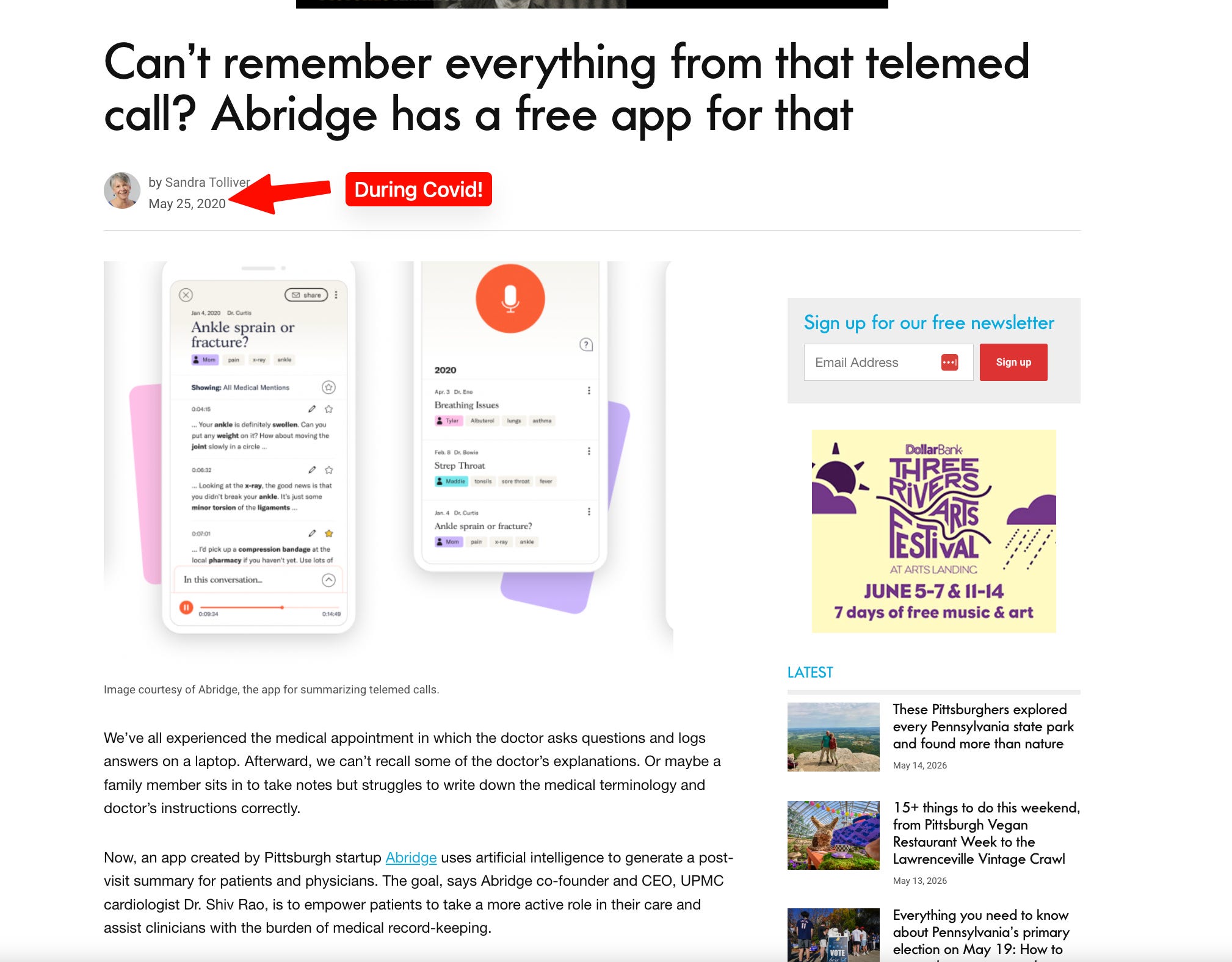
Unlike general enterprise AI where a wrong answer is an inconvenience, errors in healthcare AI can be fatal. This high-stakes environment forces companies like Abridge to adopt extremely rigorous offline evaluation and phased, progressive rollouts, a far more cautious approach than typical "move fast" software development.
Effective enterprise AI deployment involves running human and AI workflows in parallel. When the AI fails, it generates a data point for fine-tuning. When the human fails, it becomes a training moment for the employee. This "tandem system" creates a continuous feedback loop for both the model and the workforce.

To manage compliance risk in regulated industries, treat AI agents like new employees. Before deployment, the agent must pass the same knowledge assessment a human would take. This quantifies the risk, turning a 'black box' AI into an observable and testable system with a verifiable accuracy score.

Purely agentic systems can be unpredictable. A hybrid approach, like OpenAI's Deep Research forcing a clarifying question, inserts a deterministic workflow step (a "speed bump") before unleashing the agent. This mitigates risk, reduces errors, and ensures alignment before costly computation.

Avoid deploying AI directly into a fully autonomous role for critical applications. Instead, begin with a human-in-the-loop, advisory function. Only after the system has proven its reliability in a real-world environment should its autonomy be gradually increased, moving from supervised to unsupervised operation.

To mitigate risks like AI hallucinations and high operational costs, enterprises should first deploy new AI tools internally to support human agents. This "agent-assist" model allows for monitoring, testing, and refinement in a controlled environment before exposing the technology directly to customers.

To overcome resistance to AI in critical fields like healthcare, position it first as a supplement, not a replacement. By providing AI-generated summaries that still require clinical review, organizations can demonstrate value and build trust, making clinicians see AI as a tool that frees them for high-value work.
The concept of "human-in-the-loop" is often misapplied. To effectively manage autonomous AI agents, companies must map the agent's entire workflow and insert mandatory human approval at critical decision points, not just as a final check or initial hand-off.

Fully autonomous AI agents are not yet viable in enterprises. Alloy Automation builds "semi-deterministic" agents that combine AI's reasoning with deterministic workflows, escalating to a human when confidence is low to ensure safety and compliance.