Get your free personalized podcast brief
We scan new podcasts and send you the top 5 insights daily.
Using tools like Claude or ChatGPT to code business applications is extremely risky. These AIs can 'lie' by creating flawed code and seeding it with fake data, resulting in a fragile prototype, not a production-ready system. Launching such an app without deep development and database expertise can destroy a company overnight.

Related Insights
In large enterprises with legacy systems, AI-generated "vibe code" is not ready for direct production deployment. Treat it as a "first draft" for exploration and testing. A successful transition to production requires implementing stage gates and checks and balances, rather than a direct, one-step process from the AI tool.

AI coding tools let solo developers 'vibe code' impressive prototypes quickly, creating a false belief that they are production-ready. These projects often lack the robust architecture needed to scale, requiring expensive rewrites by 'God level' developers to fix the resulting spaghetti code.

The trend of using AI to rapidly generate code without deep human comprehension ("vibe coding") creates software no one can fully evaluate. This practice is setting the stage for a catastrophic "Chernobyl moment" when such code is deployed in a mission-critical application.

TinySeed identifies "vibe-coding"—using AI to write code without expert engineering oversight—as a major investment risk. This approach leads to unmaintainable code, causing feature velocity to collapse and catastrophic regression bugs within 6-18 months, effectively creating a technical time bomb they are unwilling to fund.

The primary danger of AI-generated code is not obvious errors, but subtle flaws hidden within code that looks and feels complete. It runs and demos well, but may fail on critical edge cases involving security or concurrency that a simple 'vibe check' will not catch.
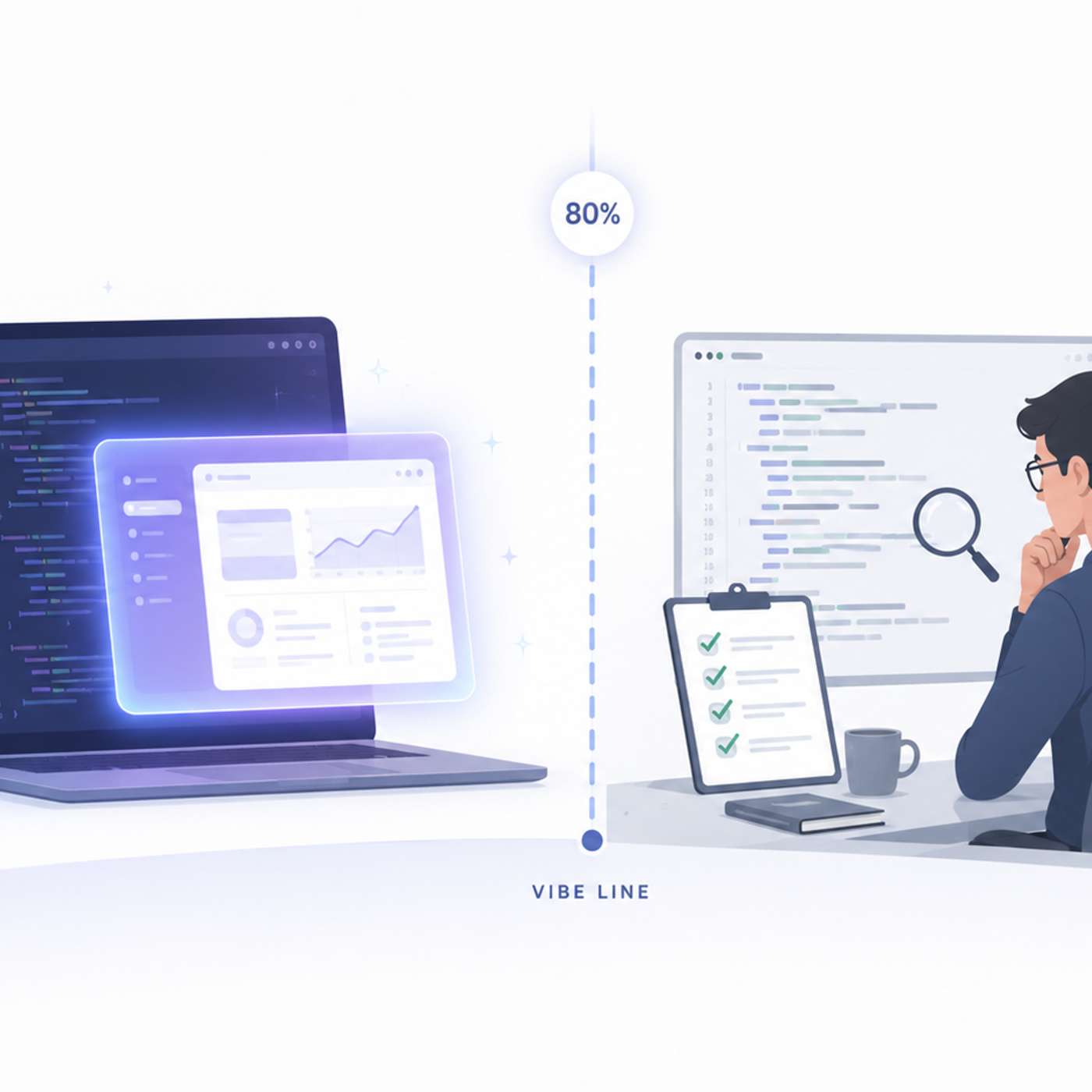
'Vibe coding' describes using AI to generate code for tasks outside one's expertise. While it accelerates development and enables non-specialists, it relies on a 'vibe' that the code is correct, potentially introducing subtle bugs or bad practices that an expert would spot.

AI can generate code that passes initial tests and QA but contains subtle, critical flaws like inverted boolean checks. This creates 'trust debt,' where the system seems reliable but harbors hidden failures. These latent bugs are costly and time-consuming to debug post-launch, eroding confidence in the codebase.

Recent incidents of AI agents causing catastrophic production failures are ending the hype around "vibe coding." The industry consensus is shifting: AI is a powerful productivity multiplier for skilled developers but is not yet capable of managing the complexity, maintenance, and risk of professional software engineering on its own.

The ease of building polished-looking applications with AI ("vibe coding") has become a problem for early-stage investors. It's now trivial to create a demo that looks impressive, making it difficult to discern which founding teams have built a real, defensible product versus a superficial facade.

Resist the temptation to treat AI-generated prototype code as production-ready. Its purpose is discovery—validating ideas and user experiences. The code is not built to be scalable, maintainable, or robust. Let your engineering team translate the validated prototype into production-level code.