Get your free personalized podcast brief
We scan new podcasts and send you the top 5 insights daily.
Instead of streaming all data, Samsara runs inference on low-power cameras. They train large models in the cloud and then "distill" them into smaller, specialized models that can run efficiently at the edge, focusing only on relevant tasks like risk detection.

Related Insights
The proliferation of sensors, especially cameras, will generate massive amounts of video data. This data must be uploaded to cloud AI models for processing, making robust upstream bandwidth—not just downstream—the critical new infrastructure bottleneck and a significant opportunity for telecom companies.

The vast network of consumer devices represents a massive, underutilized compute resource. Companies like Apple and Tesla can leverage these devices for AI workloads when they're idle, creating a virtual cloud where users have already paid for the hardware (CapEx).

Model architecture decisions directly impact inference performance. AI company Zyphra pre-selects target hardware and then chooses model parameters—such as a hidden dimension with many powers of two—to align with how GPUs split up workloads, maximizing efficiency from day one.

The primary driver for fine-tuning isn't cost but necessity. When applications like real-time voice demand low latency, developers are forced to use smaller models. These models often lack quality for specific tasks, making fine-tuning a necessary step to achieve production-level performance.
Chinese AI models like Kimi achieve dramatic cost reductions through specific architectural choices, not just scale. Using a "mixture of experts" design, they only utilize a fraction of their total parameters for any given task, making them far more efficient to run than the "dense" models common in the West.

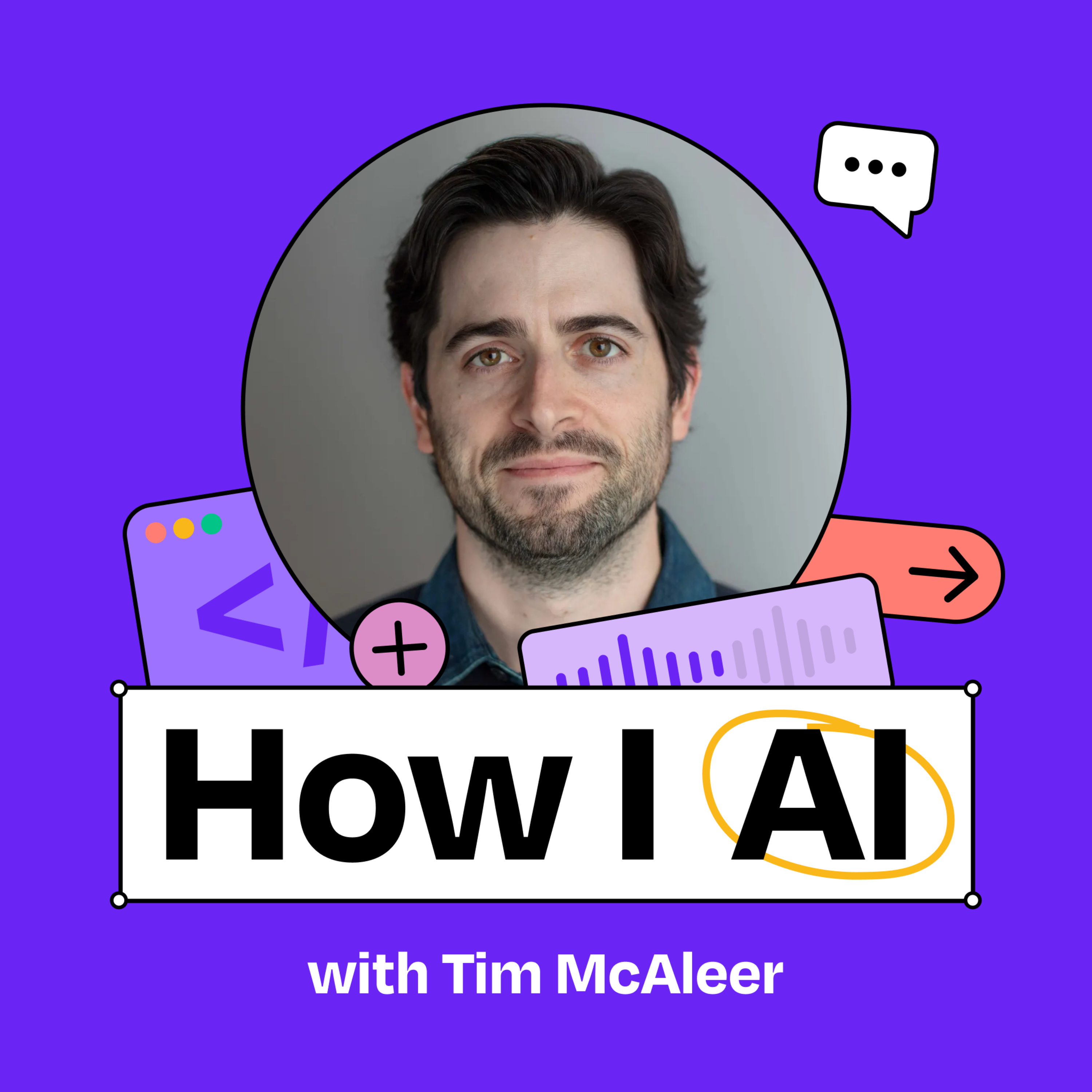
To analyze video cost-effectively, Tim McLear uses a cheap, fast model to generate captions for individual frames sampled every five seconds. He then packages all these low-level descriptions and the audio transcript and sends them to a powerful reasoning model. This model's job is to synthesize all the data into a high-level summary of the video.
The next wave of data growth will be driven by countless sensors (like cameras) sending video upstream for AI processing. This requires a fundamental shift to symmetrical networks, like fiber, that have robust upstream capacity.

A cost-effective AI architecture involves using a small, local model on the user's device to pre-process requests. This local AI can condense large inputs into an efficient, smaller prompt before sending it to the expensive, powerful cloud model, optimizing resource usage.

Google's strategy involves building specialized models (e.g., Veo for video) to push the frontier in a single modality. The learnings and breakthroughs from these focused efforts are then integrated back into the core, multimodal Gemini model, accelerating its overall capabilities.
The biggest risk to the massive AI compute buildout isn't that scaling laws will break, but that consumers will be satisfied with a "115 IQ" AI running for free on their devices. If edge AI is sufficient for most tasks, it undermines the economic model for ever-larger, centralized "God models" in the cloud.
![Gavin Baker - Nvidia v. Google, Scaling Laws, and the Economics of AI - [Invest Like the Best, EP.451] thumbnail](https://megaphone.imgix.net/podcasts/d97fee14-d4d7-11f0-8951-8324b640c1c1/image/d3a8b5ecbf3957de5b91f278a191c9ff.jpg?ixlib=rails-4.3.1&max-w=3000&max-h=3000&fit=crop&auto=format,compress)