Get your free personalized podcast brief
We scan new podcasts and send you the top 5 insights daily.
For fit patients with metastatic MSI-high colorectal cancer, the combination of ipilimumab and nivolumab is the preferred frontline treatment over pembrolizumab monotherapy. This is based on Phase III data showing the dual IO approach is superior. Single-agent PD-1 inhibitors are reserved for frail patients or those with autoimmune comorbidities.

Related Insights
Trials like the dostarlimab study in rectal cancer and NICHE in colon cancer show neoadjuvant immunotherapy can induce profound responses in MSI-high tumors. This is creating a new paradigm where major surgery might be avoided entirely for some patients, marking a significant shift in treatment strategy.
The CheckMate 9LA regimen provides exceptional benefit to PD-L1 negative and squamous histology NSCLC patients. This is significant because these subgroups often respond poorly to other immunotherapy combinations, with Dr. Carbone noting some trials where the control arm outperformed pembrolizumab in these patients.

Following positive Phase III data for adjuvant atezolizumab plus chemotherapy in Stage III MSI-high colon cancer, clinicians are extrapolating this approach to high-risk Stage II patients. For some, they favor using immunotherapy alone, omitting chemotherapy due to its perceived limited additional benefit in the Stage II setting.
Experts favor a Nivolumab plus Ipilimumab (NIVO+EP) combination for newly diagnosed, MSI-high, stage IV gastroesophageal cancer patients who can tolerate it. This approach avoids chemotherapy and yields high, sustained response rates, including potential for complete pathologic responses in metastatic settings.

While the ATOMIC trial established FOLFOX plus atezolizumab as a new standard for adjuvant therapy in MSI-high colon cancer, its design lacked an immunotherapy-only arm. This leaves a critical, unanswered question about the actual contribution and necessity of the chemotherapy component.
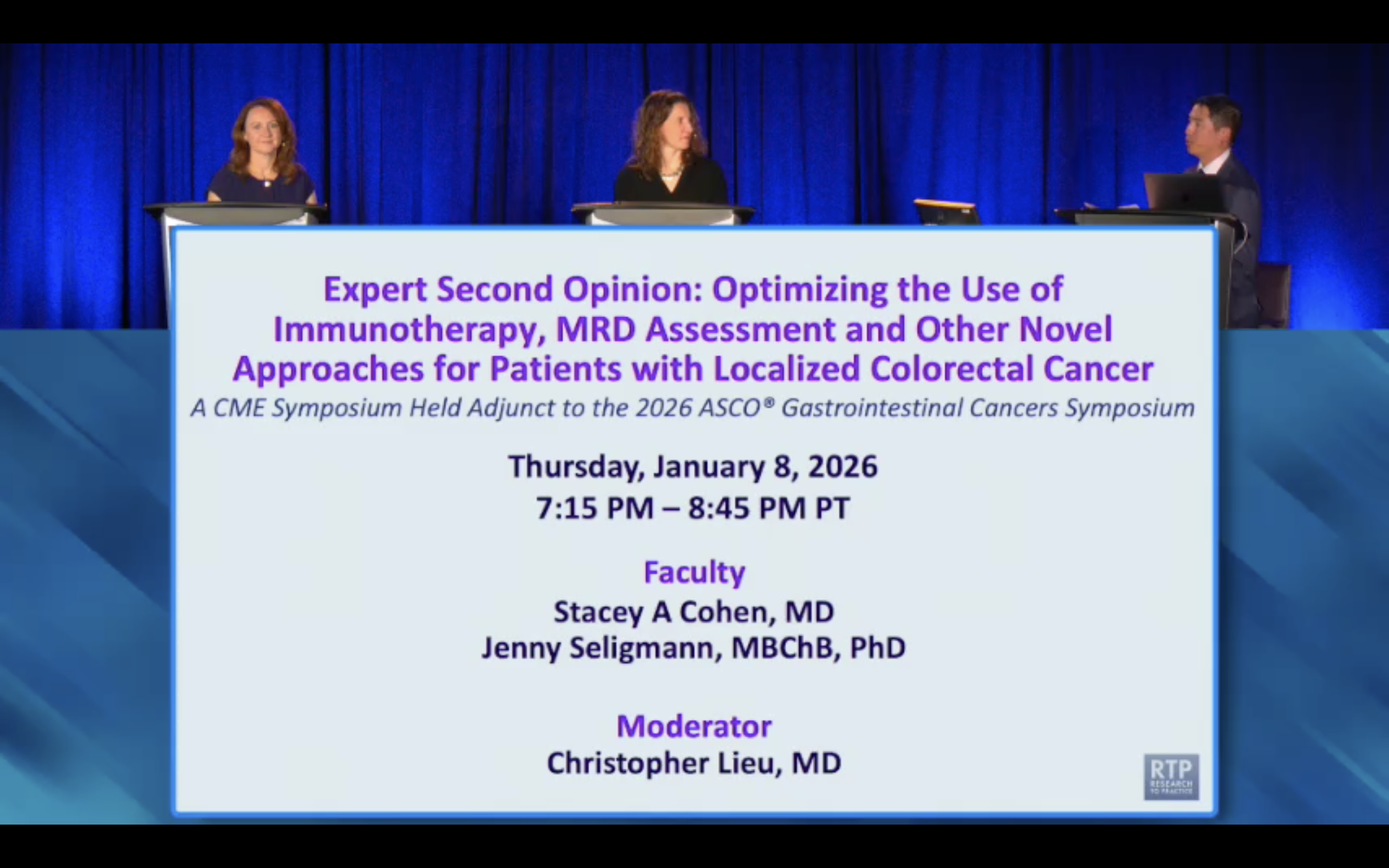
Retrospective data suggests patients with MSI-high rectal cancer might not just respond poorly to standard neoadjuvant chemoradiation (TNT), but their disease could actually progress. This makes immunotherapy a potentially safer and more effective first-line neoadjuvant choice, not just an alternative.

Data shows that patients who permanently stopped ipilimumab due to immune-related side effects still had exceptionally good outcomes. This gives clinicians confidence to manage toxicity by discontinuing the CTLA-4 inhibitor portion of the regimen while continuing nivolumab, without fearing a loss of efficacy.
The standard approach for first-line metastatic colorectal cancer is obsolete. Clinicians must test for and categorize patients into at least four, soon five, distinct biomarker-defined subgroups (MSI-high, BRAF V600E, RAS/RAF wild-type, HER2-positive, and the RAS-mutated "catch-all") to select the optimal initial therapy.

The KEYNOTE-177 trial allowed patients on the chemotherapy arm to cross over to pembrolizumab upon progression. Despite this, pembrolizumab showed a significant survival advantage, implying the actual benefit of using immunotherapy first-line is even greater than what the data shows.

While the ATOMIC trial combined FOLFOX with atezolizumab, clinicians should not de-escalate by simply dropping oxaliplatin. Historical data suggests single-agent 5-FU is ineffective and potentially harmful in MSI-high patients, a risk that is not presumed to be overcome by adding immunotherapy.