Get your free personalized podcast brief
We scan new podcasts and send you the top 5 insights daily.
Satellite services like Starlink have largely solved geographical signal coverage across remote regions, but centralized networks remain prone to administrative shutdowns and density bottlenecks. The remaining unsolved challenge in connectivity is high-density congestion, which requires infrastructure-independent, decentralized communications systems.

Related Insights
While drones get the headlines, operators on the front lines in Ukraine identified Starlink as the most critical technology. This reveals that the foundational layer for future conflict is resilient, decentralized communication, which enables all other advanced systems to function in contested environments.

While launches are becoming routine, the real bottleneck in the space economy is communicating with in-orbit assets. Incumbent ground stations use archaic, FTP-based technology. This creates a massive opportunity for companies building a modern, API-driven communications backbone for satellites, which is a critical and underserved market.

Starlink's satellite beams are too broad to effectively serve dense cities. Its business model is complementary to ground-based cellular, focusing on rural and underserved areas where building fiber or cell towers is economically inefficient.

High-density crowd environments routinely crash cellular infrastructure due to limited bandwidth and centralized tower bottlenecks. In contrast, autonomous offline mesh networks benefit from crowd density because every additional user acts as an active relay, expanding transmission range, speed, and network reliability.
The primary bottleneck for Project Maven wasn't algorithms but outdated digital infrastructure. Data packets crisscrossing the Atlantic multiple times and physical hardware encryptors creating bottlenecks revealed that cutting-edge AI is useless without a modernized, high-throughput network to support it.

Due to inertia and the high cost of building new landing infrastructure, today's fiber optic cables often terminate in the exact same coastal cities as telegraph cables did over a century ago. This historical path dependency creates concentrated points of failure instead of a more distributed, resilient network.

Satellite internet alone cannot deliver seamless consumer mobile connectivity because mid-band satellite signals struggle to penetrate obstacles like roofs and tree foliage. Achieving functional nationwide cellular coverage requires acquiring low-band spectrum and building physical terrestrial transmission towers to carry everyday signals.

The Arctic is a critical geopolitical region, but its polar orbit is poorly served by satellite constellations like Starlink, creating significant connectivity challenges. This gap presents a unique market opportunity for companies building localized, distributed, and attributable mesh networks that can operate reliably in the harsh environment without depending on consistent satellite backhaul.

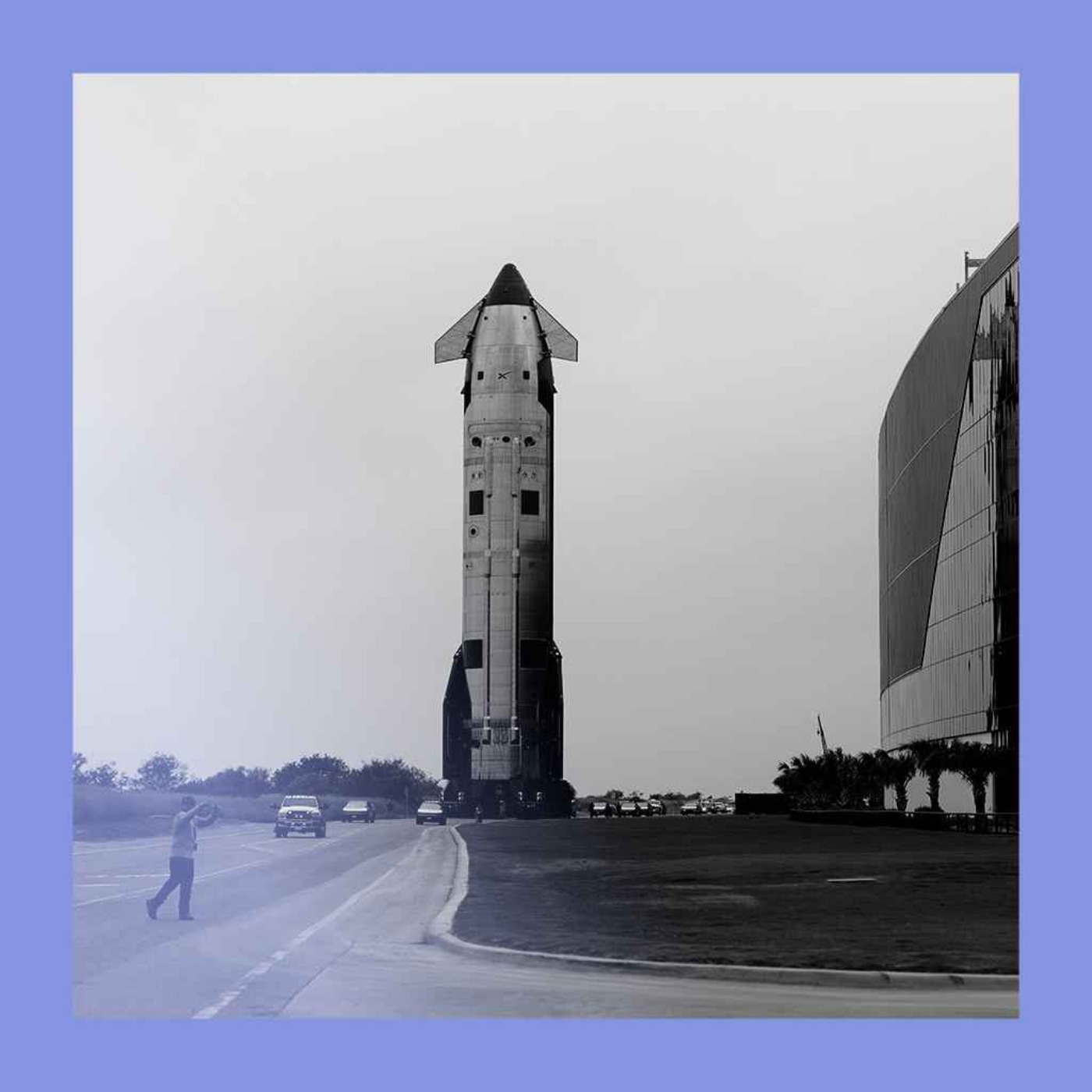
SpaceX's cash-cow, Starlink, is facing network congestion due to rapid growth. The solution requires larger satellites that are too big for the current Falcon 9 rocket. The success of the much larger, reusable Starship is therefore a critical bottleneck for unlocking Starlink's future profitability and expansion.
Beyond consumer connectivity, Starlink's satellite network and future space-based data centers are effectively building a backup internet. This extraterrestrial communication infrastructure offers a parallel system that could function independently of Earth's terrestrial cables, providing resiliency against civilizational upheaval or government collapse.
