Get your free personalized podcast brief
We scan new podcasts and send you the top 5 insights daily.
Jordan Schneider points out that while systemic corruption runs deeper in China, the CCP maintains an equilibrium requiring illicit activities to stay concealed alongside public crackdowns. Conversely, recent US legal precedents and political norms increasingly permit overt, publicized conflicts of interest without triggering institutional antibodies.

Related Insights
A dangerous shift in public morality means corruption is no longer universally condemned but judged based on political allegiance. Actions like a politician's insider trading, once an outrage, are now rationalized and defended by their own side, eroding shared societal ethics.

To combat corruption, the US should consider Singapore's model: pay elected officials significantly higher salaries (e.g., $1-2 million) but enforce absolute zero tolerance for insider trading or lobbying conflicts. This approach professionalizes public service and removes the financial incentive for illicit activities.

Matt Yglesias argues that because corruption crackdowns enjoy broad public popularity, regimes frequently weaponize them to consolidate power and eliminate political rivals. When wrongdoing is pervasive across a system, selective prosecution makes distinguishing genuine accountability from partisan persecution nearly impossible.
In Western economies, capital controls the governance system, leaving elected officials subordinate to bondholders, central banks, and military-financial nodes. Conversely, China’s authoritarian framework places the state strictly above capital, dictating terms to corporate and financial entities.

The extreme and open nature of corruption—moving from small favors to nine-figure no-bid contracts for friends and family—violates the implicit rules of populist graft. This brazenness is unsustainable and is likely to become a key weapon in an emerging GOP civil war.
A key contrast between the U.S. and China lies in the security of wealth. In China, even billionaires can be purged by the state. In the U.S., wealth is more easily converted into political influence and security, making it a safer haven for the ultra-rich, though this creates societal imbalances.

Unlike the US, China's political system makes a trillionaire entrepreneur impossible. As demonstrated by the crackdown on Jack Ma, once an individual's wealth and influence become politically problematic or challenge the state, the Chinese Communist Party (CCP) will intervene to curtail it, regardless of economic success.

The public's tolerance for political corruption stems from a broader cultural shift mirroring an economic model where success is celebrated regardless of ethical costs. If CEOs can decimate communities for profit, politicians are seen as entitled to their rewards after winning an election.
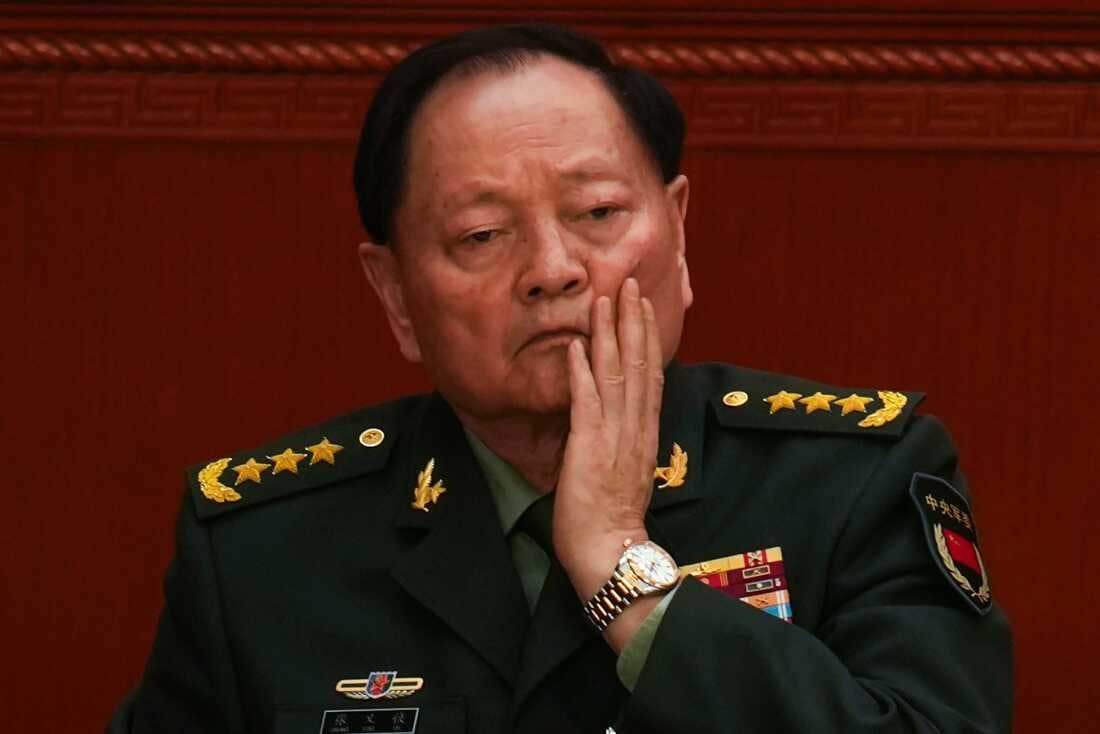
Widespread corruption within the PLA means nearly every senior officer has a usable 'dossier.' This provides Xi Jinping with a permanent, justifiable pretext to eliminate anyone for political reasons, with corruption charges acting as the public-facing justification.
Society used to have a shared understanding that politicians becoming wealthy in office was wrong. Now, corruption is being justified based on political affiliation, creating a slippery slope where core moral agreements erode, depending on "who's doing the corruption."
