Get your free personalized podcast brief
We scan new podcasts and send you the top 5 insights daily.
Early on, Templify balanced customer feedback with their own deep domain expertise. They intentionally focused more on demonstrating a new, better way of working rather than simply asking what customers wanted, thus defining the future state of their market instead of just iterating on the past.

Related Insights
Nikesh Arora warns that founders often solicit feedback from large enterprise customers too early. These customers ask for "speeds and feeds," not a holistic product, leading founders to build features instead of a complete solution. The best founders first build a product based on their own end-to-end vision.

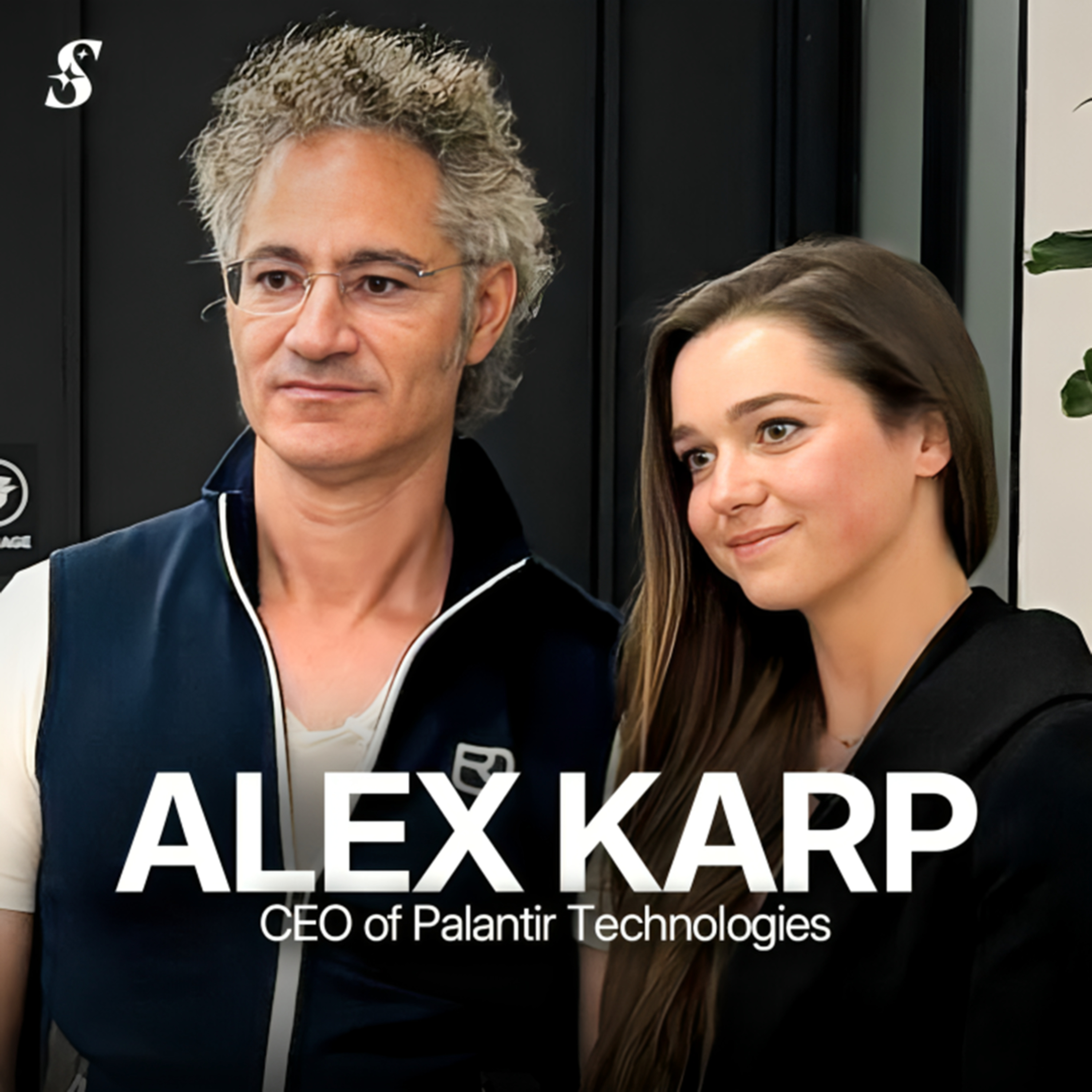
Unlike typical software companies that build addictive products or simply fulfill requests, Palantir's approach is to anticipate and build what its partners *ought* to want in the future. This radical, value-driven strategy builds deep trust and creates an indispensable long-term position with the client.
Before having software, Templify sold a Big Four accounting firm by positioning themselves as partners who understood the impending cloud transition. They sold domain expertise and a vision for the future, not features, allowing them to co-create the product with their first major customer.
Relying solely on current user feedback leads to incremental improvements, not breakthroughs. A forward-looking approach involves mapping future user needs and aspirations to identify "white spaces" in the market. This proactive strategy ensures products are relevant upon launch, not already outdated by solving yesterday's problems.

Scribe started by building workflow automation, viewing documentation as a simple byproduct. Customers, however, found the automation only incrementally valuable but saw the documentation as a game-changing solution. Listening to this strong user pull led to the company's successful pivot.

Templify's AI messaging focused on enterprise-level control, while customers were still exploring individual productivity. Being too far ahead of the market's immediate pain meant they were disqualified from conversations, proving you can be too early with thought leadership.
Early-stage companies naturally build for their first few customers to gain traction. However, a critical and often-missed transition is to intentionally shift from building for individual customer needs to building for a defined market. Failure to make this strategic pivot leads to a perpetually reactive, sales-driven culture.

Early demos shouldn't be used to ask, "Did we build the right thing?" Instead, present them to customers to test your core assumptions and ask, "Did we understand your problem correctly?" This reframes feedback, focusing on the root cause before investing heavily in a specific solution.

Voice of the customer research is often insufficient. Adopt iterative innovation by quickly creating and demoing cheap prototypes—even computer simulations or animated concepts—to get constant, early feedback. This validates ideas in real-time.
Your audience will dictate your product roadmap if you listen. Porterfield's evolution was a direct response to customer feedback. They finished her webinar course and asked what to sell. They finished her product course and asked how to market it. The path to her flagship product was paved with their questions.
