Get your free personalized podcast brief
We scan new podcasts and send you the top 5 insights daily.
Beyond generating 3D assets, Roblox sees a future where AI's greatest impact is on game testing. With near-zero token costs, creators could run "a million hours of testing with simulated players in five minutes," allowing for incredibly rapid iteration and quality improvement cycles before launch.

Related Insights
While AI tools reduce the cost of creating game assets, Roblox's CEO argues this won't change the competitive dynamics. He believes consumer expectations for quality and polish increase at the same pace as the technology's capability, keeping the bar for success perpetually high.

Prototyping directly in the production environment makes high-quality interactions achievable without extensive resources. This dissolves the traditional design dilemma of sacrificing quality for speed, allowing teams to build better products faster.

Gaming companies often pioneer technologies like AI, cloud infrastructure, and freemium business models before they go mainstream. The industry's low-risk environment and its user base of inherent early adopters make it an ideal proving ground for innovation.

Beyond simple concept testing, AI simulations allow businesses to model downstream consequences. A car company can simulate how launching a new EV might change market perception of its entire gas-powered product line, revealing second-order effects that are impossible to test in the real world.

The user experience of Roblox games belies the immense technical infrastructure underneath. The platform runs on its own custom cloud with over 40 data centers, hundreds of thousands of servers, and more than 400 proprietary AI models to manage its massive scale.
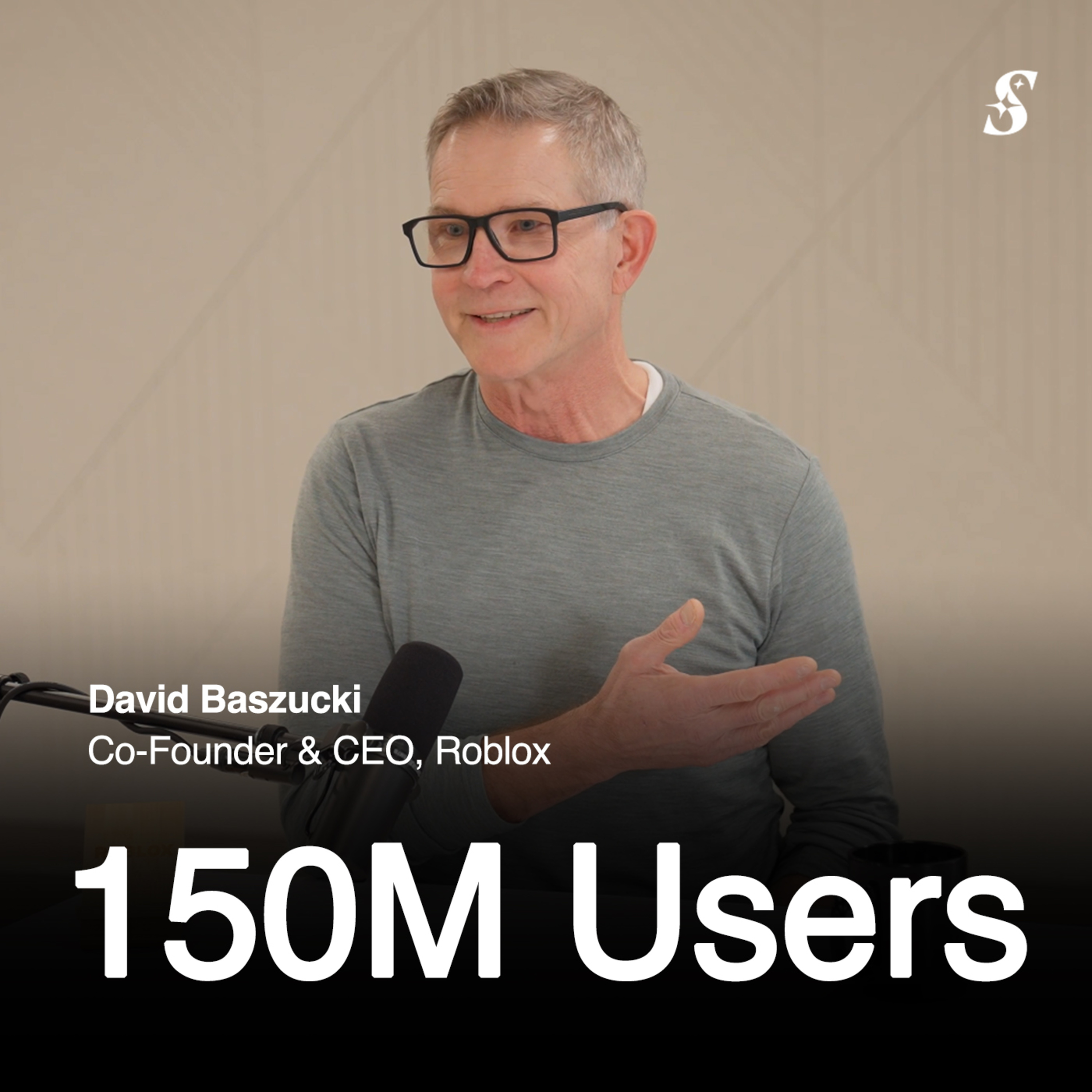
Instead of saving gameplay as video (raster data), Roblox intends to store its entire history as vector data. This would allow any event to be replayed and "re-shot" from any camera angle, creating a uniquely powerful dataset for training AI and enabling new user experiences.
A significant portion of AI-generated assets (around 20% in this case) will require revision. The core advantage is not a perfect initial hit rate, but the extremely low cost and speed of iteration—regenerating or tweaking assets is an order of magnitude faster than traditional 3D modeling revisions.

Railway encourages its team to use AI not just for coding but to build massive test benches and prototypes of future product concepts. This allows them to validate complex ideas for free, accelerate learning, and in some cases, skip incremental roadmap items to build the final vision sooner.

Roblox aims to create personal NPCs by training them on users' specific behaviors, gestures, and speech. These "virtual doppelgangers" could act as agents, performing tasks or standing in for the user in virtual experiences, moving far beyond generic AI companions.
BuzzFeed is using AI-powered toolkits that allow creative staff, like writers, to design and launch interactive products such as games. This dramatically increases the speed and volume of new product experimentation without relying on traditional engineering resources.
