Get your free personalized podcast brief
We scan new podcasts and send you the top 5 insights daily.
We have formal languages like Lean for deductive proofs, which AI can be trained on. The next frontier is developing a language to capture mathematical *strategy*—how to assess a conjecture's plausibility or choose a promising path. This would help automate the intuitive, creative part of mathematical discovery.
Related Insights
Generative AI can produce the "miraculous" insights needed for formal proofs, like finding an inductive invariant, which traditionally required a PhD. It achieves this by training on vast libraries of existing mathematical proofs and generalizing their underlying patterns, effectively automating the creative leap needed for verification.
Languages like Lean allow mathematical proofs to be automatically verified. This provides a perfect, binary reward signal (correct/incorrect) for a reinforcement learning agent. It transforms the abstract art of mathematics into a well-defined environment, much like a game of Go, that an AI can be trained to master.

The purpose of creating a superhuman mathematician is not just to solve proofs, but to establish a system of verifiable reasoning. This formal verification capability will be essential to ensure the safety, reliability, and collaborative potential of all future AI code and superintelligence.

Andrej Karpathy's 'Software 2.0' framework posits that AI automates tasks that are easily *verifiable*. This explains the 'jagged frontier' of AI progress: fields like math and code, where correctness is verifiable, advance rapidly. In contrast, creative and strategic tasks, where success is subjective and hard to verify, lag significantly behind.

The advancement of AI is not linear. While the industry anticipated a "year of agents" for practical assistance, the most significant recent progress has been in specialized, academic fields like competitive mathematics. This highlights the unpredictable nature of AI development.

AI and formal methods have been separate fields with opposing traits: AI is flexible but untrustworthy, while formal methods offer guarantees but are rigid. The next frontier is combining them into neurosymbolic systems, creating a "peanut butter and chocolate" moment that captures the best of both worlds.
Unlike other sciences, mathematics has historically lacked a strong experimental branch. AI changes this by enabling large-scale studies—for example, testing a thousand different problem-solving approaches on a thousand problems. This creates a new, data-driven methodology for a field that has been almost entirely theoretical.
The ultimate goal isn't just modeling specific systems (like protein folding), but automating the entire scientific method. This involves AI generating hypotheses, choosing experiments, analyzing results, and updating a 'world model' of a domain, creating a continuous loop of discovery.

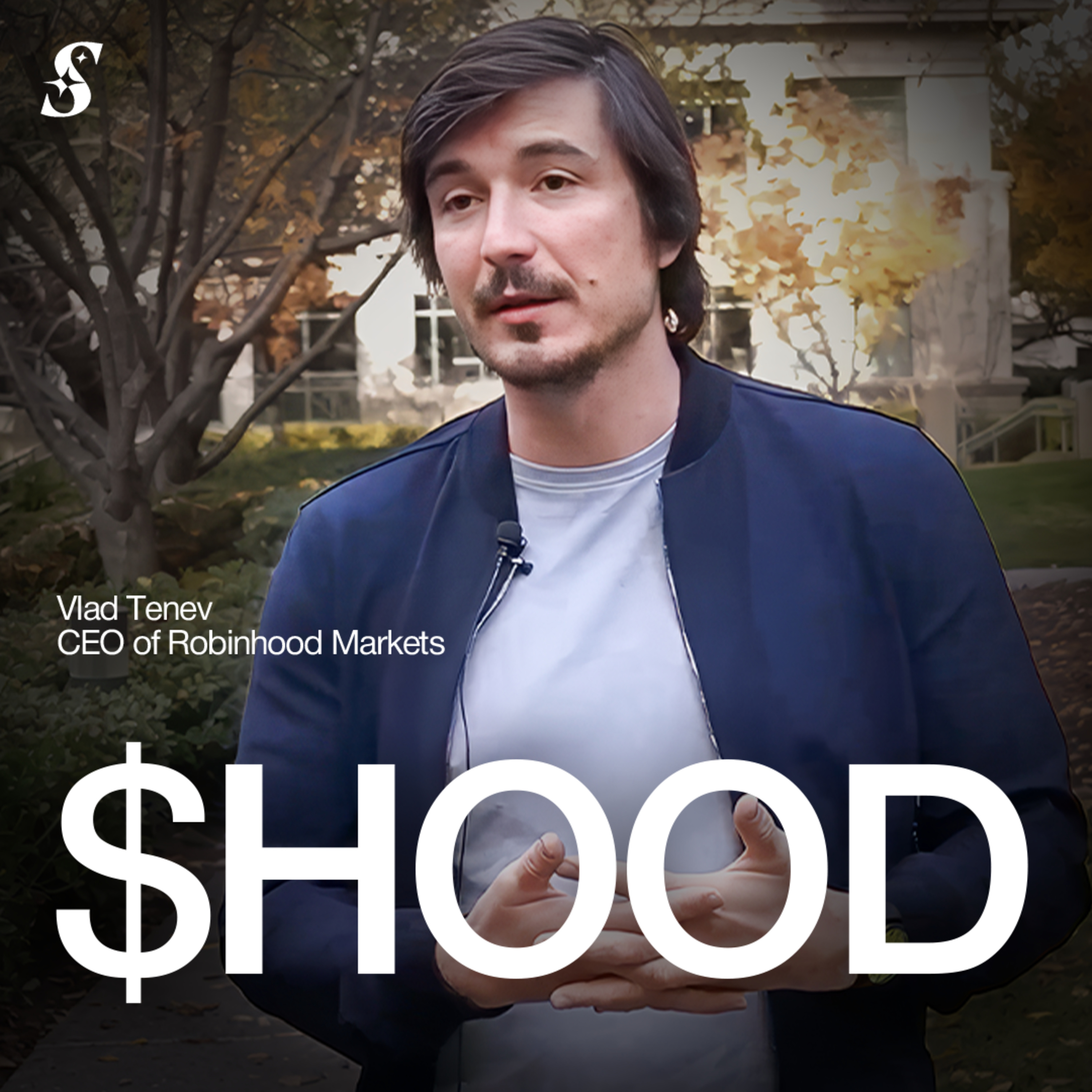
Harmonic, co-founded by Vlad Tenev to build mathematical superintelligence, has seen its model 'Aristotle' advance faster than anticipated. Initially targeting competition-level math, Aristotle is already assisting with or solving previously unsolved 'Erdős problems,' accelerating the timeline towards tackling foundational scientific challenges.
We perceive complex math as a pinnacle of intelligence, but for AI, it may be an easier problem than tasks we find trivial. Like chess, which computers mastered decades ago, solving major math problems might not signify human-level reasoning but rather that the domain is surprisingly susceptible to computational approaches.
