Get your free personalized podcast brief
We scan new podcasts and send you the top 5 insights daily.
When Dr. Decker's discovery challenged established science, he faced intense skepticism. Instead of trying to convince others, he focused on deeply understanding the mechanism for himself. This internal conviction, built from rigorous hands-on work, was key to persevering for over 20 years.

Related Insights
Even Donald Hoffman, proponent of the consciousness-first model, admits his emotions and intuition resist his theory. He relies solely on the logical force of mathematics to advance, demonstrating that groundbreaking ideas often feel profoundly wrong before they can be proven.

Dr. Dispenza initially wrote with critics in mind, forcing him to meticulously back up his work, which created a strong foundation. Once the results of his work became undeniable, he consciously stopped catering to detractors. This two-step process allows for both intellectual rigor and creative freedom.

The conviction that you can achieve something is what enables the actions that create proof. Waiting for external validation first is a common fear response that leads to inaction and downward spirals. You must decide you can before the evidence exists.

The strength of scientific progress comes from 'individual humility'—the constant process of questioning assumptions and actively searching for errors. This embrace of being wrong, or doubting one's own work, is not a weakness but a superpower that leads to breakthroughs.

Named after a doctor whose life-saving hand-washing theories were rejected, the Semmelweis reflex describes the tendency to ignore new evidence that conflicts with existing paradigms. Accepting the new idea would force an admission of past error, which is psychologically difficult. This is a crucial barrier to overcome when selling new ideas internally.
Skepticism is a scientist's superpower, but it's a barrier to new ideas. Effective communication must first put that skepticism at bay and activate curiosity. Use tools like analogies or framing questions to make an audience open and receptive before presenting a novel claim or data set.

To endure a multi-year build with constant self-doubt, the founder maintained a core belief: since the market need was proven and existing products were flawed, a better solution was physically possible. This framed the challenge as one of perseverance, not possibility.

True scientific advancement happens when researchers refuse to accept 'no' as an answer. When immunotherapy was dismissed for lung cancer, pioneers investigated why it worked in melanoma but not other cancers. This mindset—questioning failures and studying successes—is key to turning scientific impossibilities into standard treatments.

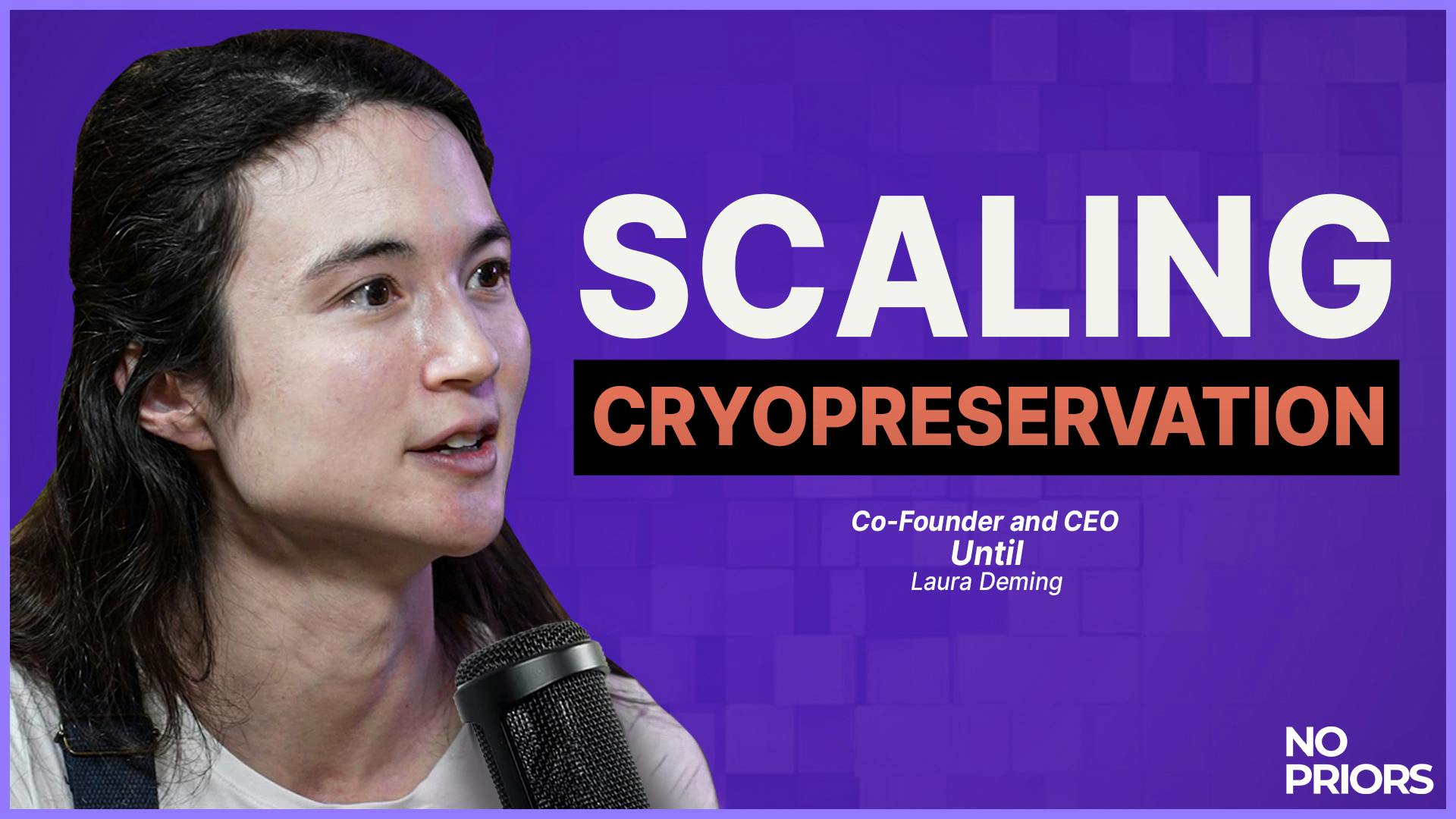
Laura Deming's co-founder, Hunter, wasn't swayed by existing research. His initial skepticism turned to conviction only after he independently re-derived the fundamental physics of ice formation from first principles. This illustrates the depth of technical diligence required to validate radical ideas and build a foundation for tackling seemingly sci-fi challenges.
To counteract the brain's tendency to preserve existing conclusions, Charles Darwin deliberately considered evidence that contradicted his hypotheses. He was most rigorous when he felt most confident in an idea—a powerful, counterintuitive method for maintaining objectivity and avoiding confirmation bias.
![Charlie Munger and The Psychology of Human Misjudgement [Outliers] thumbnail](https://megaphone.imgix.net/podcasts/ffb628d4-c418-11f0-acd7-b3217b3943c4/image/37067138e685dc4ea5d98531397f6711.png?ixlib=rails-4.3.1&max-w=3000&max-h=3000&fit=crop&auto=format,compress)