Get your free personalized podcast brief
We scan new podcasts and send you the top 5 insights daily.
AI's role in bioprocessing is not to replace scientists but to augment their abilities. It serves as a powerful tool providing predictive insights and autonomous optimizations. The ideal future is a partnership where humans guide strategy and interpret results, while AI handles the complex data analysis to make processes faster and more reliable.

Related Insights
Business owners should view AI not as a tool for replacement, but for multiplication. Instead of trying to force AI to replace core human functions, they should use it to make existing processes more efficient and to complement human capabilities. This reframes AI from a threat into a powerful efficiency lever.

By training on multi-scale data from lab, pilot, and production runs, AI can predict how parameters like mixing and oxygen transfer will change at larger volumes. This enables teams to proactively adjust processes, moving from 'hoping' a process scales to 'knowing' it will.
The most significant breakthroughs will no longer come from traditional wet lab experiments alone. Instead, progress will be driven by the smarter application of AI and simulations, with future bioreactors being as much digital as they are physical.
The strategic narrative for AI integration is shifting from automation (replacement) to augmentation (collaboration). Augmentation positions AI as an assistant that enhances human skills, enabling teams to achieve outcomes that neither humans nor AI could accomplish independently. This fosters a more inclusive and productive environment.
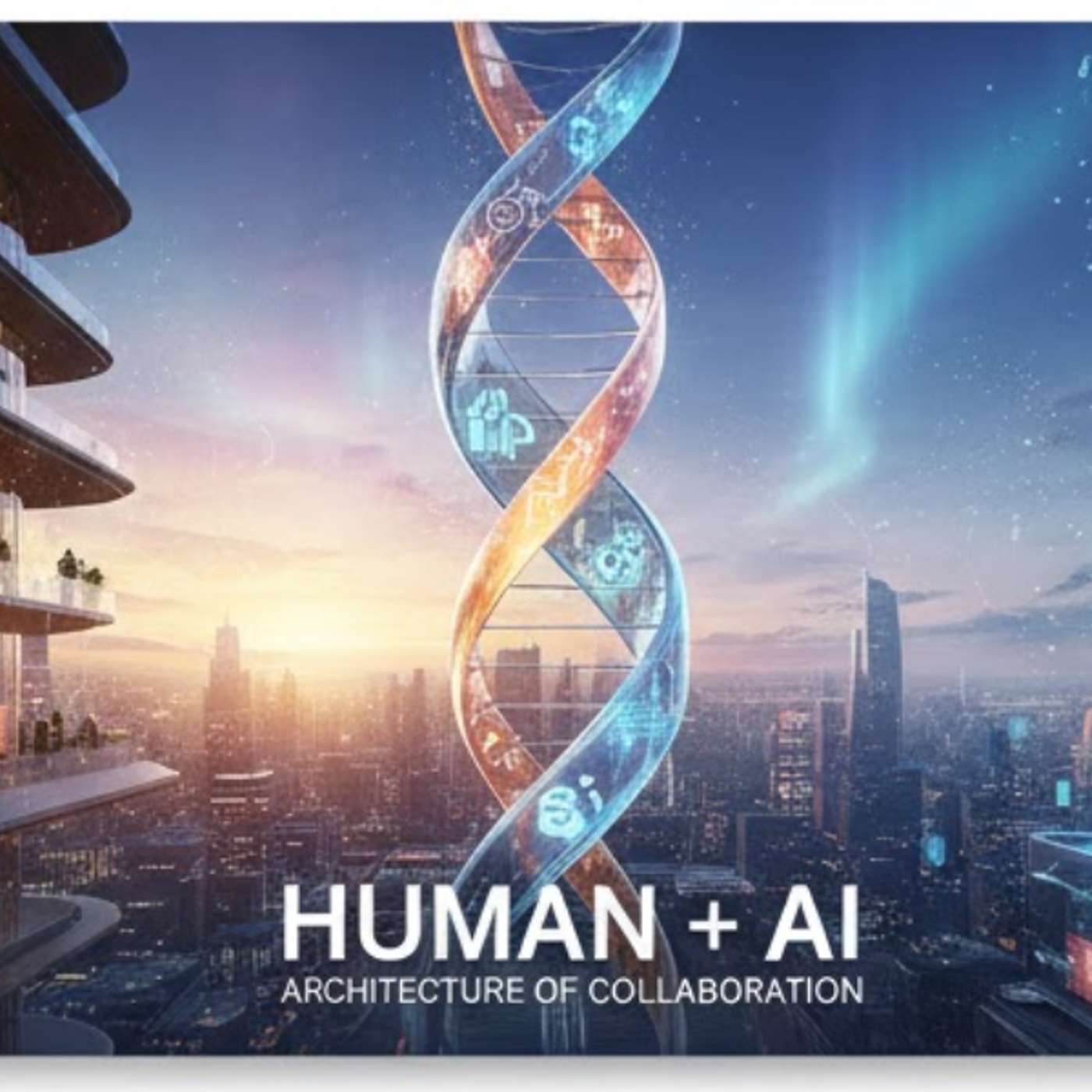
Despite hype in areas like self-driving cars and medical diagnosis, AI has not replaced expert human judgment. Its most successful application is as a powerful assistant that augments human experts, who still make the final, critical decisions. This is a key distinction for scoping AI products.

Contrary to the idea that AI will make physical experiments obsolete, its real power is predictive. AI can virtually iterate through many potential experiments to identify which ones are most likely to succeed, thus optimizing resource allocation and drastically reducing failure rates in the lab.
AI excels at intermediate process steps but requires human guidance at the beginning (setting goals) and validation at the end. This 'middle-to-middle' function makes AI a powerful tool for augmenting human productivity, not a wholesale replacement for end-to-end human-led work.

According to Immunocore's CEO, the biggest imminent shift in drug development is AI. The critical need is not for AI to replace scientists, but for a new breed of professionals fluent in both their scientific domain and artificial intelligence. Those who fail to adapt will be left behind.

Contrary to fears of displacement, AI tools like 'AI co-scientists' amplify human ingenuity. By solving foundational problems (like protein folding) and automating tedious tasks, AI enables more researchers, even junior ones, to tackle more complex, high-level scientific challenges, accelerating discovery.

The next evolution of biomanufacturing isn't just automation, but a fully interconnected facility where AI analyzes real-time sensor data from every operation. This allows for autonomous, predictive adjustments to maintain yield and quality, creating a self-correcting ecosystem that prevents deviations before they impact production.