Get your free personalized podcast brief
We scan new podcasts and send you the top 5 insights daily.
Demonstrating AI's transformative power, Chinese biotech firm Insilico Medicine used its platform to develop a drug for lung fibrosis. The AI-native approach reduced discovery time by 70% and drastically cut the number of potential drug candidates needed for testing from hundreds of thousands down to just 78.

Related Insights
AI modeling transforms drug development from a numbers game of screening millions of compounds to an engineering discipline. Researchers can model molecular systems upfront, understand key parameters, and design solutions for a specific problem, turning a costly screening process into a rapid, targeted design cycle.

The long-term strategy for AI in drug discovery is a two-step process. First, create an AI platform to design effective drugs. Second, after a dozen or so AI-designed drugs succeed, use that data to convince regulators to trust AI predictions, potentially allowing future drugs to skip steps like animal testing and accelerate trials.

The integration of AI in drug development has been extraordinarily fast. What were vague, 'hand wavy' AI/ML claims on pitch decks just 3-4 years ago have, since ChatGPT's 2022 arrival, become a fundamental, end-to-end retooling of how the industry discovers and develops drugs.

AI's impact isn't one magic bullet. It will accelerate drug discovery by enhancing multiple stages simultaneously: biasing protein drug candidates to fold correctly, improving their targeting and stability, and enabling the synthesis and testing of massive libraries in parallel. This multi-pronged optimization will create an exponential effect.

The future of AI in drug discovery is shifting from merely speeding up existing processes to inventing novel therapeutics from scratch. The paradigm will move toward AI-designed drugs validated with minimal wet lab reliance, changing the key question from "How fast can AI help?" to "What can AI create?"

AI's primary value in early-stage drug discovery is not eliminating experimental validation, but drastically compressing the ideation-to-testing cycle. It reduces the in-silico (computer-based) validation of ideas from a multi-month process to a matter of days, massively accelerating the pace of research.

Traditional drug discovery is a slow, sequential "waterfall" process with expensive gates. AI models that generate promising candidates quickly are transforming this into an agile, iterative loop, much like the revolution in software development. This dramatically reduces the cost of early experimentation.
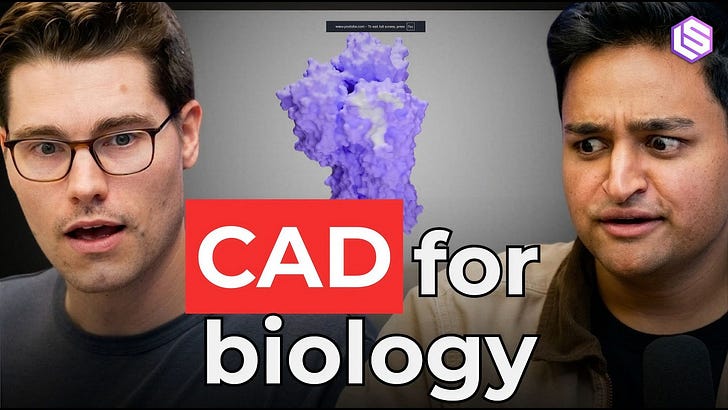
Venture capital is heavily backing companies with AI-powered drug discovery engines. Irindil Labs' massive $787 million financing shows extreme investor confidence that computational platforms can de-risk and accelerate pipeline development for complex diseases like autoimmune disorders and cancer.
For patients with ultra-rare diseases, traditional drug development is too slow. AI platforms like Therna's can design a custom RNA molecule in days and complete the lab-testing cycle in under three months, compressing a multi-year process and making previously impossible treatments viable.

A major biotech revolution is underway as AI now enables effective 'in silico' (simulated) experiments. This shift from physical "wet labs" to cheap, infinitely scalable simulations drastically cuts time and cost for drug discovery, making audacious goals like curing cancer scientifically plausible.
