Get your free personalized podcast brief
We scan new podcasts and send you the top 5 insights daily.
Counterintuitively, blinatumomab benefits patients who are already MRD-negative. This indicates that even the most sensitive tests (down to 10^-6) miss clinically relevant disease. The therapy targets this sub-clinical residual leukemia, preventing future relapse and improving outcomes for patients considered to be in deep remission.

Related Insights
A key conceptual shift is viewing ctDNA not as a statistical risk marker, but as direct detection of molecular residual disease (MRD). This framing, similar to how a CT scan identifies metastases, explains its high positive predictive value and justifies its use in making critical treatment decisions.
The treatment backbone for Ph+ ALL is shifting away from intensive chemotherapy like hyper-CVAD. Chemotherapy-free regimens combining blinatumomab with a TKI (preferably ponatinib) are becoming the new standard, showing outcomes that are at least as good as, and likely better than, traditional chemotherapy.
Menin inhibitors achieve high rates of MRD-negative remissions. However, the median duration is very short (4-6 months), suggesting current MRD assays may not adequately capture residual disease and that "MRD negativity" is not a reliable predictor of long-term benefit for this drug class.
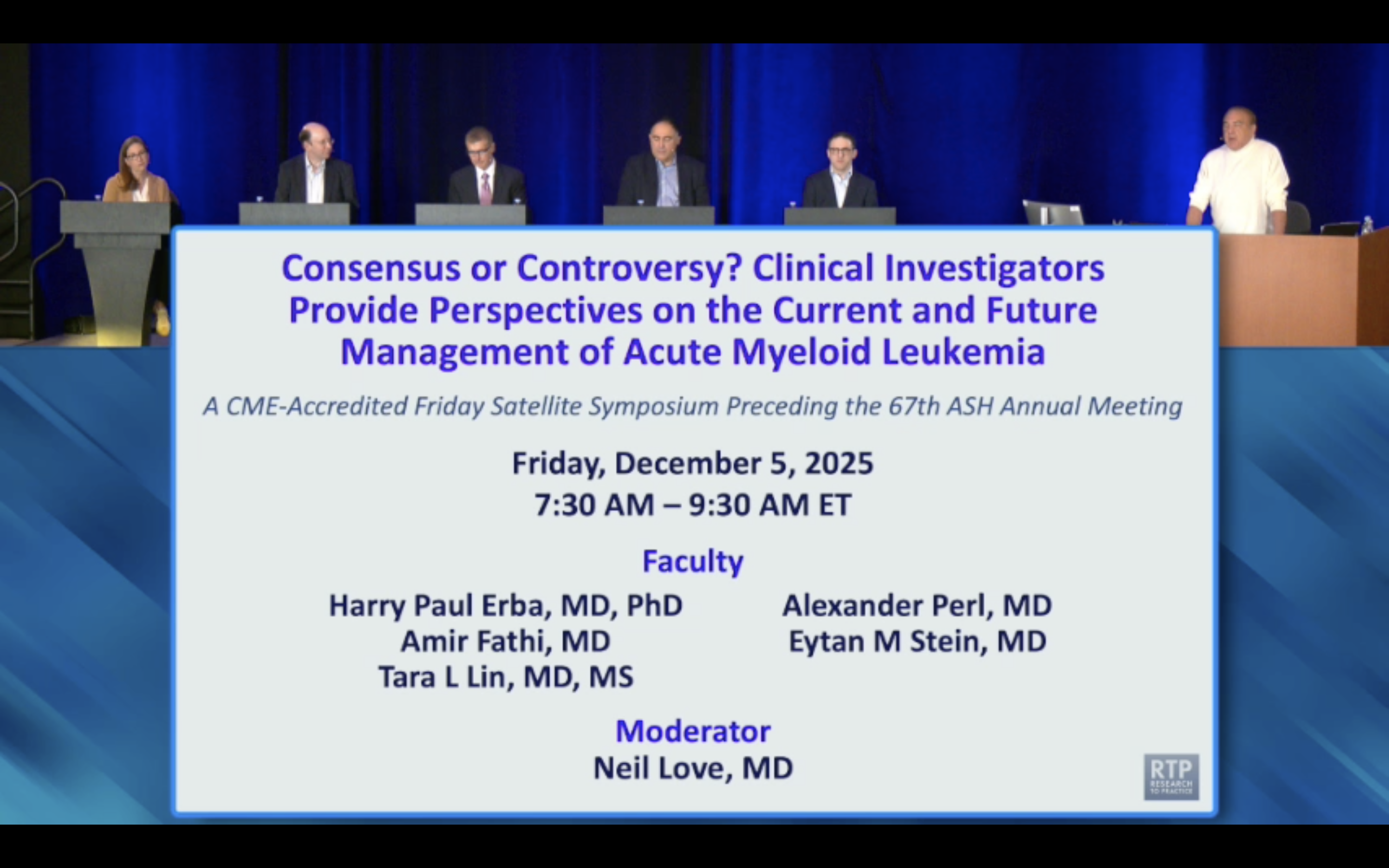
New BiTEs like Survatamig are achieving high response rates (73-78%) in heavily pre-treated ALL patients, including those who have already relapsed after receiving blinatumomab or CAR-T cell therapy. This indicates that resistance to one CD19-targeting agent does not preclude a deep response to another with a different molecular design.
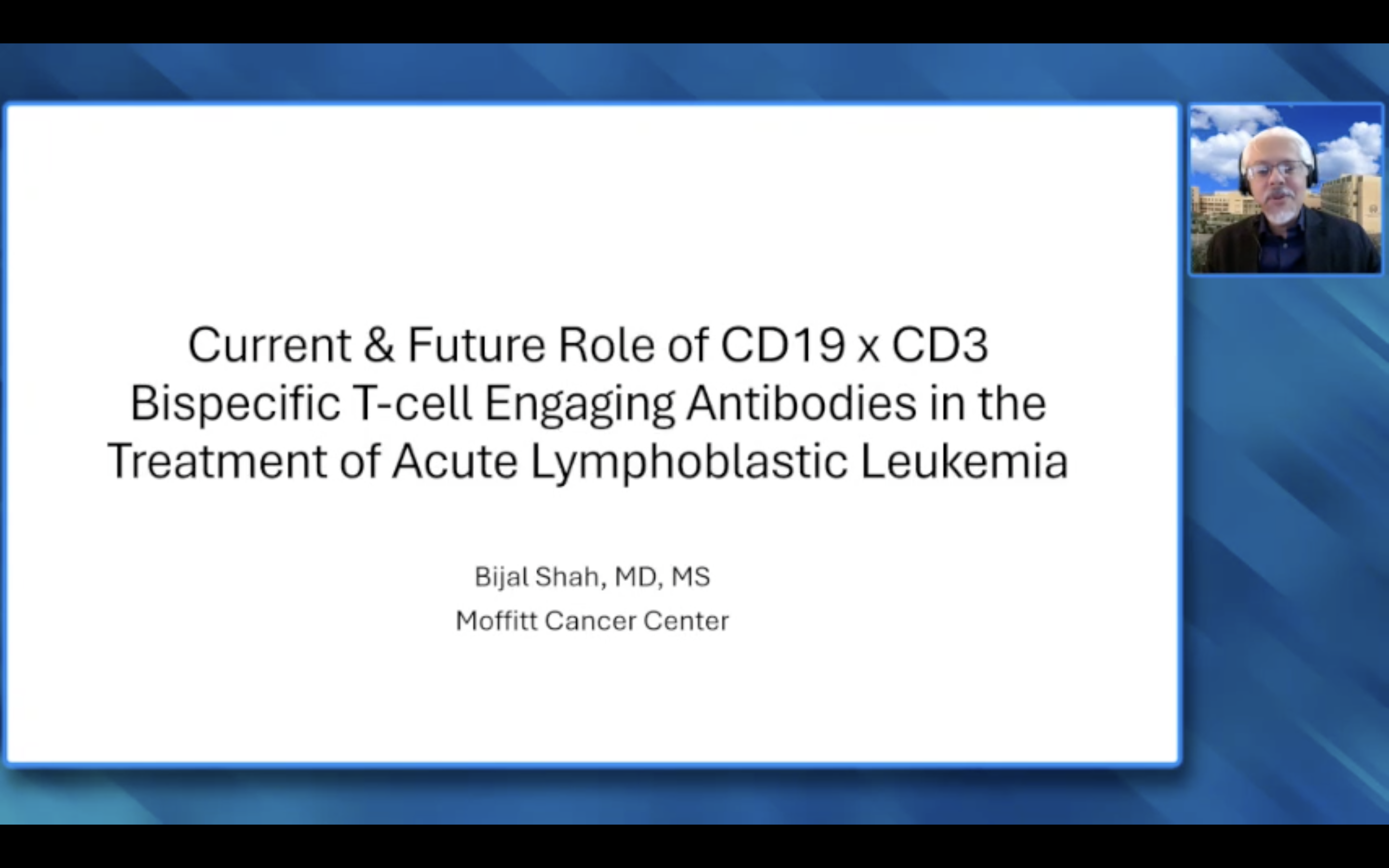
Genomic risk factors like TP53 mutations can predict immunotherapy failure mechanisms. In a case of TP53-mutated ALL, treatment with blinatumomab led to relapse with CD19-dim or negative disease. This suggests the underlying genomics predispose the cancer to shed its target antigen under therapeutic pressure.
The ECOG 1910 study revealed a surprising benefit of adding blinatumomab to frontline ALL therapy. Beyond decreasing relapse-related deaths, it also lowered non-relapse mortality. This was achieved simply by giving adult patients a much-needed break from the cumulative toxicity of continuous multi-agent chemotherapy.
In the pivotal ECOG1910 trial, adding blinatumomab to frontline chemotherapy did more than just prevent relapse. It also improved non-relapse mortality, meaning it was a safer and more tolerable consolidation strategy than the chemotherapy alternative. This dual benefit drove its profound overall survival advantage.
A case study of a bed-bound 59-year-old with multiple comorbidities highlights a paradigm shift. Instead of intensive chemotherapy, a gentle induction followed by targeted, chemo-free consolidation with blinatumomab and a TKI led to a durable three-year remission, a result previously considered impossible for such a high-risk patient.
Blinatumomab, initially for relapsed/refractory ALL, transformed outcomes when moved to earlier treatment stages for patients with minimal residual disease (MRD). This strategic shift from a high-burden salvage therapy to a low-burden consolidation therapy dramatically increased its efficacy and improved survival curves.
A key failure pattern for blinatumomab is relapse in extramedullary sites (outside the bone marrow). An analysis found that 43% of relapses involved these sites, suggesting the therapy may not effectively reach or clear disease in areas like the CNS or lymph nodes, allowing blasts to hide and re-emerge.