Get your free personalized podcast brief
We scan new podcasts and send you the top 5 insights daily.
Instead of a traditional top-down sales model, Anthropic is embedding its technology within enterprises by training 30,000 Accenture consultants on its tools. This creates a distributed, third-party implementation force that drives bottom-up adoption, effectively outsourcing enterprise sales and integration.
Related Insights
Instead of hiring a 'Chief AI Officer' or an agency, the most successful GTM AI deployments empower existing top performers. Pair your best SDR, marketer, or RevOps person with AI tools, and let them learn and innovate together. This internal expertise is more valuable than any external consultant.
AI companies can accelerate enterprise adoption by focusing on workflows already outsourced to BPOs. This provides pre-codified standard operating procedures (SOPs), existing QA processes, and simpler change management, as replacing a vendor is easier than displacing an internal team.

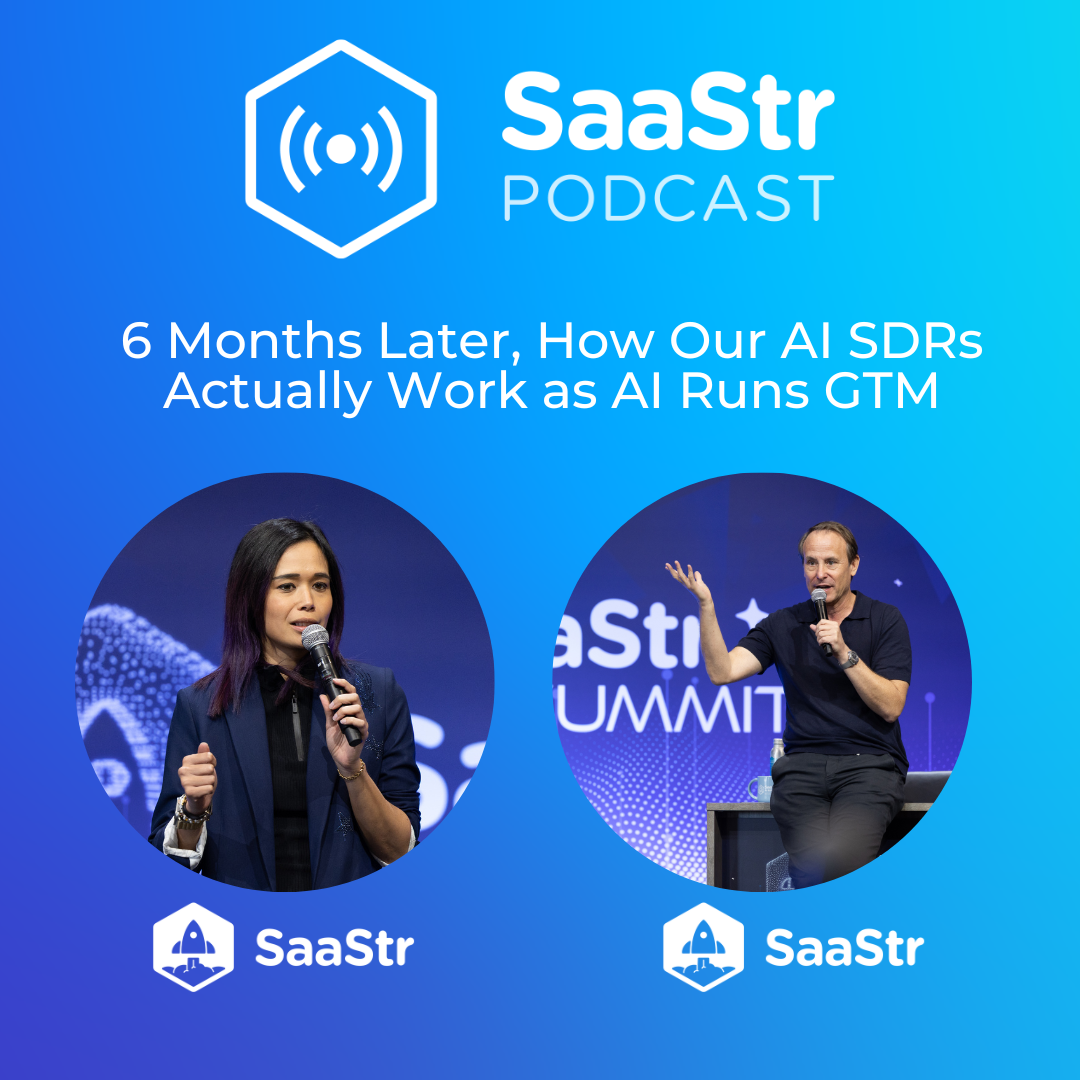
Jason Lemkin's company, SaaStr, transitioned from a go-to-market team of roughly 10 humans to just 1.2 humans managing 20 AI agents. This new, AI-driven team is achieving the same level of business performance as the previous all-human team, demonstrating a viable new model for sales organizations.

Companies are replacing traditional, siloed sales assembly lines with a centralized "GTM Engineer." This technical role uses AI and automation tools to build revenue systems, absorbing the manual research and prospecting work previously done by individual reps. This allows for rapid learning and scaling of creative ideas across the entire team.

For its first three years, Read AI closed enterprise deals without salespeople. When IT departments inquired due to massive bottom-up adoption, the company provided self-service admin tools and automated volume discounts, often avoiding sales calls entirely.

Directly approaching large organizations is often ineffective. Instead, emulate Slack's growth model by getting individual employees to use and love the product. This creates internal champions who advocate for wider organizational adoption, pulling the product in rather than pushing it from the outside.

OpenAI is hiring hundreds of "forward deployed engineers" to act as technical consultants. This strategy aims to deeply integrate its AI agents into corporate workflows, creating a powerful services-led moat against rivals by providing custom, hands-on implementation for large clients.
The narrative that AI killed traditional GTM is false. Leaders at firms like OpenAI and Anthropic are SaaS veterans applying modified versions of proven strategies. If your GTM is failing, the problem is likely poor execution, not an outdated playbook.
Snyk combined bottom-up adoption with top-down sales in a 'pincer movement.' They leveraged existing developer usage within an organization as a powerful entry point for their outbound sales team to engage security leaders, turning user love into a compelling conversation with the economic buyer.

Large companies integrate AI through three primary methods: buying third-party vendor solutions (e.g., Harvey for legal), building custom internal tools to improve efficiency, or embedding AI directly into their customer-facing products. Understanding these pathways is critical for any B2B AI startup's go-to-market strategy.