Get your free personalized podcast brief
We scan new podcasts and send you the top 5 insights daily.
While low cost is a key benefit, the core innovation of the ETF is its tax structure. The in-kind creation and redemption process allows ETFs to avoid distributing capital gains to shareholders, unlike most mutual funds. This tax alpha often swamps other sources of return.

Related Insights
Vanguard founder Jack Bogle initially opposed ETFs, viewing intraday trading as speculation. Leadership overcame this by framing ETFs not as a trading product, but as an 'alternative distribution vehicle' to get their low-cost funds onto brokerage platforms and into advisors' hands, ultimately widening their market.

The shift to index funds was triggered not by a belief in market efficiency, but by the surprising discovery that alternative investments are highly tax-inefficient for individuals due to non-deductible fees and ordinary income, creating a tax drag of up to 20%.

Contrary to intuition, even a fully systematic, rules-based investment strategy benefits from an active ETF structure. This approach avoids third-party index licensing fees and provides crucial flexibility to delay rebalancing during volatile market events, a cumbersome process for index-based funds.
The Section 351 tax code is intended for contributing an already diversified portfolio into a new ETF, not for taking a concentrated position and diversifying it tax-free. That latter goal is governed by the more restrictive Section 721, which often involves private partnerships and a seven-year holding period.
For most investors, alpha isn't about generating hedge-fund-level excess returns. Instead, it's about accessing unique strategies via ETFs that shape a portfolio beyond standard market-cap-weighted beta. This 'alpha for the rest of us' focuses on diversification and unique outcomes, not just beating the market.

The primary innovation of managed futures ETFs isn't merely democratizing access. It's solving the traditional model's core flaw: exorbitant costs. By simplifying the portfolio and avoiding the "Rube Goldberg" trading of older funds, an ETF eliminates hundreds of basis points in fees and implementation costs, passing more value to investors.
The market for all-in-one asset allocation funds remains saturated with expensive, tax-inefficient mutual funds despite superior low-cost ETFs. The transition is slow because incumbent firms rely on investor inertia—the "death, divorce, or drawdowns" events that trigger portfolio reviews—to keep assets in legacy products, delaying an inevitable shift to more efficient solutions.

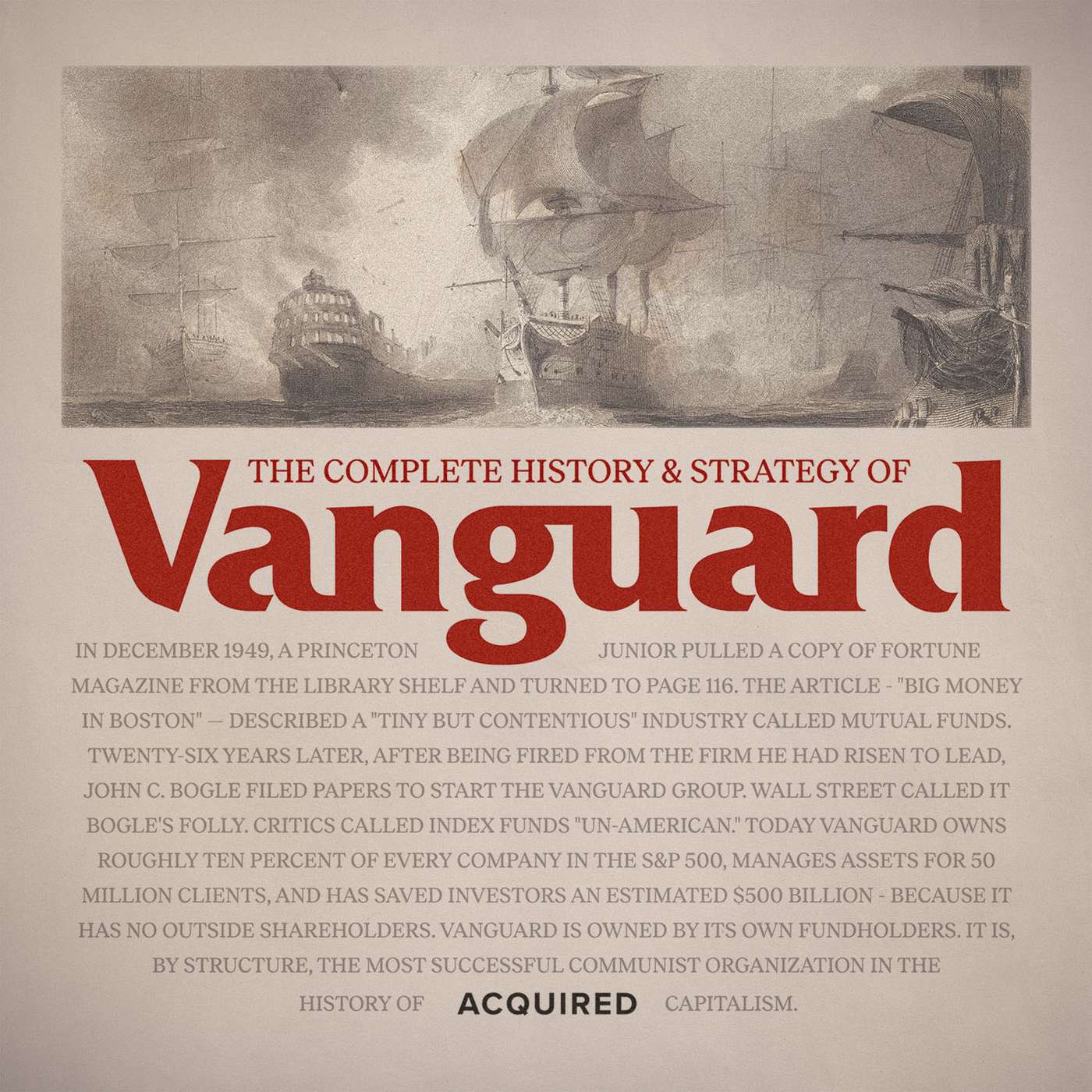
Vanguard's low-cost strategy is a direct result of its unique corporate structure. Since the company is owned by its fund investors, there's no incentive to generate profits for outside shareholders. Excess earnings are returned to customers via lower fees, a concept Jack Bogle called "strategy follows structure."
Increased regulatory and media attention on emerging tax strategies like 351 ETFs is a positive development. It forces transparency, helps the market distinguish between compliant and non-compliant operators, and solidifies best practices early in a product's life cycle before major problems can arise.
Effective index fund management is not passive. Vanguard's teams constantly balance four factors: precise index tracking, minimizing tax impact, reducing market impact from trades, and seeking small outperformance opportunities (positive excess return) from events like corporate actions.