Get your free personalized podcast brief
We scan new podcasts and send you the top 5 insights daily.
AI can get hyper-focused on a specific task and lose sight of the overall user flow. A dedicated "Spec Flow Analyzer" agent can simulate a user persona and review the entire plan, ensuring all necessary steps are connected and the feature is cohesive from a user's perspective.

Related Insights
Many users blame AI tools for generic designs when the real issue is a poorly defined initial prompt. Using a preparatory GPT to outline user goals, needs, and flows ensures a strong starting point, preventing the costly and circular revisions that stem from a vague beginning.
To discover high-value AI use cases, reframe the problem. Instead of thinking about features, ask, "If my user had a human assistant for this workflow, what tasks would they delegate?" This simple question uncovers powerful opportunities where agents can perform valuable jobs, shifting focus from technology to user value.
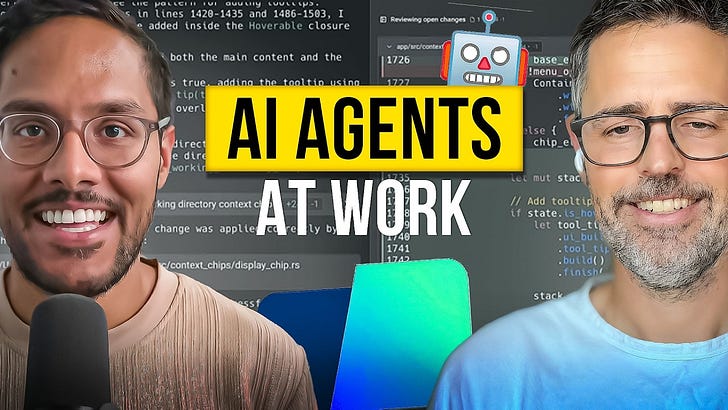
Instead of prompting for code line-by-line, "Plan Mode" has the AI agent generate a detailed plan in a markdown file first. The user reviews and modifies this plan like a spec document, elevating their role from coder to architect before the AI executes the build.
User workflows rarely exist in a single application; they span tools like Slack, calendars, and documents. A truly helpful AI must operate across these tools, creating a unified "desired path" that reflects how people actually work, rather than being confined by app boundaries.
To unlock the full potential of AI, don't just assign it single tasks. Instead, ask: 'If I had infinite, always-available junior talent, what is the ideal process I'd have them follow for a new ticket?' This framing helps you design more comprehensive, multi-step prompts and automations.
Borrowing from classic management theory, the most effective way to use AI agents is to fix problems at the earliest 'lowest value stage'. This means rigorously reviewing the agent's proposed plan *before* it writes any code, preventing costly rework later on.

The panel suggests a best practice for AI prototyping tools: focus on pinpointed interactions or small, specific user flows. Once a prototype grows to encompass the entire product, it's more efficient to move directly into the codebase, as you're past the point of exploration.

AI agents have limited context windows and "forget" earlier instructions. To solve this, generate PRDs (e.g., master plan, design guidelines) and a task list. Then, instruct the agent to reference these documents before every action, effectively creating a persistent, dynamic source of truth for the project.

Simply adding AI "nodes" to a deterministic workflow builder is a limited view of AI's potential. This approach fails to capture the human judgment and edge cases that define complex processes. A better architecture empowers AI agents to run standard operating procedures from end to end.

To get AI agents to perform complex tasks in existing code, a three-stage workflow is key. First, have the agent research and objectively document how the codebase works. Second, use that research to create a step-by-step implementation plan. Finally, execute the plan. This structured approach prevents the agent from wasting context on discovery during implementation.
