Get your free personalized podcast brief
We scan new podcasts and send you the top 5 insights daily.
A firm's ability to survive market cycles depends less on a stated 50-year outlook and more on having the assets, clients, and GP relationships to make that vision structurally possible. This foundation is what allows an LP to genuinely support partners through downturns.

Related Insights
In a bull market, it's hard to tell if a GP is skilled or just lucky. A downturn reveals their true discipline regarding valuations, capital deployment speed, and how they support founders through down rounds, providing LPs with robust underwriting data.

Top companies like Stripe are staying private for decades, extending the time VCs need to return capital to LPs. This shift from a 7-9 year cycle to a 16-20 year one fundamentally changes fund structure and liquidity expectations for both GPs and LPs.

In an environment of large, multi-stage funds, smaller firms differentiate by providing stable, long-term partner relationships and highly specialized networks. This appeals to founders who value dedicated support over just a large check and high valuation from a firm with high employee turnover.

While a first fund is raised on a compelling vision, raising a second requires demonstrating institutional maturity. LPs shift from underwriting a founder's promise to underwriting a firm's ability to be "consistently excellent." The narrative must evolve to highlight repeatable processes, refined decision frameworks, and a scalable organizational structure.

The rigid 10-year fund model is outdated for companies staying private longer. The future is permanent capital vehicles with hedge fund-like structures, offering long durations and built-in redemption features for LPs who need liquidity.

OMX Ventures defines its role not as a shadow operator but as a partner helping founders "see around corners." While founders are consumed by short-term execution (the next month or quarter), the VC's responsibility is to maintain a long-term perspective, looking a few years down the road to guide strategic thinking and ensure alignment.
The venture capital business requires consistent investment, not sprinting and pausing based on market conditions. A common mistake is for VCs to stop investing during downturns. For companies with 50-100x growth potential, overpaying slightly on entry price is irrelevant, as the key is capturing the outlier returns, not timing the market.

Foresite Capital's Jim Tananbaum values LPs who probe the firm's long-range, macro-thematic vision over short-term performance. Questions about future trends (e.g., AI in healthcare) signal an LP's alignment with a thesis-driven, forward-looking investment strategy, which he sees as the core of the business.
Unlike firms whose value is tied to a few key partners, Andreessen Horowitz is building an institution akin to Goldman Sachs. Their bet is that venture capital will evolve from small partnerships to large, institutional firms, making them better equipped to handle generational transitions and founder departures.

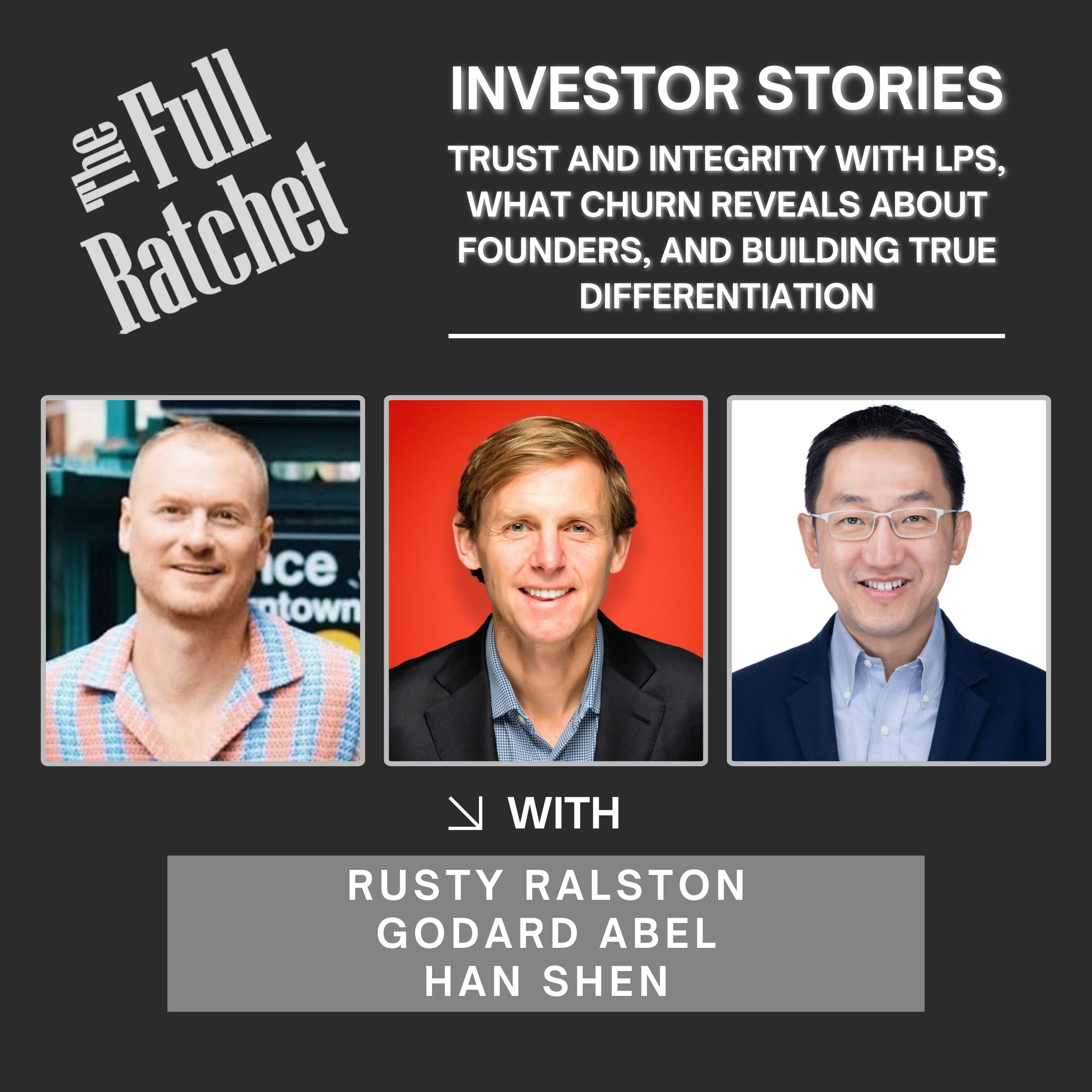
Swell VC's Rusty Ralston shares that the most insightful LPs probe a GP's character, values, and personal history. For multi-decade investment relationships, understanding the person is foundational to establishing the trust, character, and integrity required for long-term success, surpassing the importance of typical fund metrics.