Get your free personalized podcast brief
We scan new podcasts and send you the top 5 insights daily.
Breakthrough solutions often come from polymaths who can cross-pollinate ideas between different disciplines. By drawing on a diverse mental toolkit, they can see analogies and solutions that specialists within a single field might miss, as new stimuli are required to solve hard problems.

Related Insights
Creative solutions often emerge from those not deeply entrenched in a problem. Using the analogy of medical 'grand rounds'—where doctors from unrelated fields consult on a difficult case—Chopra suggests that non-experts can 'think outside the box' precisely because they aren't confined by conventional knowledge.

The best career paths are now found at the intersection of two seemingly unrelated disciplines. This "bilingual" approach creates a unique perspective and value that cannot be easily replicated by others with traditional, siloed expertise, like a pediatric surgeon who is also a game developer.

David Epstein's book *Range* shows that breakthrough innovators often switch disciplines. By entering a new field "through the side door," they bring different mental models and "far analogies" that allow them to see solutions incumbents cannot.

Groundbreaking ideas often emerge not from digging deeper in one specialty but from connecting existing knowledge across fields. Claude Shannon’s creation of binary code by applying an obscure philosophical logic system to electrical circuits is a prime example of this cross-disciplinary innovation.

Judea Pearl selects research problems using a two-part filter: 1) Is it a genuine puzzle to which he doesn't know the answer? and 2) Does he possess a unique set of tools or perspectives, possibly borrowed from another field, that could give him a distinct advantage in solving it?
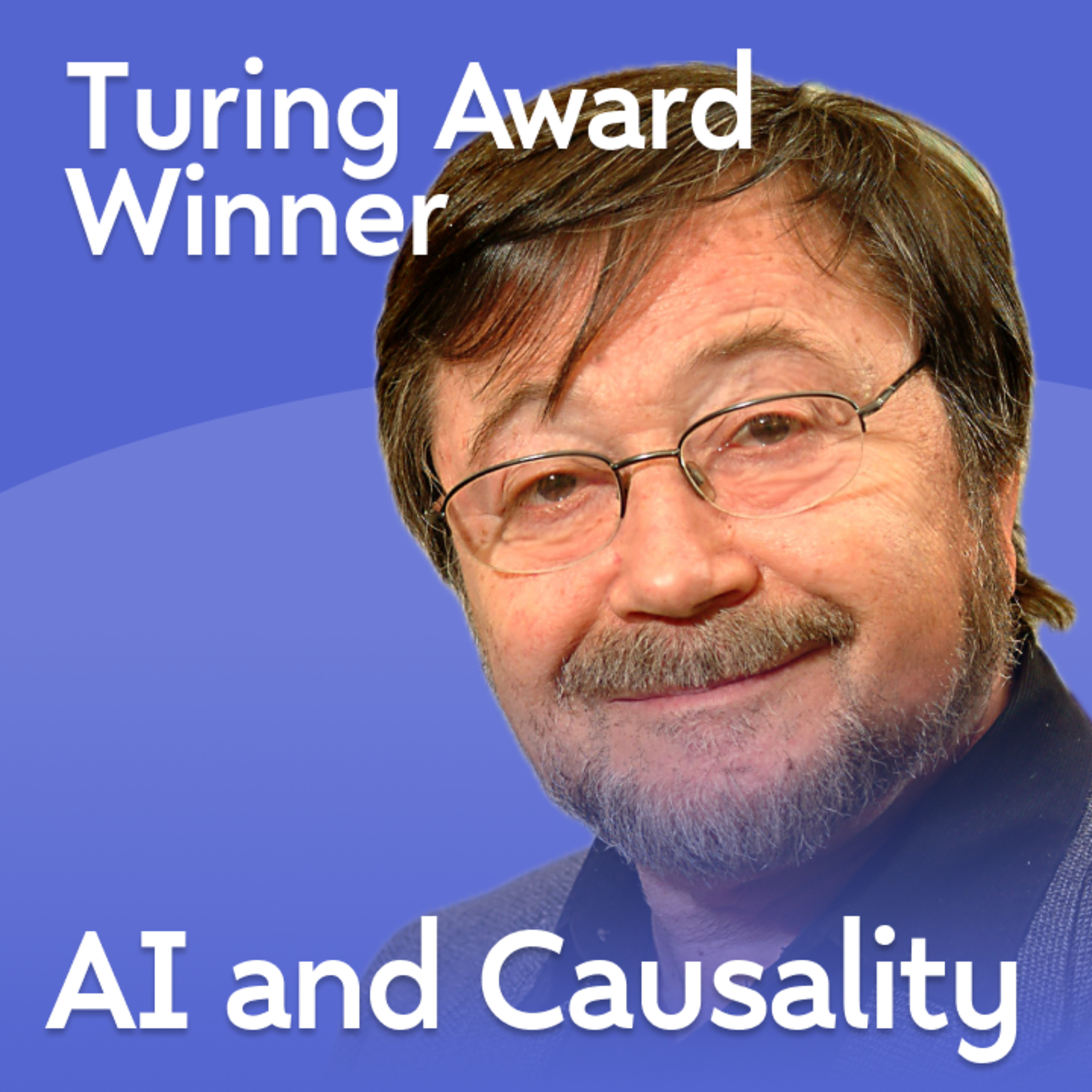
Experts often view problems through the narrow lens of their own discipline, a cognitive bias known as the "expertise trap" or Maslow's Law. This limits the tools and perspectives applied, leading to suboptimal solutions. The remedy is intentional collaboration with individuals who possess different functional toolkits.
The idea for a living computer came not from biologists, but from engineers with backgrounds in signal processing. This highlights how breakthrough innovations often occur at the intersection of disciplines, where outsiders can reframe a problem from a fresh perspective.

With no biology background, CEO Martine Rothblatt used 'shepardizing'—a legal research method of tracing footnotes—to navigate complex medical journals. This allowed her to find a life-saving molecule for her daughter, proving expert frameworks can be ported across unrelated fields.

In a rapidly changing world, the most valuable skill is not expertise in one domain, but the ability to learn itself. This generalist approach allows for innovative, first-principles thinking across different fields, whereas specialists can be constrained by existing frameworks.

As AI masters specialized knowledge, the key human advantage becomes the ability to connect ideas across different fields. A generalist can use AI as a tool for deep dives on demand, while their primary role is to synthesize information from multiple domains to create novel insights and strategies.
