Get your free personalized podcast brief
We scan new podcasts and send you the top 5 insights daily.
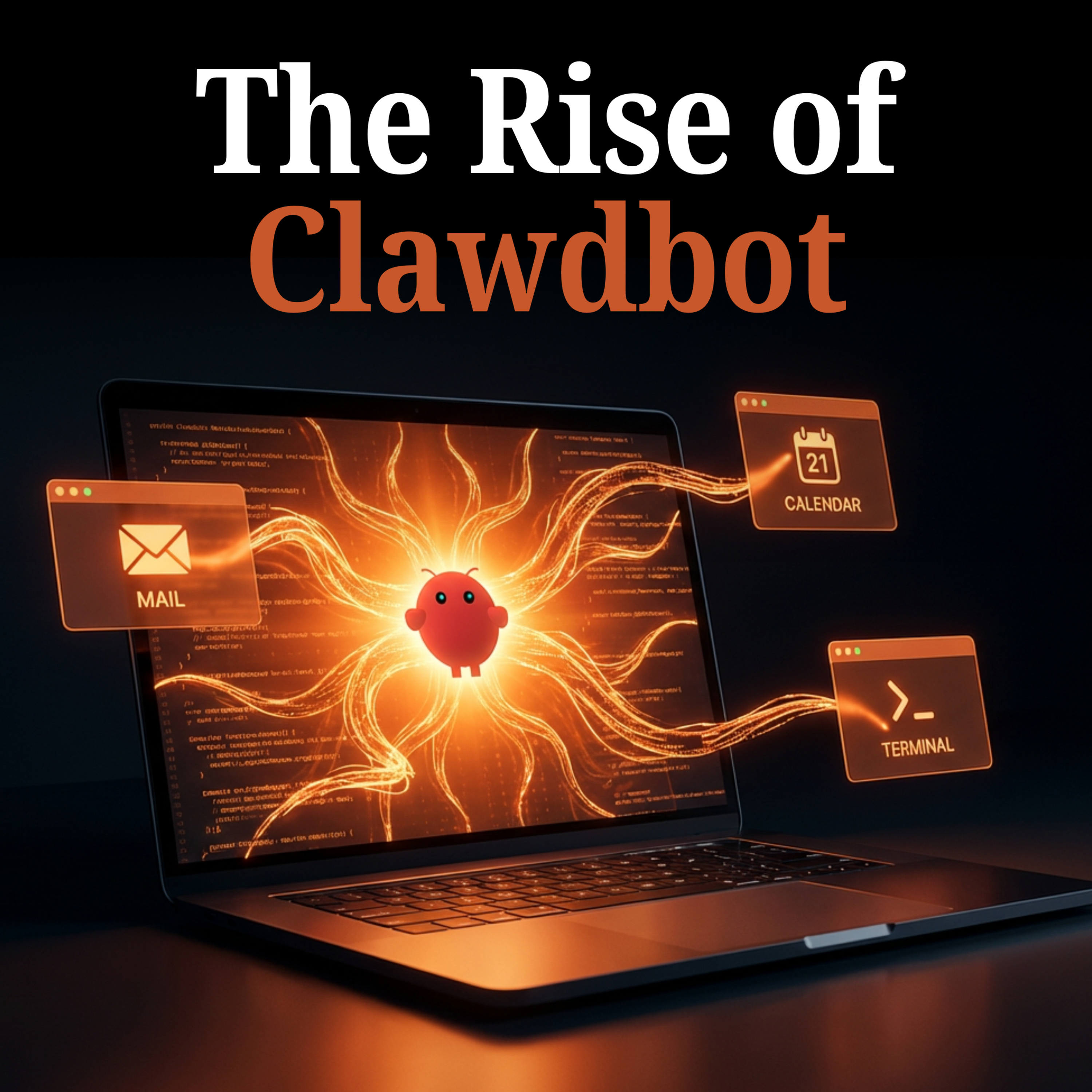
Despite significant buzz, the trend of buying Mac Minis to run local AI models has not translated into a sales surge. The devices remain widely in stock, suggesting the behavior is a niche, performative signal of being "AI native" rather than a widespread consumer movement.

Related Insights
The frenzy over Mac Minis to run Moltbot is a "sideshow." The true economic impact is the massive increase in GPU/TPU demand for inference. Each user running a persistent personal agent is effectively consuming the output of a dedicated data center chip, not just a local machine.

Users are choosing the Mac mini to run Claude Bot because it's an affordable, reliable, always-on device that offers crucial native iMessage integration. This allows them to control their desktop-based AI from their phone, effectively turning the Mac mini into a personal server.
Apple is deliberately avoiding the massive, capital-intensive data center build-out pursued by its rivals. The company is betting that a more measured approach, relying on partners and on-device processing, will appear strategically brilliant as the market questions the sustainability of the AI infrastructure gold rush.

Apple's seemingly slow AI progress is likely a strategic bet that today's powerful cloud-based models will become efficient enough to run locally on devices within 12 months. This would allow them to offer powerful AI with superior privacy, potentially leapfrogging competitors.
The surge in Mac mini purchases for running AI assistants isn't random. It's the ideal 'home server' because it's affordable, can run 24/7 reliably via ethernet, and critically, its macOS provides native iMessage integration—a key channel for interacting with the AI from a mobile device.
Marketers observe a significant disconnect between the sophisticated AI workflows discussed online and the more basic applications happening inside companies, even at the CMO level. This highlights the need for practical, real-world examples over theoretical hype.

The next major hardware cycle will be driven by user demand for local AI models that run on personal machines, ensuring privacy and control away from corporate or government surveillance. This shift from a purely cloud-centric paradigm will spark massive demand for more powerful personal computers and laptops.
There is a significant gap between how companies talk about using AI and their actual implementation. While many leaders claim to be "AI-driven," real-world application is often limited to superficial tasks like social media content, not deep, transformative integration into core business processes.
Companies are spending millions on enterprise AI tools not for measurable productivity gains but for "digital transformation" PR. A satirical take highlights a common reality: actual usage is negligible, but made-up metrics create positive investor narratives, making the investment a success in perception, not practice.
The trend of running AI agents on dedicated Mac Minis isn't just for performance. It reflects a user desire for a tangible, always-on 'AI buddy' or appliance, similar to an R2-D2, that manages their digital life.