Get your free personalized podcast brief
We scan new podcasts and send you the top 5 insights daily.
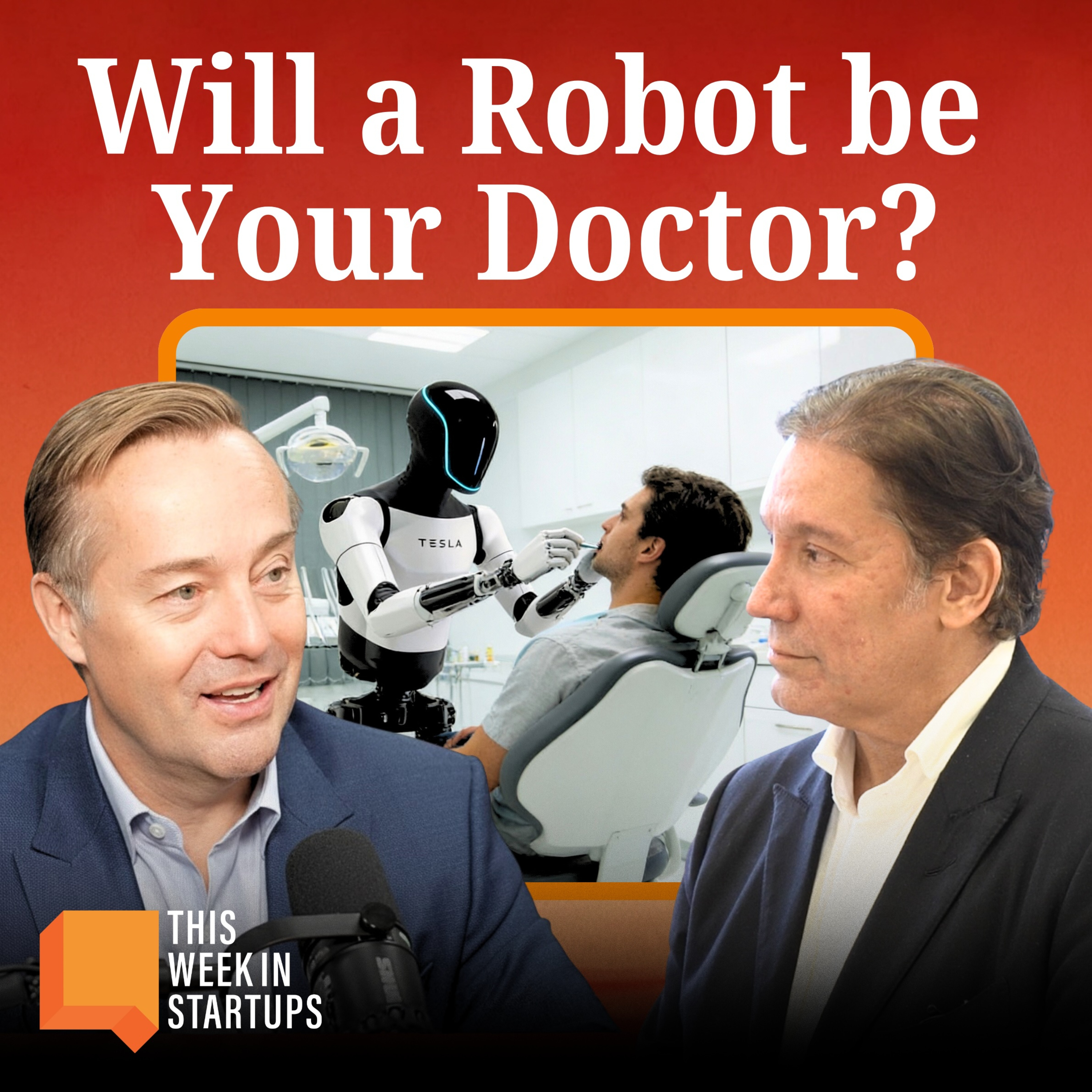
AI is being quietly integrated into dentistry to analyze X-rays and identify cavities. This has created a new workplace dynamic where some dental practices pressure dentists to act on the AI's findings, leading to conflicts when the AI identifies more issues than a human dentist believes requires intervention.

Related Insights
The future of healthcare will see AI handling initial patient consultations, effectively becoming the primary care doctor. This will streamline the process, sending patients directly to specialized clinics for diagnostic tests, bypassing traditional, inefficient doctor visits.
Hastings points to radiology as a case study for AI's counterintuitive economic effects. While AI is superior at image processing, it didn't eliminate jobs. Instead, it made MRIs cheaper, leading to more scans and a *shortage* of radiologists needed to approve AI findings.

Countering job loss fears, Jensen Huang cites that AI in radiology increased the demand for radiologists. AI automated the *task* (reading scans) but amplified the *purpose* (diagnosing disease). This efficiency allows for more scans and more patients to be treated, ultimately growing the need for the professionals who leverage the technology.

AI's most significant impact won't be on broad population health management, but as a diagnostic and decision-support assistant for physicians. By analyzing an individual patient's risks and co-morbidities, AI can empower doctors to make better, earlier diagnoses, addressing the core problem of physicians lacking time for deep patient analysis.

The most significant opportunity for AI in healthcare lies not in optimizing existing software, but in automating 'net new' areas that once required human judgment. Functions like patient engagement, scheduling, and symptom triage are seeing explosive growth as AI steps into roles previously held only by staff.
The conversation around AI in healthcare often focuses on patient-facing chatbots. However, the more significant, unspoken trend is adoption by clinicians themselves. As of last year, two out of three American doctors were already using AI for administrative tasks, translation, and even as a 'wingman' for clinical diagnosis.

Reid Hoffman argues AI models are so capable that patients with major medical issues are making a "huge mistake" if they don't use one for a second opinion. He suggests it's becoming "almost malpractice" for doctors not to use these tools to double-check themselves.
Jensen Huang uses radiology as an example: AI automated the *task* of reading scans, but this freed up radiologists to focus on their *purpose*: diagnosing disease. This increased productivity and demand, ultimately leading to more jobs, not fewer.

The widespread use of AI for health queries is set to change doctor visits. Patients will increasingly arrive with AI-generated analyses of their lab results and symptoms, turning appointments into a three-way consultation between the patient, the doctor, and the AI's findings, potentially improving diagnostic efficiency.

AI is improving medical imaging accuracy and speed by nearly 70%, enabling earlier detection of chronic diseases. This leads to more effective preventive care, which is crucial for an aging global population and offers a promising path to making overall healthcare more cost-effective.
