Get your free personalized podcast brief
We scan new podcasts and send you the top 5 insights daily.
While Congress is typically hawkish on China, significant price hikes on consumer electronics, driven by the AI chip shortage, create a powerful counter-pressure. Persistent inflation could force a political shift, prioritizing cheaper goods to control costs over containing China's tech advancement.

Related Insights
The AI boom is a double-edged sword for the economy. While driving growth through massive investment in data centers, it's also a key source of inflation. Prices for essential computer equipment and software have surged 10% year-over-year, directly feeding into broader price pressures.

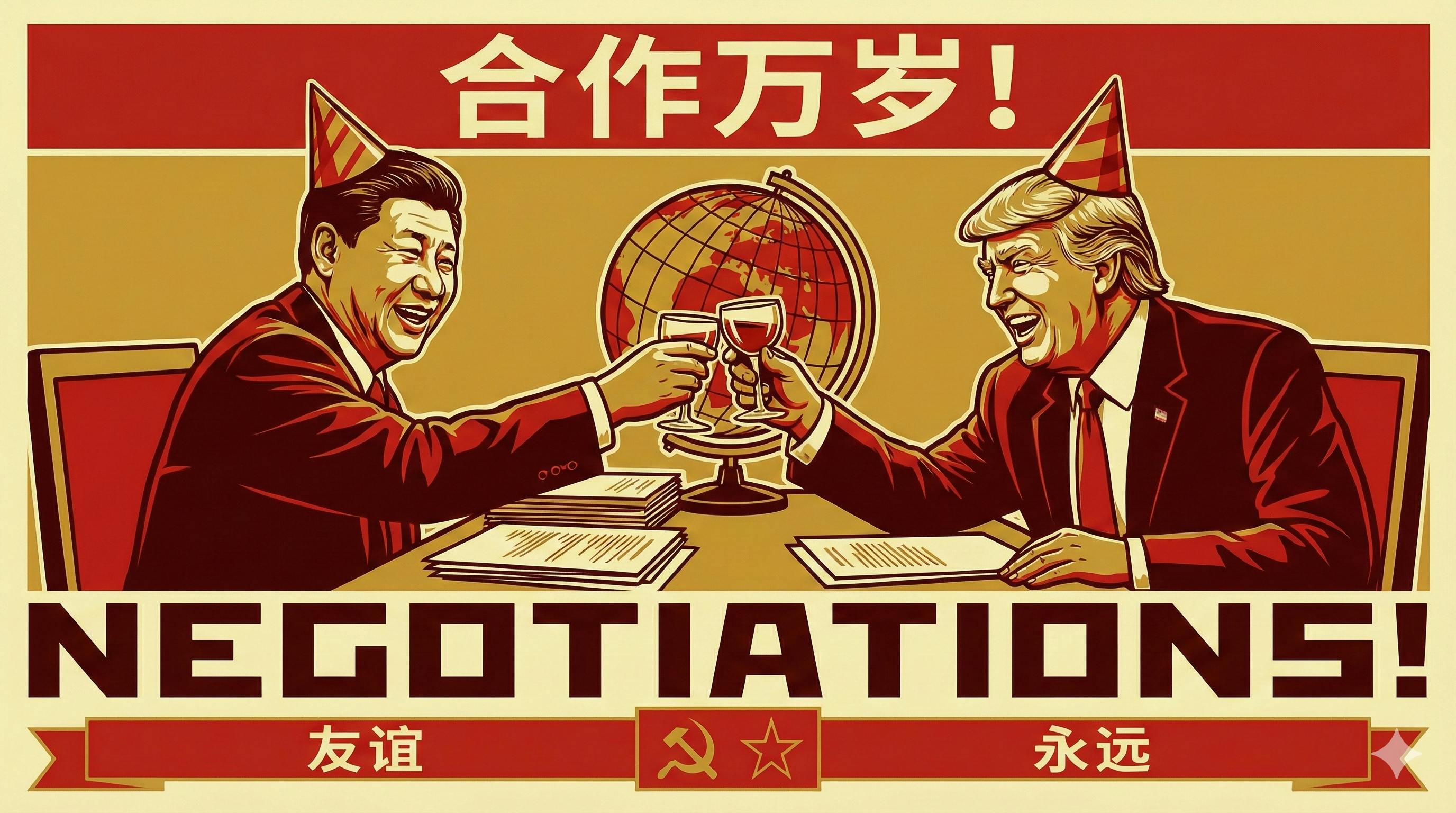
China's key learning from the past year is not that the U.S. lacks economic leverage, but that it lacks the political will to use it. Beijing perceives an unwillingness in Washington to endure domestic consequences, like higher consumer prices during an election year, to win a trade war.
A confluence of factors, including rising AI-driven component costs and higher oil prices, will likely flip China from a deflationary to an inflationary force on the world economy. This shift will particularly squeeze European nations, which may be forced to raise interest rates, thereby increasing their debt service costs.
To address voter concerns about affordability, the administration may pivot on seemingly unrelated policies like trade. A potential Supreme Court ruling limiting presidential tariff authority could be framed as an opportunity to pursue a lighter-touch tariff policy, alleviating cost pressures exacerbated by the AI buildout.

The intense competition for memory chips between AI data centers and consumer product manufacturers like Apple is creating a massive shortage. This forces companies to pass on record-high component costs to consumers, reversing the long-term trend of cheaper electronics.

The US government's reversal on Nvidia H200 chip sales to China, now with a 25% tax, indicates a strategic shift. The policy is no longer a complete blockade but aims to keep China one generation of chips behind while generating significant tax revenue for the US.

U.S. policymakers are focused on supply chain resilience and de-risking from geopolitical adversaries. This strategic imperative means they will favor creating trusted capacity over actions that might lower memory chip prices quickly, such as loosening export controls on advanced technology.

The semiconductor rally defies the energy crisis that should constrain AI. This suggests the market may be pricing in a deal where the US grants China access to high-end chips in exchange for China's help in resolving the Iran conflict and curbing inflation.

The massive demand for memory chips (RAM) from AI data centers creates a severe shortage, or 'Ramageddon'. This prioritizes hyperscalers over consumer electronics firms like Apple, leading to significant product price hikes and forcing them to seek politically risky suppliers like China's blacklisted CXMT.
While AI is expected to be deflationary long-term, the current rapid and large-scale investment in data centers is pressuring supply chains for chips and other inputs. This demand shock is causing prices for hardware, software, and electricity to rise, adding a new inflationary element for the Fed to consider.