Get your free personalized podcast brief
We scan new podcasts and send you the top 5 insights daily.
Unlike late-stage treatments, therapies for newly diagnosed cancer patients cannot be highly toxic or delay standard care like surgery. This creates a challenging three-week window for a drug to show efficacy, a major constraint that eliminates most potential treatments.
Related Insights
Moving CAR T-cell therapy to earlier treatment lines is crucial. This approach targets cancer before it develops resistance and, more importantly, utilizes patient T-cells that are healthier and more effective, not having been damaged by extensive prior chemotherapy regimens.

The aggressive nature of small cell lung cancer (SCLC) demands immediate treatment, often within days. This urgency, while necessary for disease control, paradoxically restricts patients' ability to seek second opinions, process their diagnosis, or enroll in first-line clinical trials, which providers may bypass for faster standard care.
CEO Dan Schmitt outlines a three-part test for a new drug: it must effectively engage its intended biological target, avoid interacting with other enzymes to prevent toxicity, and be deliverable to a patient in sufficient quantities to be effective. This framework simplifies the core challenges of drug development.
The standard approach to reducing cancer drug toxicity is narrowing the target to specific mutations (e.g., HER2, KRAS). While this improves safety, it drastically shrinks the addressable patient population for each new therapy. This puts immense pressure on the pharmaceutical business model, where development costs average $2.5 billion per drug.

The 'safety first' mandate in drug development is flexible. For cancers like leukemia with high cure rates, highly aggressive therapies with severe side effects are deemed acceptable. The risk-benefit calculation shifts dramatically when a cure, not just management, is the goal.

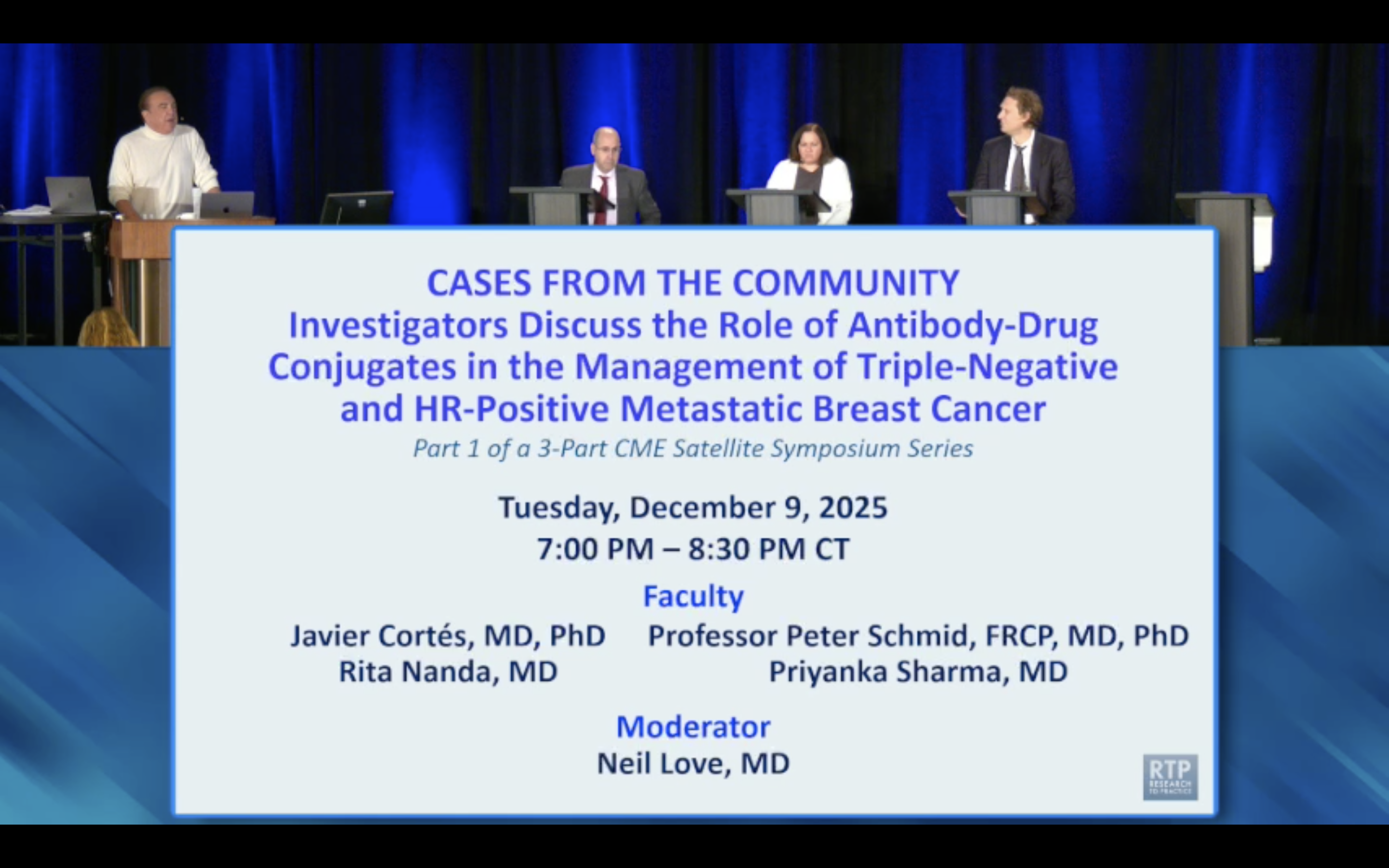
In metastatic breast cancer, approximately one-third of patients are unable to proceed to a second line of therapy due to disease progression or declining performance status. This high attrition rate argues for using the most effective agents, such as ADCs, in the first-line setting.
The fastest, cheapest path to drug approval involves showing a small survival benefit in terminally ill patients. This economic reality disincentivizes the longer, more complex trials required for early-stage treatments that could offer a cure.
Despite massive unmet need, drug development in higher-risk MDS has stalled because many drugs promising in Phase 1/2 trials fail in Phase 3. Their toxicities, manageable in smaller trials, become prohibitive for the older, co-morbid patient population in larger studies, making a favorable safety profile a critical prerequisite for success.

While TROP2-ADCs are currently approved for later-line lung cancer treatment, active clinical trials are already evaluating them as a potential replacement for traditional chemotherapy in the first-line setting. This represents a significant strategic ambition to shift the entire treatment paradigm for newly diagnosed patients with both non-small cell and small cell lung cancer.
Unconventionally, Infinitopes' first-in-human trial targets neoadjuvant patients (newly diagnosed, pre-surgery). This provides cleaner efficacy signals compared to trials in heavily pre-treated patients and enables unique analysis of resected tumors to prove the vaccine's mechanism, a key differentiator from competitors.